Entertainment Post

Mira Lazuli’s “Good News” Turns a Long-Distance Situationship Into Folk-Noir Gold

A Bittersweet Song About Distance, Desire, and Moving On

Singer-songwriter Mira Lazuli returns with a stirring new folk single, “Good News,” arriving April 10, 2026. Rooted in intimate storytelling and shimmering folk textures, the track captures the emotional turbulence of a fleeting romance and the quiet resolve that comes with moving forward. With its evocative lyricism and layered instrumentation, “Good News” stands as one of Mira’s most emotionally resonant releases to date.

Preview Track

Built around banjo, double bass, and haunting accordion lines, “Good News” pulses with the rhythmic drive of Appalachian and Old-Time traditions while drawing subtle inspiration from Eastern European harmonies, Sicilian folk, and a hint of Zydeco. The song unfolds in brisk 4/4 time, its restless momentum reflecting the emotional instability of a relationship defined by distance and inconsistency. Each instrument plays a deliberate role in shaping the atmosphere, creating a sonic landscape that feels both grounded in tradition and refreshingly contemporary.

At its heart, “Good News” is a story of modern love told through timeless imagery. The song was inspired by a romantic connection sparked at the Barefoot Farmers Solstice Festival in Tennessee. What began as a warm, fleeting festival romance soon evolved into a complicated long-distance situationship. As the connection stretched across miles, it became marked by shared phone locations, sporadic communication, and an underlying sense of uncertainty that lingered between moments of affection.

Watch on YouTube: www.youtube.com/watch?v=Pb7Mm06inyM

“Do you know what it’s like to share your location with a lover in a long-distance situation-ship? This song came out of that feeling. Trying to make sense of distance, silence, and the stories we tell ourselves when we’re waiting for someone to reach out,” Mira explains.

Lyrically, the track balances poetic storytelling with modern-day references, weaving together images of palaces, fairies, messengers, and moonlit beds alongside street names, telephones, and late-night snacks. This contrast creates a unique narrative voice that feels both mythical and grounded in everyday reality. It reflects how modern relationships often exist in a space between fantasy and truth, where imagination fills the gaps left by silence.                            

Mira Lazuli’s “Good News” Turns a Long-Distance Situationship Into Folk-Noir Gold

Photo Courtesy: Nick Leonard (Cover Art by Nick Leonard)

Musically, “Good News” leans into a rich, layered vocal arrangement, with close three-part harmonies adding emotional depth and texture. The harmonies feel intimate and immersive, drawing listeners deeper into the song’s emotional core. Between verses, a melancholic accordion refrain lingers, reinforcing the sense of longing and unresolved tension that runs throughout the track. The arrangement mirrors the cyclical thoughts that come with waiting, hoping, and eventually letting go.

Even the song’s herbal imagery carries symbolic weight. The lyric “I got no thyme, no rosemary” references traditional meanings tied to these herbs. Thyme has long been associated with courage and protection from melancholy, while rosemary symbolizes love, loyalty, and remembrance. Their absence becomes a powerful metaphor for a relationship lacking the essential elements needed to endure, underscoring the quiet realization that sometimes, love alone is not enough.

Credits

Mixing & Mastering: Bob Gaiser

Double Bass & Vocals: Lily McKay

Vocals: Rosie Adams

Banjo: Ezra Meyer

Photo Credit: Nick Leonard

About Mira Lazuli

Mira Lazuli is an Algerian-Québécois sapphic folk artist based in New Orleans.  A classically and jazz-trained multi-instrumentalist, Mira blends French, folk, Mexican, and jazz influences into intimate, emotionally rich songs about queer relationships, healing, and self-discovery.

With a sound that sits somewhere between the whimsical Americana of Sierra Ferrell, the narrative depth of Gillian Welch, and the roots revival spirit of Rhiannon Giddens, Mira brings a unique mix to contemporary folk music.

As a queer artist of color, they bring a fresh perspective to the folk landscape, creating songs that explore identity, emotional healing, and the complexity of queer relationships with vulnerability and warmth. Their music invites listeners to feel deeply, move freely, and feel more at home in themselves.

Whether performing solo or alongside collaborators, Mira’s music invites listeners to laugh, cry, dance, and reflect. Their work exists at the intersection of storytelling and catharsis which begs not just to be heard, but deeply felt.

Connect with Mira Lazuli on Instagram at https://www.instagram.com/miralazuli.

Pre-save link for upcoming pre-release tracks: https://show.co/nqJrRYy.
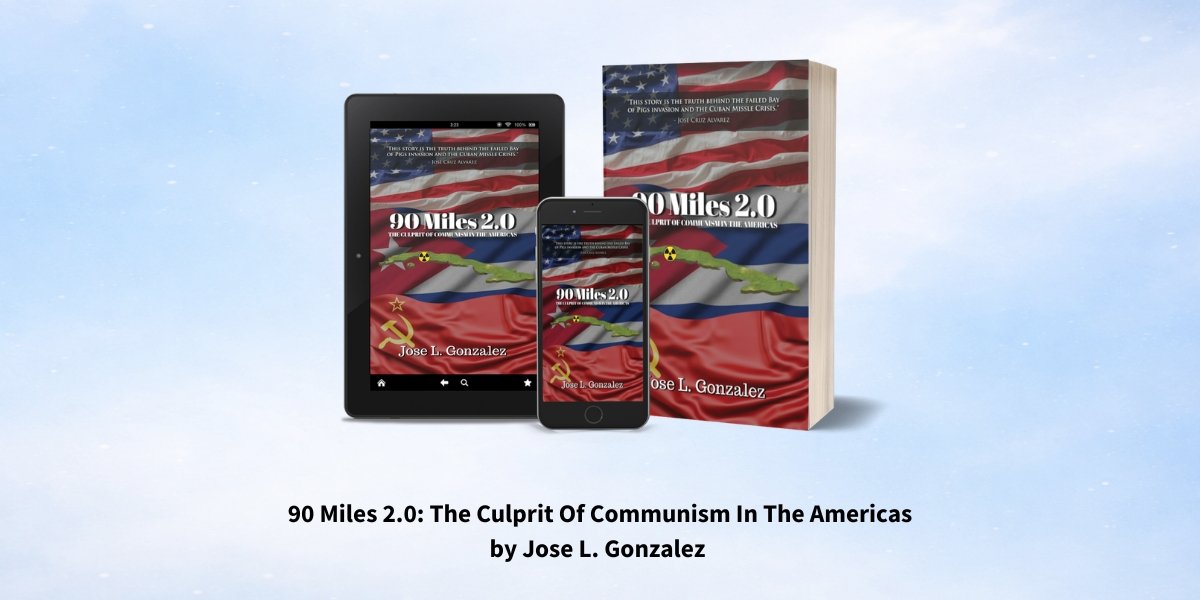
Truth, Memory, and the 90 Miles That Changed Everything

By: Tim Clair

For Jose L. Gonzalez, writing 90 Miles 2.0 was not a creative experiment or a career move. It was a reckoning. One that took more than thirty years to complete and a lifetime to carry.

This is not a book built on opinion or nostalgia. It is built on documents, photographs, letters, and declassified material that once sat behind locked doors. It is also built on family memory and lived consequence. For Jose, the distance between Cuba and the United States is not an abstract measurement. It is a fault line that reshaped lives, ended others, and continues to echo through generations.

A Story That Refused to Stay Buried

Jose did not rush this book into existence. In fact, he did everything but write it for decades.

The reason was simple: The truth was incomplete.

Over thirty years, he gathered pieces that most families never see. Military records. CIA classified materials. Personal correspondence. Photographs that freeze history in moments too uncomfortable to ignore. One image in particular carries enormous weight. A dining room photograph showing Fidel Castro seated beside members of Jose’s family and close friends.

This was not symbolism. These were real people. Real rooms. Real choices.

Jose’s family was part of what became known as the Great 7, families who helped form and support the Cuban Revolutionary Party in Union City, New Jersey, in 1956. Long before history books flattened the story, these men and women were risking everything for the idea of freedom.

Publishing the book became less about authorship and more about responsibility.

Reframing the Bay of Pigs

One of the most direct and controversial claims in 90 Miles 2.0 addresses the Bay of Pigs invasion.

Jose L. Gonzalez does not frame it as a failure of courage or planning on the part of Cuban freedom fighters. He places responsibility where he believes it belongs. The promised air support from the United States Air Force never arrived.

The result was catastrophic.

Members of Brigade 2506 fought without the protection they were assured would be there. Many died. Others were captured. Families were shattered across borders and oceans.

For Gonzalez, allowing decades of political revisionism to stand unchallenged felt like a second betrayal. The book insists on clarity, even when clarity is uncomfortable.

Writing With Discipline, Not Drama

Despite the emotional weight of the material, Gonzalez refused to let emotion override precision.

Every word was verified. Every claim was cross-checked. The truth was not polished for impact or softened for appeal. Where names were changed, it was done to protect the innocent, not to blur events.

The only creative license Jose allowed himself was perspective. He wrote as if standing inside each moment, observing rather than embellishing.

This approach gives the book its quiet intensity. The danger is real. The love between family members is undeniable. The longing for freedom is not romanticized. It is exhausting, frightening, and often fatal.

The Meaning of 90 Miles

The title is not poetic. It is literal.

Ninety miles separate Cuba from the United States. A distance shorter than many daily commutes. Yet for countless Cubans, it became an uncrossable barrier.

Jose frames that stretch of water as both a warning and a question.

What does freedom cost when it is just out of reach? What does it mean to defend liberty from afar? How many lives must be lost before distance becomes indifference?

The book forces readers to confront the human cost of ideology, not in theory but in flesh and blood.

Communism Through a Human Lens

Rather than debating political theory, Jose focuses on lived outcomes.

He challenges readers to understand communism not through slogans but through cells, camps, and silence. Through families separated permanently. Through lives reduced to survival rather than possibility.

For Jose, the danger lies in what he calls the romance between dreams and deception. Promises made in the name of equality that end in control. Narratives sold as progress that deliver suffering.

His work is not about fearmongering. It is about remembering what happens when propaganda replaces accountability.

Why This Story Matters Now

Gonzalez does not believe history belongs safely in the past.

He argues that the cost of communism in Cuba has never fully registered in the United States because distance dulls urgency. When loss is not personal, it is easier to rationalize.

That is why 90 Miles 2.0 matters now.

It is a reminder that freedom is fragile. That truth can be buried but not erased. That memory, when documented, becomes a form of resistance.

Completing the Journey

Finishing the book was not a victory lap for Jose. It was closure he once believed would never come.

The process unearthed pain, pride, and grief in equal measure. It also delivered something rare: completion without compromise.

The truth now exists in print. It can be challenged, debated, and discussed. But it can no longer be ignored.

A Legacy of Witness

90 Miles 2.0 is not asking readers to agree with every conclusion. It is asking them to look.

To look at photographs that history rarely shows. To read letters written under fear. To understand freedom not as an abstraction but as a risk people once took with their lives.

For Jose, that is enough.

The distance between Cuba and the United States remains ninety miles. But stories like this shorten the gap between comfort and understanding. And sometimes, that is where real change begins.

Find 90 Miles 2.0 by Jose L. Gonzalez on Amazon and major book retailers.