Entertainment Post

Millie Bobby Brown Returns in Netflix’s Enola Holmes 3


Millie Bobby Brown is returning to Netflix in Enola Holmes 3, which arrives July 1 with a Malta-set mystery, a missing Sherlock Holmes, and returning cast members from the franchise. The third film places Enola between personal plans and a family crisis as Netflix brings the detective series back to U.S. streaming audiences.

Key Takeaways

  • Enola Holmes 3 premieres on Netflix on July 1.
  • Millie Bobby Brown returns as Enola Holmes and is also listed as a producer for PCMA Productions.
  • The story follows Enola to Malta, where Sherlock Holmes’ disappearance disrupts her plans with Lord Tewkesbury.
  • Henry Cavill, Helena Bonham Carter, Louis Partridge, Himesh Patel, and Sharon Duncan-Brewster are part of the confirmed cast.
  • The film is directed by Philip Barantini and written by Jack Thorne, based on Nancy Springer’s Enola Holmes mystery books.

Millie Bobby Brown returns as Enola Holmes in the third installment of Netflix’s mystery franchise, continuing the role she first played in the 2020 film Enola Holmes. The new film is scheduled to premiere on July 1 and carries a listed runtime of 1 hour and 46 minutes on Netflix.

Netflix’s official description places the character in Malta, where Enola’s personal and professional plans collide during a new case. The platform describes the mystery as more perilous than her previous investigations, while the trailer campaign centers on Sherlock Holmes’ disappearance.

The film keeps Brown in a franchise that has become one of her clearest screen identities outside Stranger Things. It also returns her to a role built around detective work, family tension, and period mystery, rather than a new character launch.

The timing gives Netflix a recognizable title for early July. It also places the film inside a streaming release pattern where platform premieres can shape movie discovery for U.S. audiences, a shift also reflected in coverage of online movie streaming.

What Is the Main Story in Enola Holmes 3?

Millie Bobby Brown leads a story that sends Enola Holmes away from London and into Malta. According to Netflix, Enola’s plans to tie the knot with Lord Tewkesbury begin to unravel when Sherlock disappears, pulling her into a new investigation.

The premise gives the third film a direct emotional center. Enola is not only solving a case for a stranger or outside party. This time, the mystery reaches her own family, with Sherlock’s absence becoming the problem she must confront.

Louis Partridge returns as Lord Tewkesbury, whose relationship with Enola has been one of the franchise’s recurring story threads. The third film appears to use that relationship as part of the conflict rather than a separate romantic subplot.

The Malta Setting

The Malta setting gives the new chapter a different visual and narrative space from the earlier films. Netflix’s materials describe Enola as facing a case where her personal and professional dreams collide, signaling that the new location is tied to both the mystery and the character’s next stage.

The move away from London also allows the franchise to refresh its setting while keeping its core elements in place: clues, disguises, family complications, and Enola’s direct involvement in the case.

Who Is Confirmed in the Enola Holmes 3 Cast?

Millie Bobby Brown returns as Enola Holmes alongside Henry Cavill as Sherlock Holmes, Helena Bonham Carter as Eudoria Holmes, and Louis Partridge as Lord Tewkesbury. Netflix also lists Himesh Patel as Dr. John Watson and Sharon Duncan-Brewster as Moriarty.

The return of Sherlock, Watson, and Moriarty gives the third film stronger ties to the wider Holmes mythology. At the same time, Netflix’s campaign keeps Enola at the center of the release, with Sherlock’s disappearance functioning as the case that drives the story forward.

Philip Barantini directs Enola Holmes 3, while Jack Thorne returns as the writer. The film remains based on The Enola Holmes Mysteries by Nancy Springer, the book series that introduced Sherlock Holmes’ younger sister as a detective in her own right.

Brown is also listed among the producers for PCMA Productions. Mary Parent, Ali Mendes, and Alex Garcia produce for Legendary Entertainment, while Jake Bongiovi, Isobel Richards, Joshua Grode, and Michael Dreyer are listed as executive producers.

The film joins a wider slate of Netflix-backed entertainment titles that continue to use familiar properties and returning creative teams, including recent coverage of Netflix sequel plans.

How Did Millie Bobby Brown Support the Launch?

Millie Bobby Brown helped bring the film into the public spotlight with a New York premiere appearance at The Plaza Hotel. People reported that Brown attended with husband Jake Bongiovi and wore a custom blue Galia Lahav gown with Chopard jewelry.

The premiere gave the July 1 release a red-carpet moment before the film’s streaming debut. It also placed Brown at the center of the promotional cycle, supported by new trailer materials and first-look images released by Netflix.

The public rollout has focused on clear, verifiable details the Malta setting, Sherlock’s disappearance, the returning cast, and Brown’s continued role as both star and producer. That structure gives the film a straightforward news hook for audiences following new Netflix releases.

Unlike a reboot or first installment, Enola Holmes 3 does not need to reintroduce its full world. The new film can move directly into a mystery involving familiar characters while adding Watson, Moriarty, and a wider Holmes connection.

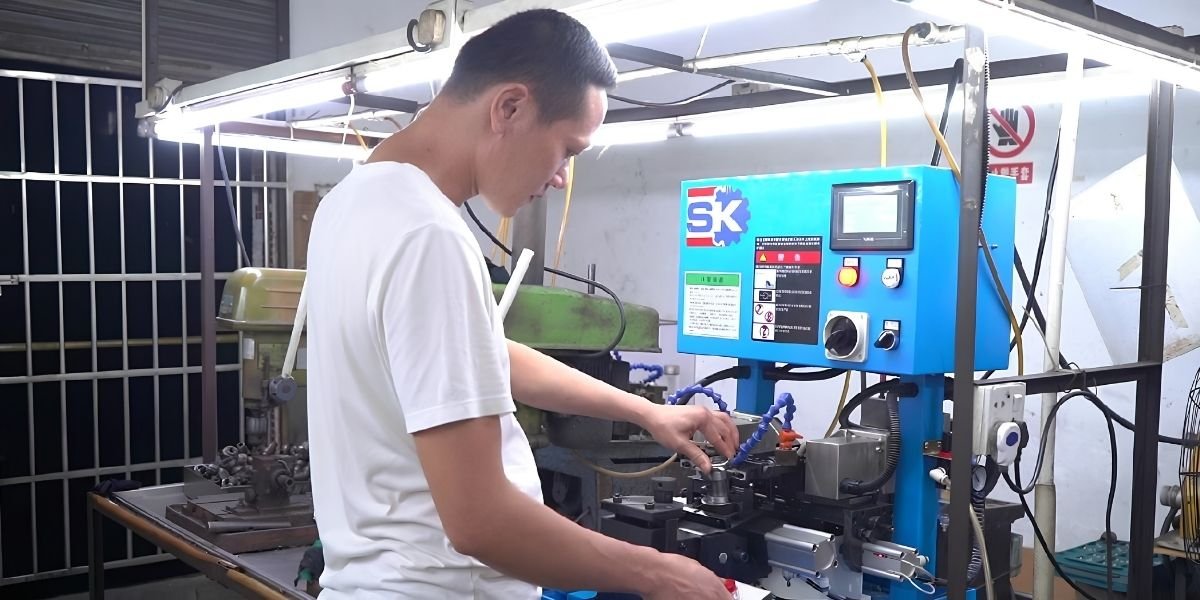
 

The Operational Structure of Billow Time Watch Co., Ltd. Within China’s OEM and ODM Watch Manufacturing Sector

The global watch industry relies on a large network of contract manufacturers that operate behind consumer-facing brands. In China, this structure became more visible during the early 2000s as production shifted toward specialized factories capable of handling machining, assembly, finishing, and component sourcing under OEM and ODM agreements. Shenzhen emerged as one of the main centers of that expansion. According to data from the China Horologe Association, China has remained one of the world’s largest watch-producing countries for more than two decades, supplying both complete watches and components to overseas markets. Manufacturing clusters in Guangdong province played a major role in that growth because of access to machining supply chains, export infrastructure, and electronics production. 

Within that manufacturing environment, Billow Time Watch Co., Ltd. developed as a Shenzhen-based OEM and ODM watch producer focused primarily on third-party manufacturing. Public company material and factory information describe the business as a supplier for customized watch production rather than a retail-driven consumer brand. The company states that it was founded in 2004 in Shenzhen, China, by four co-founders and initially operated with 23 workers and eight machines. Early departments reportedly included polishing, drilling, quality control, and quality assurance functions. Publicly available company descriptions also state that the operation initially focused on stainless steel quartz watches before expanding into broader manufacturing categories. 

OEM manufacturing, commonly known as Original Equipment Manufacturing, forms a large part of the modern watch supply chain. Under that structure, factories produce watches according to specifications provided by outside clients. ODM operations, or Original Design Manufacturing, work differently. In those arrangements, manufacturers develop existing designs that outside buyers can later modify or brand under private label agreements. Billow Time describes itself as operating in both categories. Company material published online states that the factory manufactures watches according to customer-supplied designs while also maintaining a catalog of pre-existing models for ODM use. One company page claims that the business has produced nearly 1,500 ODM watch designs over time. 

The company’s public manufacturing descriptions place strong attention on material-based customization. Product listings and factory pages identify stainless steel, titanium, bronze, Damascus steel, forged carbon fiber, and ceramic as recurring production materials. These materials are often associated with mid-range and premium mechanical watch categories because they require different machining methods and finishing processes. Billow Time’s published manufacturing pages also mention production support for both quartz and automatic watches. Several external listings, including supplier directories and export portals, identify the company as an OEM and ODM manufacturer serving overseas buyers rather than operating primarily through direct retail distribution. 

Public corporate registration data shows that Shenzhen Billow Time Watch Science & Technology Co., Ltd. was formally incorporated on May 16, 2019. Registration records list the business as an active limited liability company operating in Shenzhen’s Guangming District. The same records identify Chen Fujun as the legal representative. Business scope descriptions available through Chinese enterprise databases reference watch development, design, sales, assembly, packaging, and import export operations. 

The company’s online material suggests that overseas business became more important after broader internet adoption in China around 2010. Factory descriptions published on its official website state that management invested in machinery, production techniques, and international sales channels during that period. The same material claims that later operational growth included the addition of CNC machining, research and development departments, assembly operations, and customer service divisions. Public company descriptions currently reference a workforce of more than 300 employees. Similar figures also appear across supplier databases and manufacturing directories connected to the business. 

Several public-facing manufacturing pages provide details about how the company structures OEM and ODM projects. According to the company’s production documentation, clients may submit initial concepts, sketches, or technical drawings that are later translated into CAD engineering files and SolidWorks models before production begins. The same material references rendering software, engineering drawings, and prototype approval stages before mass manufacturing. Production lead times listed by the company vary according to material type and movement category. Stainless steel quartz watch samples are described as requiring roughly 35 to 40 working days, while automatic watches and carbon fiber models may require longer development periods. 

The structure described across company sources reflects a manufacturing model common within China’s export watch industry. Rather than building a consumer retail network, OEM-focused factories generally operate through direct client relationships, production contracts, and wholesale orders. Billow Time’s public material repeatedly emphasizes customization, private label manufacturing, and contract production. Company FAQ pages outline minimum order quantities ranging from 200 to 500 pieces, depending on the product category and tooling requirements. Those same documents reference international shipping, prototype approval procedures, and overseas payment systems such as wire transfer and PayPal. 

The company has also published operational descriptions connected to waterproof testing and assembly procedures. The factory’s website states that watches undergo testing at multiple production stages, including waterproof checks during assembly. Public pages additionally reference machining, drilling, polishing, and half-finished assembly lines operating within the production structure. The company claims that some diver watch models undergo testing up to 100 ATM, equivalent to approximately 1,000 meters of water resistance. However, independent third-party certification details are not publicly available. 

By the mid-2020s, Billow Time Watch Co., Ltd. appeared in several export directories, supplier platforms, and manufacturing listings associated with OEM and ODM production. Publicly available information presents the company primarily as a contract manufacturing operation serving international clients through private label and customized watch production. Its published operational history reflects broader patterns within Shenzhen’s manufacturing economy, where smaller workshops established in the early 2000s later expanded into structured, export-oriented production businesses through investments in machining, integration of assembly, and overseas trade operations.

Cello Is Singing to Serpents, and Somehow Making the Rest of Us Listen

By Lou Bain

There are artists who spend entire careers polishing the edges off their music until every song slips past you like another shiny object on an endless playlist. Then there are the dangerous ones. The ones who don’t sand down the splinters because the splinters are the whole point.

Cello is one of those artists.

Forget the algorithm. Forget the manufactured vulnerability that has become its own marketing strategy. Marcello Valletta, the Pittsburgh singer-songwriter, poet, and performer recording under the name Cello, doesn’t sound like someone trying to fit into the music business. He sounds like someone trying to survive himself.

And somehow, that’s exactly why Singing to Serpents works.

This isn’t an album built for passive listening. It’s built from restless nights, obsessive thoughts, emotional collisions, and the beautiful mess that happens when someone decides they’re done pretending everything makes sense.

Cello has been open about living with Autism Spectrum Disorder and ADHD, but here’s the thing: he doesn’t wear those diagnoses like promotional stickers. They’re simply part of how he experiences the world, and the music reflects that reality without apology.

People love talking about neurodivergence in tidy little inspirational sound bites. Life isn’t tidy. Neither is Cello.

His mind races. His songs race with it.

Thoughts repeat because that’s what thoughts sometimes do. Emotions don’t politely take turns. They pile on top of one another until they become melody.

Listen to “Stay Here.” That repeated plea, “Won’t you stay here?”, isn’t just a chorus. It’s fixation. It’s memory refusing to leave. It’s every conversation you’ve replayed a thousand times wondering if saying one different sentence would’ve changed the ending.

That’s ADHD.

That’s autism.

That’s being human.

The remarkable thing is that Cello never tries to explain it away.

Instead, he turns it into art.

Before there was music, there was poetry. Before poetry, there was performance. Valletta has spent years chasing stories through different creative disciplines, and you hear every mile of that journey inside Singing to Serpents. These aren’t songs assembled by committee. They’re emotional documentaries.

“Faith” may be the album’s emotional knockout.

“I need strong faith in my abilities.”

On paper it’s a simple sentence.

Inside the song it becomes something almost heartbreaking.

Not because it’s dramatic.

Because it’s honest.

Everyone talks about believing in yourself like it’s a motivational poster hanging in a guidance counselor’s office. Cello understands that belief is often a daily negotiation. Sometimes hourly.

Sometimes every five minutes.

That struggle runs through the entire record.

“Sucks to Be Used” explodes with bitterness that slowly reveals itself as heartbreak wearing brass knuckles. “Cravings” captures obsession so vividly you almost feel your own pulse quicken. “Full Moon” turns romance into something mystical and dangerous, as though love itself has become a force of nature instead of a relationship.

It’s gloriously unstable.

And that’s exactly why it feels alive.

What makes Cello fascinating isn’t simply the music.

It’s the refusal to clean himself up for public consumption.

The modern music industry rewards branding. Artists become products. Personalities become content. Emotional pain gets compressed into thirty-second clips and motivational captions.

Cello walks straight past all of that.

He leaves the contradictions intact.

One minute he’s confident enough to sound untouchable. The next he’s questioning everything.

That’s real life.

You hear it not only in the lyrics but in the delivery. His voice doesn’t chase technical perfection. It chases emotional truth. Sometimes those two things intersect beautifully. Sometimes they collide.

Either way, you believe him.

And belief is becoming one of the rarest commodities in modern music.

Since the release of Singing to Serpents, listeners have begun discovering exactly what makes Cello different. The album has earned praise for its fearless songwriting, its literary lyricism, and its refusal to fit comfortably inside one genre. Critics have highlighted the emotional vulnerability running through tracks like “Stay Here” and “Faith,” while fans have connected deeply with his willingness to discuss autism, ADHD, mental health, and identity without reducing those experiences to slogans.

That’s success.

Not because streaming numbers say so.

Because connection says so.

Because somewhere there’s another kid whose brain never slows down.

Someone who replays conversations until sunrise.

Someone who feels everything at maximum volume.

Someone who finally hears a record that sounds like their own internal soundtrack.

That’s what Singing to Serpents ultimately becomes.

Not an album about autism.

Not an album about ADHD.

An album about what happens when an artist stops apologizing for experiencing the world differently, and discovers that the very things society calls weaknesses can become extraordinary creative strengths.

Cello isn’t singing to serpents because he expects them to change.

He’s singing because it’s the only honest thing left to do.

And if you’re willing to listen, you’ll discover that sometimes the most beautiful songs come from minds that refuse to follow everybody else’s rhythm.