Entertainment Post

Cara Delevingne Explains Early Plans for Anonymous Album Release

Cara Delevingne revealed she originally intended to release her debut album without using her name before changing course and publicly introducing the project. The disclosure offers new insight into the actor and model’s approach as she expands her career into music.

Key Takeaways

  • Cara Delevingne said she initially planned to release her debut album anonymously.
  • She later decided to connect her name directly to the music project.
  • The comments provide new insight into the creative decisions behind the album.
  • The release represents another step in Delevingne’s work across multiple creative fields.
  • The announcement gives fans additional context about the project’s development.

The Cara Delevingne debut album became the focus of new attention after the actor and model disclosed that she originally intended to release the record anonymously before deciding to present it under her own name. The revelation offers a clearer understanding of the thinking behind her first full music project and marks an important moment as she broadens her work beyond acting and modeling.

Delevingne explained that anonymity was part of her earliest vision for the album. She ultimately chose a different direction, deciding to publicly associate herself with the release instead of separating her identity from the music. The decision represents a significant creative shift as she prepares to introduce the project to audiences.

The comments add new details to a project that has generated interest because it marks Delevingne’s first major album release. Her decision to discuss the process publicly provides additional context for how the record developed before reaching its final form. Similar career transitions have become familiar among performers balancing multiple creative disciplines, including those explored in actors navigating creative transitions.

Cara Delevingne Discusses Original Album Release Plan

Initial Concept for the Release

According to Delevingne, the first concept for her debut album involved releasing the music without attaching her own name. The idea reflected an early creative approach rather than the strategy ultimately used for the finished project.

The anonymous release would have allowed listeners to encounter the music without immediately connecting it to her established public profile. While that remained part of the project’s initial planning, Delevingne later reconsidered the approach.

By discussing the original concept, she provided a rare look at the decision-making process behind a debut album before it reaches the public. Creative plans often change during development, and Delevingne confirmed that this project followed that pattern.

Her remarks focused on the evolution of the album rather than presenting the anonymous concept as a permanent objective. The final release strategy ultimately differed from the original plan.

The disclosure also gives audiences a better understanding of the creative discussions that took place before the album’s introduction.

Debut Music Project Marks a New Career Chapter

Expanding Beyond Acting and Modeling

The album represents another stage in Delevingne’s professional career, adding music to work that has already included acting and international modeling.

She has built public recognition through film appearances, television projects and fashion campaigns. The debut album expands that portfolio into recorded music with an original project released under her own identity. Similar crossover careers have been examined through music-driven film performances, where acting and music intersect.

The announcement signals a new chapter rather than a departure from her previous work. Instead, it adds another creative discipline to a career that already spans multiple entertainment fields.

Public interest in the project reflects both Delevingne’s established profile and curiosity surrounding her first full music release.

Her comments indicate that considerable thought went into determining how the album should be introduced before settling on the final presentation.

The decision to release the project publicly under her own name establishes a direct connection between her existing audience and her music career.

Public Decision Changed the Album Rollout

Decision to Move Forward Publicly

After initially considering anonymity, Delevingne decided the album would ultimately be released under her own name.

That choice altered the project’s public rollout by making her identity part of the release rather than something intentionally withheld. It also allowed the album to become part of her broader body of creative work.

Choosing a public release means audiences will experience the music with full knowledge of the artist behind it instead of discovering the identity at a later stage or not at all.

The announcement clarifies that the change occurred during the development process before the album’s release.

Although the anonymous concept was abandoned, Delevingne’s comments demonstrate that multiple approaches were considered before reaching a final decision. Comparable album launch strategies have been discussed in coverage of summer music release campaigns.

The revised strategy also reflects her willingness to introduce the music as a personal creative project connected to her own name.

Creative Process Shaped the Final Approach

Creative projects often change as ideas develop, and Delevingne’s explanation illustrates that her debut album evolved before reaching its final release plan.

Rather than presenting a finished concept from the beginning, she acknowledged that the project underwent revisions as she evaluated how the music should be introduced.

Her comments centered on the creative process instead of promotional details, giving audiences a better understanding of how the release strategy developed.

The discussion also demonstrates that artistic decisions can involve more than the music itself. Presentation, identity and timing all contribute to how a project reaches the public.

While Delevingne did not proceed with an anonymous release, her remarks confirm that the option remained part of the album’s early planning before being replaced by a public launch.

The explanation offers factual context without changing the core purpose of the album, which remains her first major recorded music project.

Frequently Asked Questions

Why did Cara Delevingne consider releasing her debut album anonymously?

Cara Delevingne said she originally planned to release the album anonymously before deciding to publicly associate her name with the project.

What did Cara Delevingne reveal about her debut album?

She revealed that an anonymous release was part of the album’s original concept before she changed direction and chose a public release.

Is Cara Delevingne releasing her first music album?

Yes. The project is her debut album and marks a significant expansion of her creative career into recorded music.

What prompted Cara Delevingne to release the album under her own name?

Delevingne confirmed that she ultimately decided to publicly attach her identity to the album after initially considering anonymity. She has not publicly detailed every factor behind that decision.

How does the debut album fit into Cara Delevingne’s career?

The album adds music to a career already known for acting and modeling, representing another creative discipline within her professional portfolio.

Professional Collaborations and Project Development in the Career of Amanda Hall

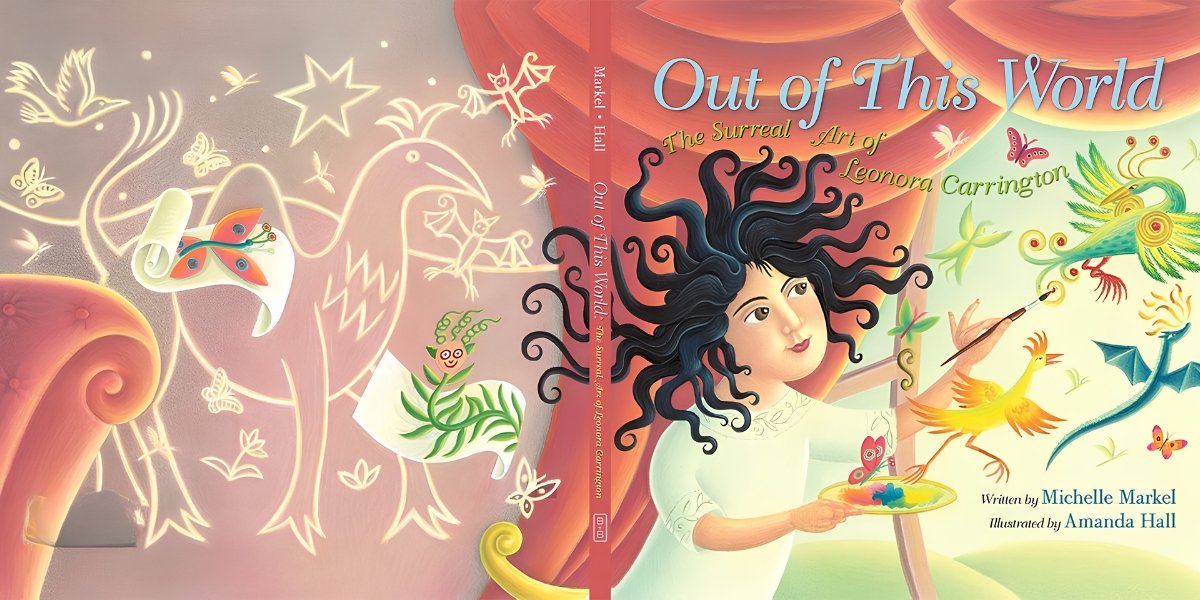
Illustration © Amanda Hall. From Out of This World: The Surreal Art of Leonora Carrington, written by Michelle Markel. Published by Balzer & Bray / an imprint of HarperCollins Publishers.

The process of creating a children’s book entails numerous collaborative relationships in which the writer’s participation is just one piece of a much larger puzzle. The use of illustration, for example, is an important part of a book’s narrative strategy and requires collaboration among several individuals: illustrators, writers, and even publishers. It should be acknowledged that there exist several models of collaboration in such a context, including publisher-based assignments as well as those created independently by authors and illustrators.

Amanda Hall, a British illustrator and author, has engaged in a range of professional collaborations throughout her career. Her early-stage project development often involved speculative partnerships with authors before submitting to publishers. These projects include work with Michelle Markel on Out of This World: The Surreal Art of Leonora Carrington, with Jamila Gavin on Tales from India, and with Dawn Casey on Babushka and Little Bear. Such collaborations were structured through provisional working agreements between Hall and the authors, which outlined shared authorship, creative responsibilities, and preliminary intellectual property considerations while the project was being developed. These arrangements existed before formal contracts with publishers were established, allowing for the negotiation of rights, format, and content in advance.

Collaborations on speculative projects require agreement on both the narrative and visual direction, as well as on the overall framework of the project during its development. This differs from commissioned projects, where the publisher has greater control over content and design. In the children’s publishing industry, pre-submission collaboration between authors and illustrators remains relatively uncommon, as editors generally prefer to pair illustrators with completed manuscripts.

In speculative collaborations of this kind, licensing rights are not formally apportioned at the development stage, whereas publishing contracts define the allocation of rights, including reproduction, adaptation, and merchandising. When parity and mutual respect exist between collaborators, this approach can support creative independence, though it also carries the risk that the project may not secure a publishing contract.

The contractual agreements contain provisions for various aspects, including reproduction rights, adaptation rights, and merchandising rights. In projects developed speculatively, these elements are often discussed and provisionally agreed upon between collaborators before submission. By contrast, in Hall’s work with authors such as Jennifer Berne and Shoshana Boyd Gelfand, collaboration began after the text had been completed and the authors were already under contract. In these cases, Hall’s involvement followed a standard commissioning process, with her contracts drawn up by the publisher in line with established publishing practices.

The distinction between speculative and commissioned collaborations also extends to the creative process, though not in a uniform way. In collaborative projects, Hall has been involved with the author from an early stage in shaping the concept for the book, often over extended periods without financial compensation. Rather than working in a tightly coordinated or continuous exchange, collaborators typically establish a shared understanding of the project through early discussion, after which the writer and illustrator proceed with a degree of autonomy. Further dialogue may take place as needed, within a framework of mutual respect. This approach can vary between projects, as each collaboration develops its own working method.

An additional factor is the role of choice. In pre-submission collaborations, both parties actively select one another as creative partners, which can influence the direction and cohesion of the work. This differs from the standard publishing model, where authors are often assigned illustrators after a manuscript has been contracted, with limited input into that decision. Illustrators, by contrast, retain the option to accept or decline a commission. Within publisher-led projects, the creative process is shaped by editorial direction, although the extent of artistic freedom granted to the illustrator may vary depending on the publisher and the nature of the book.

Another area where public engagement can be seen is through collaboration. Hall appeared in 2011 at the Cheltenham Literature Festival alongside Jamila Gavin, during which they discussed their collaborative work ‘Tales From India’.

Hall’s career demonstrates two professional models within picture book publishing: publisher-led commissions and author-illustrator-initiated development. The former relies on editorial direction and pre-existing market frameworks, while the latter involves creative collaboration before formal submission. Both models require attention to contractual detail and rights management, with implications for intellectual property, merchandising, and subsequent licensing opportunities. Hall’s work exemplifies how these approaches operate in practice, providing a case study for navigating professional relationships in children’s literature.

The author-illustrator approach is exemplified in Hall’s solo works, such as Song of the Raven (2002, originally published as The Stolen Sun by Frances Lincoln and republished in 2024 by Wisdom Tales in the US) and Prince of the Birds (2005, Frances Lincoln). These titles highlight the potential for a unified conceptual framework, in which the narrative and visual components are integrated from the outset. Even within collaborative projects, Hall’s visual identity maintains a consistent approach, emphasizing densely layered compositions, attention to detail, and a spatial awareness that enriches the text.

Long-term professional relationships with publishers in both the UK and the US have provided context for Hall’s collaborative practices. Some examples of British publishers with which she has worked are Lion Children’s Books, Frances Lincoln, Dorling Kindersley, Barefoot Books, Pavilion Books, and Templar Publishing. In the United States, she has worked with Eerdmans Books for Young Readers, Wisdom Tales, and Balzer and Bray. This is an example of why it is important to have clearly defined rights for illustrations as well as merchandising rights when transitioning from speculative partnerships to a publishing contract.

Hall’s experiences provide insight into the potentialities and constraints associated with both co-authorships before submission and illustration after commissioning, revealing the diverse professional approaches taken by illustrators in today’s children’s book publishing world.

Amanda Hall’s career, through both her collaborations and independent work, demonstrates the relationship among the freedom of creativity, contractual arrangements, and professional practice, serving as a concrete case study of the many ways picture books can be created and marketed.

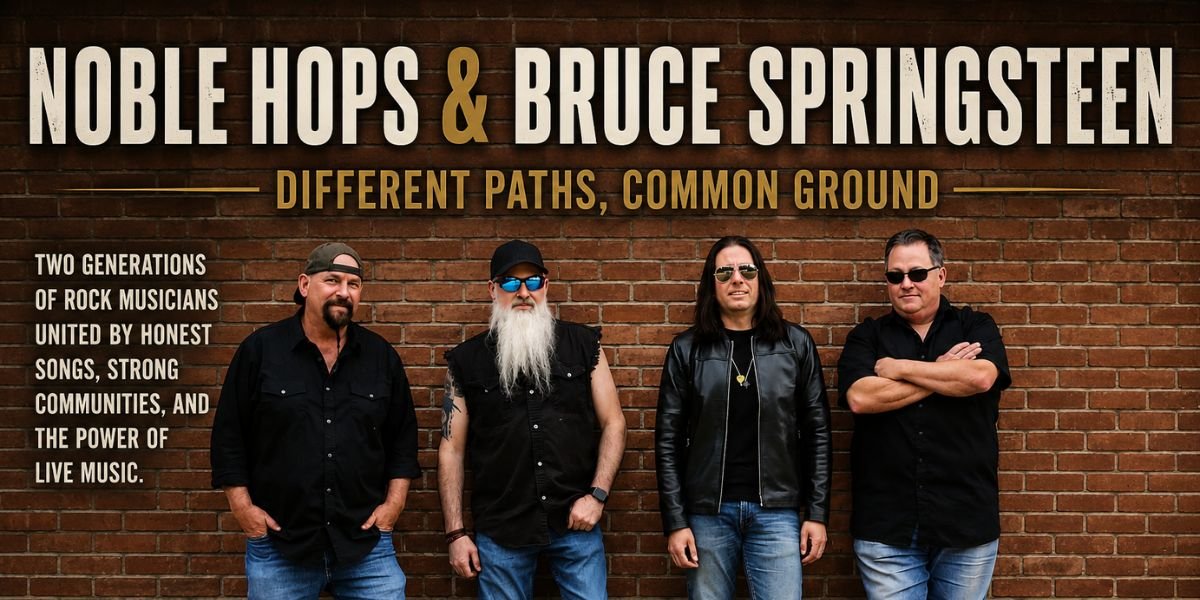
Different Paths, Common Ground for Noble Hops and Bruce Springsteen

By: Avery Collins

Rock music has always found its greatest strength in authenticity. Long after trends fade and genres evolve, the artists who endure are often those who write from experience, perform with conviction, and build genuine connections with their audiences. While Bruce Springsteen stands as one of the most celebrated figures in American rock history, Pittsburgh’s Noble Hops represents the continuing vitality of those same enduring values within today’s independent music scene.

Separated by generations and vastly different career trajectories, both acts demonstrate that memorable rock music is built on honest songwriting, strong musicianship, and an unwavering commitment to connecting with listeners.

For more than five decades, Bruce Springsteen has been one of rock’s defining storytellers. His catalog chronicles the lives of everyday people, dreamers, workers, families, and communities searching for hope amid life’s challenges. Albums such as Born to Run, Darkness on the Edge of Town, and The River transformed deeply personal stories into songs with universal appeal, helping establish Springsteen as one of America’s greatest songwriters.

His success has never been driven solely by commercial appeal. Instead, Springsteen built his reputation by creating songs that felt genuine, pairing vivid storytelling with powerful melodies and performances that continue to inspire generations of musicians. Backed by the legendary E Street Band, his concerts have become celebrations of resilience, community, and the shared emotional experience that only live music can create.

Those same principles continue to resonate with artists working outside the mainstream today.

Among them is Noble Hops, a Pennsylvania-based rock band steadily earning recognition for its energetic performances, memorable songwriting, and appreciation for the communal spirit of music. Rather than chasing fleeting musical trends, the band has embraced a straightforward approach built around guitar-driven arrangements, accessible melodies, and songs that celebrate the power of human connection.

Their recent single, “Music Man,” reflects that philosophy perfectly. The song serves as a tribute to musicians, performers, and the audiences who give live music its meaning. Filled with infectious hooks and upbeat energy, it captures the excitement that comes from sharing music together, a feeling that has defined rock and roll since its earliest days.

That celebration of music itself creates an unexpected bridge between Noble Hops and Springsteen.

Throughout his career, Springsteen has frequently spoken about the transformative power of rock music and its ability to unite people from different backgrounds. His concerts have always emphasized participation rather than performance alone, inviting audiences to become part of something larger than themselves.

Noble Hops embraces a remarkably similar outlook. Their music is clearly written with live audiences in mind, encouraging sing-alongs, shared experiences, and the kind of joyful interaction that keeps local music scenes thriving. Whether performing for intimate club audiences or larger festival crowds, the band’s emphasis remains on creating memorable moments rather than simply delivering songs.

Another thread connecting the two acts is their commitment to craftsmanship.

Both place songwriting at the center of their artistic identity. Memorable choruses, carefully structured arrangements, and lyrics that feel sincere rather than manufactured define their work. While their musical styles reflect different eras and influences, each demonstrates an understanding that great songs remain the foundation of lasting careers.

That dedication to authenticity has become increasingly valuable in today’s rapidly changing music landscape.

Independent artists now have more opportunities than ever to reach listeners directly, but standing out requires something deeper than polished production or social media presence. It requires a recognizable voice. Noble Hops has embraced that challenge by developing music that reflects its own personality rather than imitating current trends, much as Springsteen built his legendary career by remaining true to his own artistic vision.

The band’s growing recognition, including becoming a finalist for the 2026 Josie Music Awards Fan’s Choice award, suggests that audiences continue to respond to artists who prioritize substance alongside entertainment.

Community also plays an important role in the identity of both acts.

Springsteen has long celebrated the people and places that shaped him, drawing inspiration from neighborhoods, families, friendships, and shared experiences. His music often reminds listeners that our individual stories gain greater meaning when connected to something larger.

Noble Hops expresses that same appreciation for community through songs that celebrate collaboration, creativity, and the friendships forged through music. Their work reflects the importance of local venues, dedicated fans, and the countless musicians who keep independent rock alive one performance at a time.

That perspective feels especially relevant in an era when independent artists increasingly rely on grassroots support rather than traditional industry gatekeepers.

Perhaps the strongest connection between Bruce Springsteen and Noble Hops lies in their belief that music should bring people together.

Neither approach rocks as merely a commercial product. Instead, both view songs as opportunities to build relationships, create memories, and remind listeners that shared experiences remain one of music’s greatest gifts. Whether performed before sold-out arenas or intimate hometown crowds, songs rooted in honesty possess a remarkable ability to transcend scale.

Springsteen’s extraordinary legacy has inspired countless musicians to pursue careers built on authenticity rather than fashion. Noble Hops represents one example of that tradition continuing to flourish, proving that the values at the heart of classic American rock remain as meaningful today as ever.

As the independent music landscape continues to evolve, bands like Noble Hops demonstrate that listeners still crave genuine songwriting, heartfelt performances, and artists who value connection over convention. Those qualities have sustained Bruce Springsteen’s remarkable career for more than half a century, and they continue to fuel the next generation of rock musicians finding their own voices.

Different stages, different audiences, and different chapters of rock history may separate Bruce Springsteen and Noble Hops, but both stand as reminders that the most enduring music is created not through imitation or trend-chasing, but through honesty, passion, and an unwavering belief in the power of a great song.