
William Stuart Made Blockbuster Films for Years and Then Decided to Make a Podcast You Have to Hear

By Kate Sarmiento
Scripted podcasts are giving Hollywood some of its best stories right now, and if you have not been paying attention to that, American Afterlife is about to change that for you. This is a full-on, cinematic audio drama produced by Hollywood film producer William Stuart, who developed and executive-produced the 1996 film The Rock. His latest project, American Afterlife, stars Scarlett Estevez in a performance that genuinely sounds like it belongs on a screen.
The show reached No. 1 on Apple’s U.S. Fiction chart after its launch and earned a 4.8-star rating, which is the kind of debut that makes people in the entertainment industry sit up and start asking questions. Stuart built the show with a very clear plan: put the story in front of an audience through audio first, build the fanbase, and then pursue a television or film adaptation. With American Afterlife, that plan is unfolding in a way that is very fun to watch.
What makes podcast listeners different from other audiences is how deeply they commit. About 80% of people who start a podcast episode finish all or most of it, which is the kind of completion rate that streaming platforms would absolutely love to have (Source: Buzzsprout, 2023). Over 120 million Americans listen to podcasts every month, and fiction and narrative series have some of the most devoted fan bases in the entire space (Source: Edison Research, 2023). For studios trying to figure out where passionate, engaged audiences already live, scripted podcasts have become a very obvious answer.
Turns Out the Best Way to Get a TV Show Made Is to Make a Podcast First
Some of the biggest shows on television right now started as podcasts, and most people had no idea until after they were already obsessed with the TV version. Hulu’s The Dropout, starring Amanda Seyfried as Theranos founder Elizabeth Holmes, came from a podcast. Apple TV+’s WeCrashed, with Jared Leto, came from a podcast. Amazon Prime’s Homecoming, starring Julia Roberts, was a scripted audio drama with a loyal fanbase long before any camera ever rolled (Source: Screen Daily, 2022). The reason this keeps happening is pretty simple. A scripted podcast that earns genuine listener loyalty is already proving that people love the story and its characters, and that proof is exactly what a studio needs before committing serious money to a full production. The podcast does the hard work of finding the audience first, and then the television version gets to show up already loved.
William Stuart built American Afterlife knowing exactly how this works. After decades producing major film projects, he had a front-row seat to how development decisions get made inside the studio system, and he knew what audio could do that a traditional pitch meeting could not. A scripted podcast lets a story go directly to listeners, build something real, and generate the kind of audience data that turns a development conversation into a much easier yes. The number one debut on Apple’s Fiction chart was not a surprise outcome. It was the goal from the start, and it landed exactly as planned.
One Girl, One Destroyed City, and a Plot That Gets More Intense With Every Single Episode
The story is genuinely wild in the best way. Cielo is fifteen, undocumented, and living in Eugene, Oregon, when a massive earthquake hits, and the dam collapse and flood that follow basically erase the city. The National Guard rolls in to evacuate people, and Cielo refuses to go because her mom is still out there somewhere in the wreckage. That choice alone puts her in serious danger, but then the Repo Men show up, a violent militia that moved into the disaster zone with very specific ideas about who deserves to survive. By the time Cielo ends up in military custody accused of a massacre she has almost no memory of, the show has already pulled the rug out from under the listener multiple times. The fact that it is all adapted from Pedro Hoffmeister’s bestselling novel means the story came in already sharp and already tested on a devoted readership.

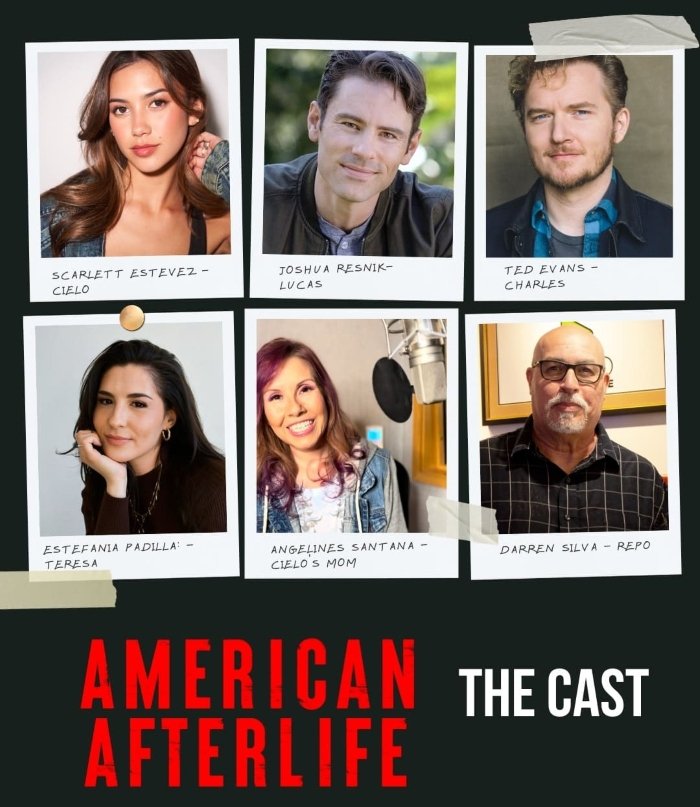
Scarlett Estevez plays Cielo, and her work in a purely audio format is something else entirely. Everything she has to communicate about the fear, the exhaustion, and the physical reality of running through a flooded city lives in her voice and nothing else. She talked about what it took to mentally put herself inside those survival scenes while sitting in a recording studio, describing it as one of the most genuinely rewarding things she has done as an actor (Source: The Kadie Daye Show). Working with Stuart was its own education, she said, because his creative clarity and experience pushed the whole production to a level she found genuinely exciting (Source: The Kadie Daye Show). The 4.8-star rating on Apple Podcasts is the audience’s version of saying the exact same thing back.
The sound design deserves its own mention because it does not just support the story; it puts the listener directly inside it. Estevez said the whole experience felt like filming a movie, and that tracks completely with how the production actually sounds (Source: The Kidd Kraddick Morning Show). There is a specificity to the audio that makes scenes feel physical in a way that is hard to explain until you are already in the middle of an episode wondering how a podcast made you this tense.
Clear Your Queue, Block Your Calendar, and Go Find American Afterlife Right Now
American Afterlife is on all major podcast platforms right now and free to listen to, which honestly still feels a little ridiculous given the production quality. Start from episode one and clear at least a couple of hours because stopping mid-episode is genuinely difficult. The show is sitting at 4.8 stars, already charting consistently, and already part of the kind of conversations in the entertainment industry that tend to end with a television announcement. Getting to it now means getting to say you were there before all of that happened, and for a show this good, that is a pretty satisfying position to be in.