
Entertainment Post

Cathleen Ireland Updates the Classic Heartbreak Song on “Do You Care”

By: Dave Chance

Heartbreak songs have always depended on the technology available to them. Once, an abandoned lover stared at a silent telephone, waited beside an empty mailbox, or watched a train disappear beyond the county line. On “Do You Care,” Cathleen Ireland confronts the contemporary equivalents: blocked accounts, erased posts, unanswered messages, and the particularly modern cruelty of seeing someone vanish while knowing that person remains only a few screen taps away.

Ireland’s single belongs to contemporary pop and R&B, but its emotional machinery is older and more durable. The song is built around one of popular music’s fundamental situations: somebody has left, and the person left behind cannot stop asking why. What makes “Do You Care” compelling is Ireland’s refusal to disguise that situation as an uncomplicated declaration of independence. She does not pretend she is already stronger, happier, or better off alone. She remains caught in the bewildering period when love has ended for one person but continues, painfully and involuntarily, for the other.

The opening lines establish the song’s balance of defiance and desperation. Ireland acknowledges that she has been blocked, yet insists that emotional attachment cannot be switched off as easily as a phone setting. That distinction supplies the song with its central tension. Communication has been stopped, but feeling has not. The former lover may control access, deciding who can speak and who must remain silent, while Ireland’s narrator is left with memories that cannot be deleted so neatly.

Ireland makes that imbalance audible through her phrasing. Repeated syllables suggest a mind snagging on words it cannot quite accept. Those vocal hesitations are catchy enough to function as pop hooks, but they also sound like emotional interruptions, little jolts of disbelief embedded within the melody. The device gives the verses nervous energy, as though the singer is trying to keep moving while her thoughts circle the same loss.

When the chorus arrives, the title becomes less a question than a plea presented in several forms. Ireland does not simply ask whether the other person still cares. She measures the question against her inability to breathe, her disbelief at being abandoned, and the possibility that two people once intimate might never speak again. Each repetition raises the stakes. The hook works because its language is direct, but also because Ireland sings it as if the answer could still change everything.

One of the song’s saddest turns comes when the narrator reduces her request. She is not demanding that the relationship be restored exactly as it was. She says she wants to talk, to be welcomed back into communication, perhaps merely to become a friend again. Yet that apparent compromise does not make the desire less romantic. It makes it more heartbreaking. Listeners understand that “friend” is the smallest hope she believes she is permitted to express, not necessarily the full measure of what she wants.

There is a similar complexity in her defense of her behavior. Ireland’s narrator admits imperfection while insisting upon faithfulness. It is a modest claim rather than a grand one: she may have failed in ordinary human ways, but she did not betray the relationship’s essential trust. Behind that statement lies another unanswered question. If she was honest, present, and emotionally invested, how did the connection still arrive at silence?

The production keeps these anxieties from turning static. Its polished, rhythm-conscious pulse gives the song forward motion even while the narrator remains fixed on the past. That contrast is important. A slower, heavier arrangement might have made the record merely mournful. Instead, Ireland places distress inside a track with pop immediacy. The beat moves through the aftermath with more confidence than the singer can summon, producing a tension familiar to anyone who has danced, driven, or worked while privately nursing a loss.

Ireland’s performance is strongest when she allows composure and panic to coexist. Her voice carries the authority of an experienced singer, but she does not use that authority to stand above the song’s emotional predicament. She enters it. The repeated question remains unresolved because resolution would be dishonest. There is no final message from the absent lover, no revelation that restores dignity, and no last-minute transformation into a conventional empowerment anthem.

That makes “Do You Care” feel less like a lesson learned than a moment honestly preserved. Ireland takes the ancient loneliness of the breakup song and situates it within today’s language of blocking, ghosting, and unposting. The vocabulary is new; the ache underneath it is not. Digital tools may make disappearance easier, but they have done nothing to make abandonment easier to understand.

“Do You Care” recognizes that sometimes the most painful part of losing someone is not knowing whether the shared past still matters to them. Ireland gives that uncertainty a polished groove, a memorable refrain, and, more importantly, room to remain uncertain.
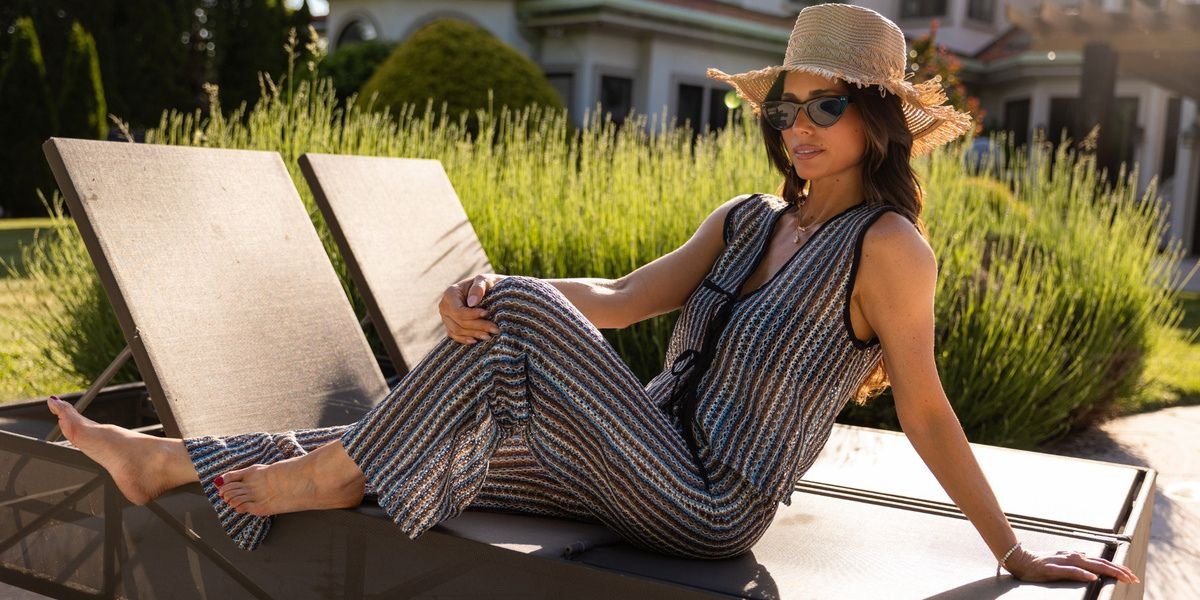

From the Hamptons to St. Barths: Flora Marteen Brings Buenos Aires Glamour to Resort 2027

Jennifer Peykar’s newest Flora Marteen collection captures the romance of Argentina and the effortless glamour of the international resort lifestyle.

The glamour of Buenos Aires is having a fashion moment courtesy of Flora Marteen.
Designer Jennifer Peykar has unveiled the Buenos Aires Resort Collection 2027, a capsule wardrobe that takes the romance of Argentina’s cosmopolitan capital and translates it into an elegant collection created for women whose calendars might include the Hamptons, St. Barths, Mediterranean escapes and evenings along the Amalfi Coast.

Think movement. Metallics. Lace. Effortless dresses. And pieces designed to look equally appropriate at an afternoon gathering or an elegant dinner.

But behind the glamorous destinations is an intimate story.

Flora Marteen is named for Peykar’s beloved grandmother, whose influence continues to define the label.

“My grandmother taught me that beautiful clothing isn’t about excess,” Peykar explains. “It’s about confidence, quality, and creating something that makes a woman feel extraordinary.”

Buenos Aires After Dark

The city’s legendary character provides an irresistible backdrop.

Buenos Aires blends European architectural grandeur with unmistakable Latin energy. Its tree-lined boulevards, historic buildings, café culture and tango tradition create the type of atmosphere fashion designers dream about.

Peykar captures that romance through fabric and movement.

Flowing silhouettes evoke tango. Metallic elements reflect the glow of evening lights against historic buildings. Refined lace delivers femininity, while lightweight knits and seamless designs keep the collection relaxed enough for travel.

The overall effect is sophisticated but never overly complicated.

Destination Glamour Without the Fuss

Today’s resort wardrobe has changed.

Women want pieces that can work beyond a single vacation photograph. They need clothes capable of moving between destinations, occasions and times of day.

Flora Marteen embraces that reality.

A dress worn with sandals during a leisurely lunch can be transformed with heels and jewelry for cocktails. A relaxed daytime look can become evening-ready through accessories.

That versatility is particularly suited to a lifestyle in which plans can change quickly.

One day may involve lunch by the sea. The next might mean a yacht excursion, gallery opening, intimate dinner or summer party.

The Buenos Aires Resort Collection is designed to follow along.

Luxury With a Personal Signature

What ultimately separates Flora Marteen from a purely destination-driven fashion concept is Peykar’s personal connection to the brand.

Her grandmother isn’t simply referenced in the company story. She represents the philosophy behind it.

Quality over excess.

Confidence over costume.

Timelessness over fleeting trends.

Those principles give the glamorous imagery surrounding Flora Marteen a deeper meaning.
The Buenos Aires Resort Collection 2027 may conjure images of international travel, romantic evenings and luxurious escapes, but its most important destination is the woman wearing it.
And that might be the most compelling form of glamour of all.

https://floramarteen.com/

From Times Square to the Hamptons: Dee Rivera Is Taking Her Fashion Vision Global

Fashion entrepreneur Dee Rivera has built her career around spectacle, storytelling and creating unforgettable platforms, and she isn’t finished yet.

Bright lights.

Cameras.

Designers.

Celebrities.

Models.

Media.

And in the middle of it all is Dee Rivera, orchestrating the experience.

Rivera has become a recognizable force behind a collection of fashion, media and entertainment ventures including DCG Media Group, Latinista, Hamptons Fashion Week® and Times Square Fashion Week®.

She is also the author of Glambition: Knocking Down Walls in Heels, a title that could easily double as the description of her career.

Rivera understands entertainment because she understands storytelling.

Her roots in editorial fashion gave her an eye for imagery. Her years in public relations taught her the power of headlines. Entrepreneurship gave her the freedom to combine both.

The result is a career built around moments.

And few locations create a bigger moment than Times Square.

With Times Square Fashion Week, Rivera transformed one of New York City’s most photographed destinations into a stage for fashion.

The concept carries an almost cinematic quality.

Models walking against massive digital billboards.

Designers presenting collections surrounded by the energy of Manhattan.

Tourists stopping.

Cameras flashing.

Social media capturing everything in real time.

For Rivera, fashion is entertainment.

But it is also business.

Behind every glamorous runway moment is an enormous production requiring designers, models, hair and makeup teams, sponsors, media, photographers, security, production staff, partners and countless logistical decisions.

Rivera has spent years learning how to make those worlds work together.

The Hamptons provide another stage.

Through Hamptons Fashion Week, Rivera has created a fashion and lifestyle experience connecting luxury, culture, media and entertainment within one of America’s most celebrated summer destinations.

The two properties have distinct personalities.

The Hamptons offer luxury and escape.

Times Square delivers energy and global visibility.

Rivera is the common denominator.

Her work also reflects a changing fashion industry.

Fashion is no longer confined to invitation-only rooms.

Audiences experience collections through social media, video, livestreams, influencers, celebrity appearances and immersive activations.

Rivera has embraced that evolution by treating her events as experiences rather than simply runway presentations.

It is part of what makes her journey compelling.

As a Latina entrepreneur, Rivera has built platforms in industries where ownership and executive leadership have not always reflected the diversity of their audiences.

Instead of waiting for the industry to change, she created businesses where she could participate in that change herself.

Latinista gave her a media voice.

DCG Media Group gave her a business engine.

Hamptons Fashion Week gave her a luxury fashion platform.

Times Square Fashion Week gave her a global stage.

And Knocking Down Walls in Heels gave her philosophy a name.

Now Rivera is thinking beyond New York.

Her vision includes expanding her fashion and media concepts globally, opening possibilities for international partnerships, designers and audiences.

The evolution feels fitting.

Rivera’s entire career has been about expansion.

From editorial to PR.

From PR to entrepreneurship.

From entrepreneurship to media ownership.

From media to fashion production.

And from fashion production toward a global vision.

After decades of helping brands, designers and personalities capture attention, Dee Rivera is becoming the story herself.

The woman behind the curtain is stepping forward.

And wherever she takes her vision next, one thing seems certain.

Dee Rivera isn’t simply producing fashion shows. She is building a legacy designed for a much bigger stage.

More about Rivera’s work is available on her Dee Rivera professional profile on LinkedIn and on DCG Public Relations on Instagram.