Entertainment Post

The Synesthetic Vanguard: How Anthony Baglino is Redefining Cross-Platform Artistry

By: Aman Jalan

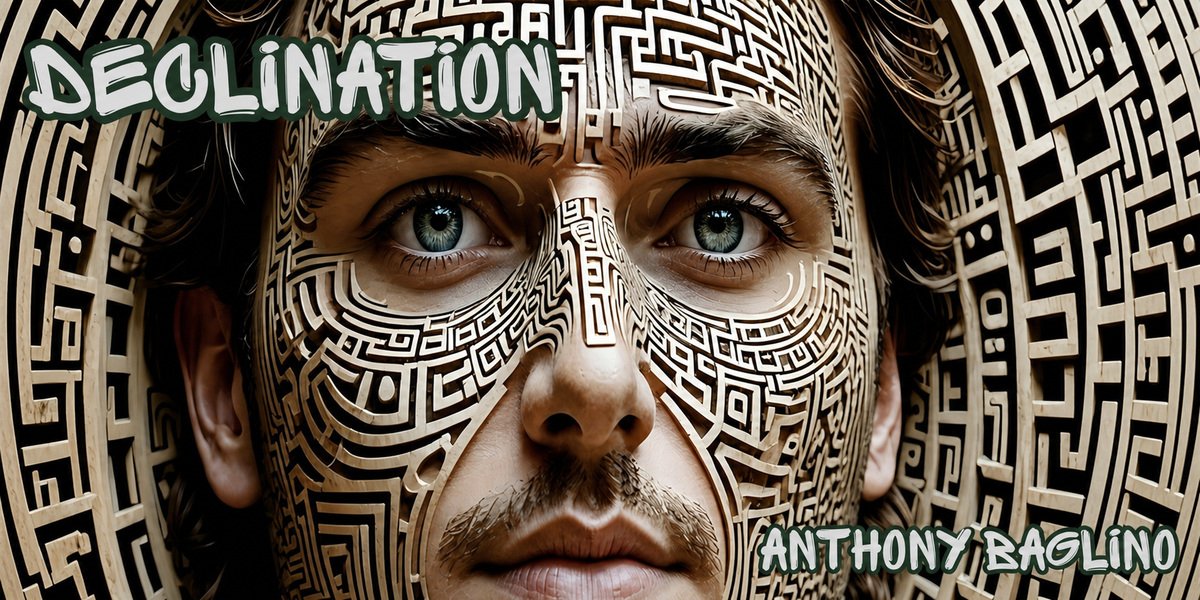
In today’s fast-paced entertainment landscape, modern art and music often suffer from a severe case of creative fragmentation. The era of the single-track streaming playlist has largely stripped sonic storytelling of its visual context, leaving audiences with isolated audio drops rather than cohesive artistic experiences. For the independent creator, standing out in this fractured ecosystem without compromising artistic depth is a monumental challenge. Yet, South Florida multi-instrumentalist, producer, and painter Anthony Baglino is actively dismantling these boundaries. Through Baglino Studios, he is pioneering a sweeping, cross-platform movement that seamlessly fuses modern jazz, surrealist fine art, and interactive digital animation.

Baglino’s latest creative endeavor pushes far beyond the traditional boundaries of releasing a record or hanging a painting. He is currently spearheading immersive, cross-platform ecosystems where different artistic mediums do not just coexist, they actively trigger one another. Utilizing a piano or a digital saxophone, Baglino performs live musical pieces that literally release digital animations of his own original surrealist art. It is a live-action form of synesthesia, where the strike of a key or the breath through a reed breathes kinetic life into static imagery.

Audiences can witness this dynamic synergy in action through his recent performance showcases:

● Instagram Reel Demonstration: https://www.instagram.com/reel/C-EeIelunDR/?stkn=MTd6b215ZzN6c2Y4aw==

● Video Feature on Facebook: https://www.facebook.com/share/v/1JPTu5CE57/?mibextid=wwXIfr

This deep integration extends directly into the virtual realm. Baglino is currently featured in an innovative digital art gallery that reimagines how audiences consume multimedia. On one side of the virtual gallery space, visitors can view his striking surrealist artwork. Directly opposite, the walls are hung not with more canvases, but with digital links to his music albums, displayed and framed as if they were fine art themselves. By bridging these platforms, Baglino encourages his audience to step inside an “audio-visual canvas,” consuming the sight and the sound simultaneously, exactly as the artist intended.

This holistic approach to creation was thoroughly explored in his recent six-track EP, Declination. A vibrant tapestry of modern jazz, Bossa Nova, Latin fusion, classical brass textures, and electronic design, the EP serves as the perfect sonic counterpart to his visual surrealism. The title itself, referring to the angular difference between magnetic north and true north, serves as a metaphor for the listener’s journey.

“There are those who, while using maps with compasses, were not aware of the issue of declination,” Baglino explains when discussing the philosophical core of the project. “Across the EP there is inner cartography to be explored. The visuals in the videos and audio allude to course corrections or confirmation, as do some dreams.”

Tracks like “Digital Mitosis” lean heavily into glitch aesthetics and experimental synthesis, while “Glass House” thrives on rich, acoustic Latin rhythms. To bridge these disparate worlds, Baglino borrows from the film industry’s playbook. Rather than writing a song and filming a video to match it, he frequently renders his visuals first, scoring the music to the moving image. “If the visuals call for a mood swing, I add the appropriate sounds,” he notes. “The language is akin to a type of hieroglyphic expression with a traditional three-part construction. As in film, the director arranges the props in a scene and directs the camera movement. The music parallels the scene for emotional impact.”

What truly separates Baglino from his contemporaries is his uncompromising, end-to-end control over every facet of Baglino Studios. He manages the composition, saxophone performances, sound engineering, video editing, oil painting, and final mastering entirely on his own. He views his varied disciplines merely as different instruments in a singular creative toolkit. “I have tools for each discipline,” he says. “Brushes have different sizes, photography has different lenses as well as digital darkrooms, and sound has different variations for the need, such as pianos, digital and traditional saxophones.”

While handling every aspect of production is a monumental task, Baglino believes the preservation of his original vision is worth the effort. Acknowledging that collaboration sometimes defers to “poetic license,” he poses a vital question for modern creators: “Should original intent defer to absolute perfection in aesthetics?” By maintaining absolute control, his cross-platform releases remain untainted translations of his initial dreams.

This dedication to his distinct vision is matched only by his dedication to his listeners. When rolling out Declination, Baglino released all six tracks sequentially as standalone singles before presenting the completed EP, prioritizing audience engagement over algorithmic monetization. “The value of the audience outweighs that of the monetary gain,” he asserts. Whether his work is serving as an ambient backdrop for focus or demanding the active engagement of deep listening, he aims to connect with the shared human experience, noting simply that “there is a little deja vu in everyone.”

Anthony Baglino’s pioneering approach proves that musical production and visual art do not have to exist in isolation. By merging rich live instrumentation with custom surrealist canvases and interactive digital galleries, he demonstrates the staggering power of a unified creative vision. As media distribution continues to evolve, Baglino’s cross-platform ecosystems offer a brilliant roadmap for sustainable, boundary-pushing artistic independence. Cultivating these distinct, multimedia spaces, where jazz, electronic textures, and fine art meet in real-time, will undoubtedly remain crucial for engaging audiences who seek depth far beyond the standard playlist.
Why the Authority Economy Is Replacing Visibility

By: Shawn Mars

Getting seen has never been easier. Getting believed has never been harder.

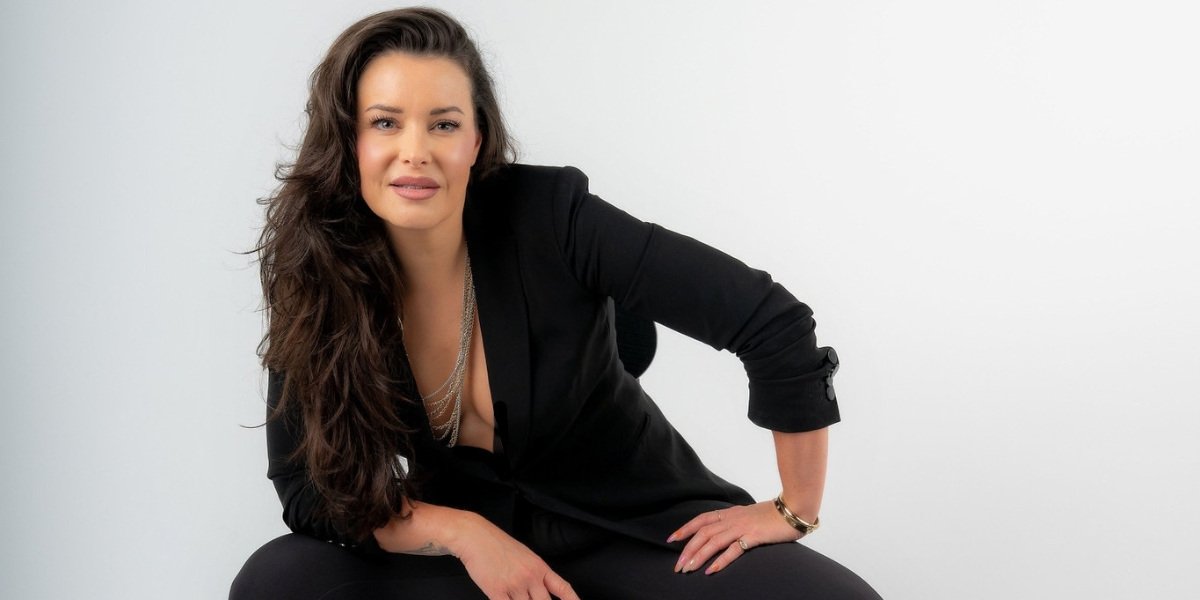
That trade is the central feature of what brand strategist Serah D’Laine calls the authority economy. For roughly fifteen years, digital strategy ran on a single assumption: more content produced more reach, more reach produced more opportunity. The assumption held while attention was scarce and production was expensive. Both conditions have now changed.

Generative AI removed most of the cost from making content that looks competent. Articles, posts, images, videos, and opinions can be produced in minutes by anyone. When supply expands that fast, the thing being supplied loses value. Visibility became abundant, and abundant things stop functioning as proof of anything.

“Visibility tells people that you exist. Authority gives them the reason to believe you,” D’Laine says.

What Changed in How People Evaluate Content

Audiences adapted faster than most brands did. Readers developed new filters, and those filters are not about quality of writing. Competent writing is now the baseline, not the signal.

The questions people ask instead are about the source. Who is saying this. What have they actually done. Is there evidence behind the position, or is this a well-phrased summary of what everyone already thinks. A polished article from an unknown author now carries less weight than a rough one from someone with a documented track record.

This is the practical mechanics of the authority economy. Credibility moved upstream, away from the artifact and toward the person behind it.

D’Laine works on that problem through her authority and positioning consulting, and she describes authority as something structured rather than something earned by accident. It is built through message clarity, demonstrated expertise, strategic repetition, a recognizable point of view, and real-world proof that holds up when someone checks.

The Five Dimensions of Authority

In her work with founders and executives, D’Laine breaks authority into five components. Each can be assessed, and each tends to fail in a different way.

Narrative authority asks whether a person has a coherent story and a position they actually hold. Most accomplished people have the story. Fewer have articulated it clearly enough that someone else could repeat it.

Expert authority asks whether they can demonstrate genuine experience and pattern recognition. The distinction here matters. Reciting industry knowledge is not the same as showing judgment developed over many cases.

Reputational authority asks what credible work, clients, media, or institutions they are associated with. This is the dimension that resists manufacture, which is why it carries weight.

Search authority asks whether their digital footprint consistently reinforces who they are and what they are known for. A bio that contradicts a speaking profile that contradicts a website produces confusion rather than recognition.

Human authority asks whether a real person with a distinct perspective is recognizable behind the content. In an environment of synthetic output, this one has quietly become decisive.

Why the Authority Economy Favors Specificity

D’Laine finds that most founders fail these tests in the same direction. They describe themselves broadly enough to seem relevant to everyone, which leaves them memorable to no one.

Her correction runs the other way. Narrow the territory. Decide which subject the person intends to own and which adjacent subjects they will leave alone. Repeat the core position often enough that people can predict what the person would say about a new development in their field.

Predictability sounds like a weakness. In the authority economy it functions as an asset. Being predictable about your area of expertise is what lets other people reference you, recommend you, and bring you into conversations you were not present for.

How AI Search Changes the Calculation

A specific section of this change deserves attention, because it operates differently from traditional search.

AI systems increasingly synthesize information across multiple public sources rather than returning a list of links for the user to sort through. Someone researching a consultant, a speaker, or a vendor may now receive a paragraph summarizing who that person appears to be, drawn from whatever consistent signals exist.

D’Laine is deliberate about the limits of what anyone can claim here. No strategy controls what an AI system outputs, and she treats promises about guaranteed search outcomes as a reason for skepticism rather than a selling point.

What she argues is narrower. When a person’s name, their company, their areas of expertise, and their body of ideas appear together across credible independent sources, that repetition builds a consistent association. Both human researchers and machine systems find it easier to describe someone whose public record says the same thing in multiple places.

Inconsistency produces the opposite outcome. When a person’s public information describes four different professionals, there is nothing coherent to synthesize.

STAGE IIX, the agency D’Laine founded, applies these principles to founders and expert-led companies. The firm works across messaging, positioning, visual identity, thought leadership, and editorial presence, treating them as one system rather than separate engagements.

The stated objective is not celebrity or vanity metrics. D’Laine describes it as strategic recognizability, meaning that the right people can identify what someone is known for without needing it explained.

Proof Is the Scarce Resource Now

The deeper logic of the authority economy comes down to what remains expensive to fake.

Content production is cheap. Design is cheap. Confident language is cheap. What stays expensive is a professional history, documented client work, media recognition earned over time, and a public record that has stayed consistent across years rather than quarters.

D’Laine’s background informs how she reads this. She spent more than a decade working professionally in Hollywood as an actress and producer before moving into consulting, which gave her a working education in how audiences decide whether a performance is believable. She later trained in communication, psychology, and executive coaching, which addressed the other half of the problem: why capable people often describe their own expertise badly.

That combination shapes her view that authority is perception built on substance, and that neither half works alone. Substance without communication stays invisible. Communication without substance gets detected, and the detection now happens quickly.

Her published thinking and client work appear through her professional profile on LinkedIn and the visual side of her positioning work on Instagram.

What the Next Phase of Brand Advantage Looks Like

The practical conclusion runs against much of what agencies have recommended for the last decade.

Advantage in the authority economy will not belong to whoever publishes the most. Publishing volume is now available to anyone with a subscription. It will belong to people and companies whose ideas are coherent enough to be understood, distinct enough to be attributed, and credible enough to withstand scrutiny.

D’Laine believes the defining advantage will be congruence.

What a founder says should match what their company communicates. What the website promises should align with what a prospective client finds in interviews, articles, social profiles, and search results. The visual presence should support the level of expertise being claimed. The proof should reinforce the positioning. And the experience someone has after making contact should feel consistent with the reputation that brought them there.

When those elements contradict one another, trust weakens. A sophisticated company paired with an indistinct founder presence creates a gap. A commanding public image unsupported by credible proof creates another. Strong thought leadership attached to a brand experience that feels generic creates one more.

Authority strengthens when those gaps disappear.

This is why D’Laine sees the next phase of branding as less about adding more touchpoints and more about bringing existing ones into alignment. The objective is not for every platform to look identical or repeat the same language. It is for each encounter to reinforce the same underlying conclusion about who the person is, what they stand for, the caliber of their work, and why their perspective deserves attention.

In the authority economy, consistency is no longer simply a branding principle. It is part of the evidence. The advantage belongs to the people and companies whose reputation, positioning, presence, and proof tell the same story wherever someone decides to look.

Artificial Gets Strong Early Buzz After NYFF Premiere

Luca Guadagnino’s Artificial received strong early reactions following its New York Film Festival premiere, with Andrew Garfield, Yura Borisov and Monica Barbaro among the principal cast. The drama explores people connected to OpenAI and is scheduled for theatrical release on December 25, 2026.

Key Takeaways

  • Artificial premiered at the New York Film Festival on October 5
  • Luca Guadagnino directed the film, with Andrew Garfield playing Sam Altman
  • Yura Borisov portrays former OpenAI chief scientist Ilya Sutskever
  • Monica Barbaro plays former OpenAI CTO Mira Murati
  • Neon has scheduled the film for theatrical release on December 25, 2026

Artificial Receives Strong Early Reactions After NYFF Premiere

The New York Film Festival premiere on October 5 gave audiences an early look at Artificial, Luca Guadagnino’s drama centered on people connected to OpenAI. Early reactions have focused on the film’s performances and its dramatization of prominent figures associated with the artificial intelligence company.

Andrew Garfield leads the film as Sam Altman, while Yura Borisov plays Ilya Sutskever and Monica Barbaro portrays Mira Murati. Their roles place recognizable technology figures at the center of the film’s story.

The festival screening represents the film’s first major public presentation before its planned theatrical release. Similar early premiere reactions have provided an initial look at how other major films are being received before wider theatrical audiences see them.

For Artificial, the early response has focused on both its cast and the way it transforms a recent technology story into a character-driven drama. Rather than treating artificial intelligence only as a technical subject, the film examines the people involved in OpenAI’s development.

Luca Guadagnino Directs the OpenAI Drama

Guadagnino directs Artificial from a screenplay by Simon Rich. The film brings the director into a story centered on OpenAI and several of the people closely associated with the organization.

The New York Film Festival presentation gives audiences an early look at Guadagnino’s approach to real-world technology figures. The production uses scripted portrayals rather than documentary interviews, placing the story within a dramatic feature-film format.

Garfield portrays Altman, while Borisov plays Sutskever and Barbaro portrays Murati. Together, the three performances establish the central character relationships around which the film is structured.

The approach allows the film to examine technology through the actions and relationships of identifiable people rather than through a fictional company or purely speculative setting.

Andrew Garfield Leads the Film’s Principal Cast

Garfield portrays Sam Altman in Artificial, placing the actor at the center of the film’s dramatization of events involving OpenAI. He appears alongside Borisov as Sutskever and Barbaro as Murati.

Borisov’s role represents another major figure in OpenAI’s history, while Barbaro adds a third recognizable person connected to the organization. Their characters form the film’s principal ensemble.

The casting gives Artificial a character-driven structure built around people whose roles in the artificial intelligence industry are already familiar outside the film.

The New York Film Festival premiere also moved Garfield, Borisov and the wider cast into the film’s public release cycle. Their performances have been among the elements drawing attention following the screening.

Artificial Examines the People Behind OpenAI

The film centers on people associated with OpenAI rather than artificial intelligence technology alone. Its story uses dramatized versions of Altman, Sutskever and Murati to explore individuals involved in the organization’s development.

Garfield plays Altman, Borisov portrays Sutskever and Barbaro appears as Murati. Their characters provide the main human focus for a film rooted in real-world technology events.

Because Artificial dramatizes living and recently prominent figures, it also operates in an area familiar to films based on contemporary public figures. Questions surrounding biopics of living people often include how filmmakers balance storytelling, recognizable events and public scrutiny of real-life portrayals.

Artificial is presented as a scripted drama rather than a documentary. The actors therefore portray versions of real people within a feature-film narrative instead of presenting firsthand testimony or documentary interviews.

That distinction shapes the film’s treatment of OpenAI. Its focus remains on characters and dramatic storytelling while drawing its central figures from a real technology organization.

Neon Sets December Theatrical Release for Artificial

Neon has scheduled Artificial for theatrical release on December 25, 2026. The date places its wider release several months after the New York Film Festival premiere.

The festival screening serves as the first major public presentation, while the December release will bring Guadagnino’s film to a broader theatrical audience.

Garfield’s portrayal of Altman remains the central casting element, with Borisov and Barbaro playing Sutskever and Murati. Guadagnino’s direction and the film’s focus on OpenAI provide the primary creative and narrative framework ahead of release.

The combination of its festival debut, principal cast and December theatrical schedule establishes the film’s current release path as it moves from early screenings toward its wider opening.

Frequently Asked Questions

What Is the Artificial Movie About?

Artificial is a drama centered on people connected to OpenAI. The film features dramatized portrayals of Sam Altman, Ilya Sutskever and Mira Murati.

Who Stars in Artificial?

Andrew Garfield stars as Sam Altman, while Yura Borisov plays Ilya Sutskever and Monica Barbaro portrays Mira Murati. The three actors form the film’s principal cast.

Who Directed Artificial?

Luca Guadagnino directed Artificial. Simon Rich wrote the screenplay.

When Will Artificial Be Released?

Artificial is scheduled for theatrical release on December 25, 2026. The film premiered at the New York Film Festival on October 5.

Where Did Artificial Premiere?

Artificial premiered at the New York Film Festival on October 5, 2026, ahead of its planned theatrical release.