Entertainment Post

Why Is Jay Chou’s Name Inside an AI Chip? The Story Goes Back Decades

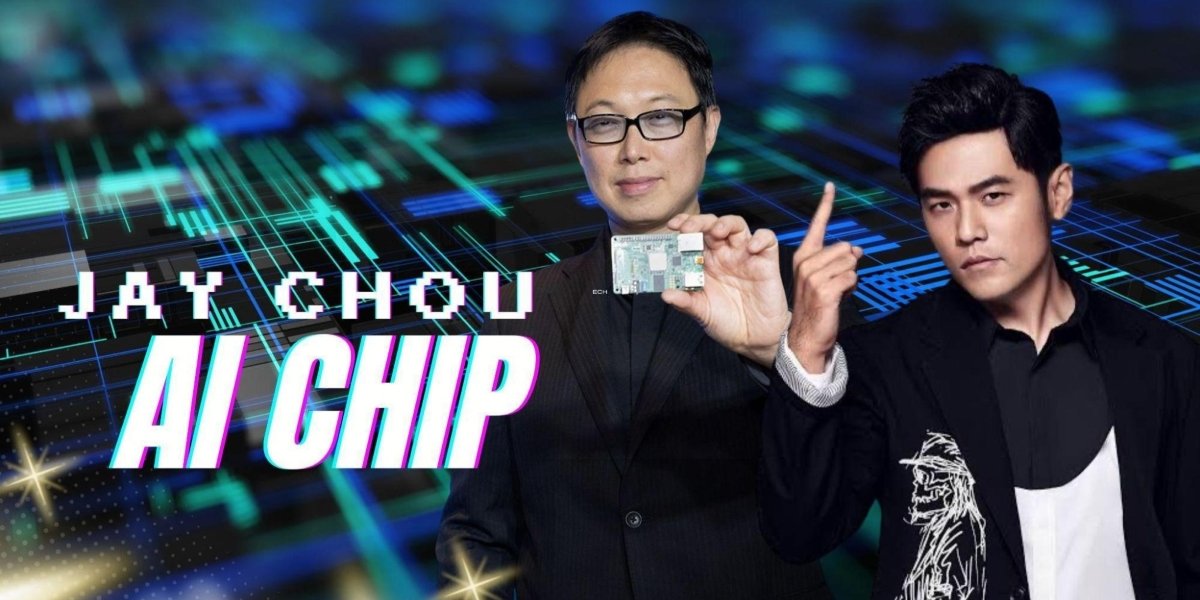
One of Asia’s biggest music stars has spent more than two decades putting his name on albums, films and sold-out concerts. Now Jay Chou’s name has appeared somewhere far more unexpected: inside an advanced artificial intelligence chip. The story of how it got there began years ago with a seriously ill child and a message that was never forgotten.

Jay Chou has one of the most recognizable names in Asian entertainment. For more than two decades, the Taiwanese superstar has filled arenas, topped music charts and built an influence extending across music, film, fashion and art. His 2022 album Greatest Works of Art topped the International Federation of the Phonographic Industry’s Global Album Sales Chart, making him the first Mandopop artist to achieve the distinction.

Now, Chou’s name has entered an industry few fans would ever associate with him: artificial intelligence. An advanced Neural Processing Unit being developed by AI semiconductor company Kneron carries the internal codename “Jay Chou.” It sounds like the beginning of a celebrity endorsement, technology collaboration or unusual branding campaign, but it is none of those things. The real reason one of Asia’s biggest stars ended up with his name inside an AI chip is considerably more personal.

The story begins years before Kneron existed, when its future founder and CEO, Albert Liu, was a student volunteering in hospice care. During that time, Liu spent time with a seriously ill child approaching the end of life. The child was a devoted Jay Chou fan and had one wish: to hear from his favorite singer.

Chou was already one of the biggest entertainers in the Mandarin-speaking world, and Liu had no personal connection to him. There was little reason to believe a request from an unknown student would ever reach a superstar surrounded by managers, concerts, appearances and millions of fans. Still, Liu decided to try. He reached out, explained the child’s situation and asked whether Chou might be willing to send a few words of encouragement.

Jay Chou responded.

According to Liu, Chou personally recorded a message for the child. For an international superstar, the gesture may have required only a few moments, but for the child who received it, those moments carried a very different weight. Liu never forgot what he witnessed. What stayed with him was not Chou’s fame or celebrity, but the fact that someone with extraordinary influence had chosen to use it for one person who needed it.

Years passed. Liu earned his doctorate, entered the semiconductor industry and eventually founded Kneron, an AI semiconductor company focused on Neural Processing Units, or NPUs. As the company began developing increasingly advanced processors, that memory from his hospice days eventually resurfaced in an unexpected way. One of Kneron’s advanced NPU projects was given a new internal codename: “Jay Chou.”

From Beethoven and Mozart to Jay Chou

The choice becomes even more unusual when viewed against Kneron’s longstanding engineering tradition. The company has historically named chip projects after legendary composers, including Bach, Mozart, Beethoven and Chopin. The comparison is surprisingly fitting because designing an advanced processor requires architecture, memory, software, programmability, performance and energy efficiency to work together. Much like a musical composition, no single element creates the final result; everything has to operate in harmony.

Then Kneron broke its own tradition. Instead of choosing another classical composer, the company named one of its advanced projects after a living Asian artist. The choice honored a moment Liu had carried with him for years, but it also reflected an unexpected parallel between Jay Chou’s career and the technology Kneron had spent years building.

When Chou emerged in 2000, he did not become influential by simply following an established Western pop formula. He blended R&B, hip hop and classical influences with traditional Chinese musical elements to create a sound that was distinctly his own. That sound helped reshape Mandopop and ultimately crossed borders, industries and generations. More than two decades later, his influence remains powerful across Asia and beyond.

In a very different industry, Kneron has been pursuing its own version of that journey. Founded in 2015, the company began developing dedicated NPU technology at a time when much of the semiconductor industry’s attention remained focused elsewhere. Its central belief was that artificial intelligence would eventually have to move beyond massive centralized data centers and into the physical devices people use every day.

Today, that prediction is becoming one of the biggest shifts taking place in artificial intelligence.

AI Is Moving Beyond the Cloud

For the past several years, the AI race has largely been defined by scale: larger models, more GPUs and increasingly massive data centers. But as artificial intelligence becomes part of computers, vehicles, cameras, robots and everyday machines, another race is emerging. The question is no longer only who can build the most powerful AI model, but who can bring intelligence closer to where people actually use it.

That is where the Neural Processing Unit becomes important. NPUs are processors specifically designed to handle neural network computation. Rather than requiring every intelligent interaction to travel to a distant cloud server and back, NPUs can allow more AI processing to happen directly on the device. That can reduce latency, improve privacy, lower dependence on cloud infrastructure and potentially reduce the energy required for certain AI workloads.

Consumers are already beginning to see this transition. NPUs are increasingly appearing across computers, smartphones and other intelligent devices as some of the world’s largest technology companies race to bring more AI processing directly into their products. What the technology industry now calls “on-device AI” is the future Kneron has spent nearly a decade building toward.

The larger implication could be significant. Today, most people still think of artificial intelligence as something they deliberately access by opening an app, visiting a website or asking an AI assistant a question. In the next phase of computing, AI may become far less visible. Intelligence could simply exist inside the computer, vehicle, camera, robot or machine a person is already using, operating in the background without requiring people to think about where the AI actually lives.

From the Music Stage to the AI Stage

There is something fitting about the connection between Jay Chou and the technology now carrying his name. Chou built something distinctly his own in Asia and took it to the world. Kneron spent nearly a decade developing NPU technology around the belief that artificial intelligence would eventually move beyond centralized computing and into the devices surrounding people. Now, as on-device AI becomes an increasingly important part of the global technology race, those two very different stories have intersected.

Yet beneath the technology, patents and rapidly evolving AI industry, the origin of the name remains remarkably human. Before there was an AI company, there was a student volunteering in hospice care. Before there was an NPU called “Jay Chou,” there was a seriously ill child who wanted to hear from his favorite singer. And before anyone could have imagined that the moment would one day be remembered inside a semiconductor project, one of Asia’s biggest stars took the time to answer.


HIVESONG Are Bringing Attitude Back to Modern Rock With ‘Bad Believer’

There’s something refreshing about a rock band that isn’t interested in playing it safe. Whether it’s the music, the visuals, or the subjects they choose to write about, HIVESONG have been building a reputation around doing things their own way. Their latest single, “Bad Believer,” is another example of that attitude, bringing a confrontational message into the duo’s growing catalogue of modern rock releases.

Hailing from Chattanooga, Tennessee, HIVESONG is made up of Kuyper and Austen, two musicians with a shared love for the louder, more theatrical side of rock and roll. Their sound brings together elements of hard rock and alternative rock, with an appreciation for the big riffs, memorable hooks and larger-than-life personalities that have always made the genre exciting.

Since launching in 2025, the duo have wasted little time establishing their presence. Songs such as “The Funny Thing Is…” and “Electric Fever” have become particularly popular with listeners, accumulating over 73,000 and 50,000 Spotify streams, respectively. Meanwhile, “Love is Pain” and “Don’t Hide It” have both passed 21,000 streams, contributing to a growing audience of monthly listeners.

It’s an encouraging start for an independent act, especially one determined to maintain such a distinctive identity.

What makes HIVESONG interesting is that their music isn’t exclusively concerned with delivering a big rock chorus. There’s often a wider conversation taking place beneath the surface, whether that’s the impact of technology, the complications of human relationships or the ways people treat one another.

“Bad Believer” takes that last idea and pushes it further. The single explores what happens when people become so convinced of their own moral superiority that they begin using their beliefs to judge and control others. Rather than questioning faith itself, HIVESONG are interested in the hypocrisy that can emerge when compassion is replaced by condemnation.

It’s a subject the duo approach with plenty of attitude. The song carries a deliberately confrontational tone, using sarcasm and defiance to challenge those who believe their personal convictions should dictate somebody else’s life.

There’s also an interesting contrast between the seriousness of the subject and the band’s wider personality. HIVESONG have always embraced the theatrical side of rock, with striking imagery and a self-described Church of Rock & Roll identity. Yet beneath that presentation is a band willing to engage with subjects that extend well beyond the usual rock clichés.

That combination gives their growing catalogue an identity of its own. “Electric Fever” looks at modern society’s complicated relationship with technology, while “Bad Believer” turns its attention towards judgment and personal freedom. The subjects may differ, but both reflect the duo’s interest in challenging familiar behaviours and encouraging listeners to question what they see around them.

As HIVESONG continue developing their sound and reaching new listeners, their commitment to making rock music with personality remains central to the project.

With “Bad Believer,” they’re showing that a memorable rock song can do more than entertain. Sometimes, it can also start a conversation.

https://open.spotify.com/track/07qKaC9PTVpOpuGMHRqn7I?si=00c52ddd97634694

Music Cult Pushes Genre Boundaries With Upcoming Album ‘Psychedelic Shift’

What happens when an artist stops worrying about fitting into a particular genre? For Florida-based Music Cult, the answer is an ever-expanding catalog of songs inspired by just about everywhere. From progressive rock and pop to hip hop, funk, and darker alternative influences, the project has developed an identity rooted in experimentation, with its upcoming second album, Psychedelic Shift, poised to take that approach even further.

Led by producer Lee Johnson, Music Cult launched in 2024 as an outlet for creative freedom. Rather than building everything around one recognizable formula, Johnson wanted to explore the different styles, production techniques, and musical ideas that had interested him throughout his career.

That philosophy has already resulted in an impressive amount of material.

In less than two years, Johnson has written and produced more than 80 tracks, working alongside a growing group of collaborators to bring those ideas to life. Vocalist Leanaxxah joined the project in 2025, while bassist Rick Hollander has also contributed to its developing sound.

The result is a catalog that can change direction considerably between releases.

Songs including “A Day in the Sun,” “Resistance,” “Deadnames,” “Neon Skin,” and “Bag of Tricks” demonstrate the variety within Music Cult’s output, while “Slow-Burning Fire” and “Sweet Secret Sin” add further depth to the collection. More recently, “The Shoals” has continued that momentum, offering listeners another introduction to the project’s ever-evolving musical world.

The response has been encouraging. “Resistance,” “Deadnames,” and “A Day in the Sun” have each attracted more than 13,000 Spotify streams, while “Bag of Tricks” has passed 11,000. These releases have helped establish an audience for a project that deliberately avoids being predictable.

Now, that same willingness to experiment sits at the center of Psychedelic Shift.

Music Cult’s second album has been developed around the idea of transformation, bringing together different moods, textures and influences without forcing them into a conventional sound. With songs such as “Smoke & Whiskey” adding to the anticipation surrounding the project, listeners are gradually getting a clearer picture of what’s to come.

The track joins the growing selection of music associated with this next chapter, while “The Black and White” offers another insight into the album’s wider themes. Exploring the grey areas between apparent opposites, the song reflects Music Cult’s interest in contrast, whether that’s light and darkness, clarity and confusion, or control and chaos.

Rather than making every track follow the same structure, Johnson has approached the record as an opportunity to explore what happens when different musical ideas are allowed to coexist.

There’s a sense that Psychedelic Shift isn’t simply about experimenting for the sake of being different. Instead, it’s about allowing each idea to develop into whatever feels most appropriate, whether that means something atmospheric, energetic, nostalgic, or unexpected.

With a growing catalog already behind them, Music Cult is approaching their next album with plenty of creative possibilities.

And if their releases so far are anything to go by, Psychedelic Shift won’t be an album interested in staying within the lines.

Scarlett Johansson Joins Peacock’s New Series Assassins

Scarlett Johansson will executive produce Assassins, a new Peacock competition series built around secret targets, deception and strategic elimination. The unscripted project comes from B17 Entertainment, a Sony Pictures Television company, with Brien Meagher and Rhett Bachner also serving as executive producers.

Key Takeaways

  • Scarlett Johansson will executive produce Peacock’s new competition series Assassins
  • Contestants will receive secret targets while attempting to avoid elimination themselves
  • Brien Meagher and Rhett Bachner of B17 Entertainment are also executive producers
  • The project marks Johansson’s first reality television producing credit
  • Peacock has greenlit the series but has not announced a premiere date or contestant lineup

Peacock Greenlights the Assassins Competition Series

Peacock has ordered Assassins, an unscripted competition inspired by a social game in which participants attempt to eliminate assigned targets while protecting their own positions. The series will combine strategic decisions, concealed assignments and shifting alliances.

Each contestant will receive a target upon entering the competition, with the objective of eliminating that person before the season ends. However, every player is also someone else’s target, creating a format in which participants must balance pursuing opponents with avoiding elimination.

The series expands Peacock’s unscripted lineup, which includes established competition programs such as The Traitors and Love Island USA.

Peacock is also developing scripted projects, including the Fast & Furious television series, which has Vin Diesel attached as an executive producer. Assassins represents a different addition to the platform, introducing an original competition format rather than extending an existing film franchise.

The greenlight confirms the project’s development for Peacock, although its release schedule and full production details have not been disclosed.

Scarlett Johansson Joins the Executive Production Team

Johansson will serve as an executive producer on Assassins, marking her first producing credit in reality television. Her involvement expands her work behind the camera beyond scripted film and television projects.

She has previously held executive production roles on projects including Fly Me to the Moon and Eleanor the Great. Her production company, These Pictures, is also associated with television adaptations of Just Cause and The Nanny Diaries.

Johansson remains active in feature films, with an acting role attached to Ari Aster’s upcoming Scapegoat film for A24. Her announced involvement in Assassins, however, is specifically as an executive producer.

Executive producers may oversee creative development, production planning and other aspects of a television project. Their responsibilities vary, and the announcement has not specified Johansson’s individual duties.

Her production credit also does not establish that she will host or compete in the series. The confirmed role places her alongside Meagher and Bachner on the show’s executive production team.

Social Gameplay Defines the Competition Format

Assassins draws inspiration from a real-world game in which participants are assigned targets and must avoid being eliminated by other players.

The television adaptation introduces a competition based on secrecy, strategy and shifting alliances. Contestants must determine how to pursue their assignments while limiting the information other participants have about their intentions.

Unlike competitions primarily based on physical challenges or individual performances, the announced premise places social interactions and tactical decisions at the center of the game.

The format creates uncertainty because players are simultaneously pursuing targets and being pursued. Forming alliances may help contestants gather information, although those relationships could change as the competition progresses.

Peacock has outlined the premise but has not disclosed the specific elimination procedures, number of contestants or prize structure. These details will determine how the game operates across the season.

B17 Entertainment Producers Join the Project

Brien Meagher and Rhett Bachner will executive produce Assassins alongside Johansson. Both are founders of B17 Entertainment, which operates as part of Sony Pictures Television.

Established in 2013, B17 develops and produces programming across competition, comedy, food and other unscripted television genres.

The company’s previous productions include The Final Straw for ABC, Blue Ribbon Baking Championship for Netflix and History of Swear Words, featuring Nicolas Cage.

Meagher and Bachner’s experience with unscripted programming provides an established production background for the new competition. Their credits span different formats, from game-based entertainment to documentary-style television.

B17 is the production company behind Assassins, while Peacock will serve as the streaming platform. The announcement identifies Johansson, Meagher and Bachner as executive producers without detailing their respective responsibilities.

Premiere Date and Casting Details Remain Unconfirmed

Peacock has not announced a premiere date, host or contestant lineup for Assassins.

The number of episodes, filming location and competition schedule also remain undisclosed. Although the premise establishes that each player must eliminate an assigned target, the precise rules governing those eliminations have not been revealed.

Additional announcements are expected to clarify the show’s casting, release schedule and competition structure. For now, Peacock’s series order confirms its development, the central gameplay premise and the executive production team.

Frequently asked questions

What is Peacock’s Assassins series about?

Assassins is an unscripted competition in which contestants receive secret targets to eliminate while avoiding elimination themselves. The game involves strategy, deception and shifting alliances.

Is Scarlett Johansson producing Assassins?

Yes. Johansson is an executive producer of Assassins, marking her first reality television producing credit. She has not been announced as the show’s host or a contestant.

Who are the executive producers of Assassins?

Scarlett Johansson, Brien Meagher and Rhett Bachner are the announced executive producers. Meagher and Bachner founded B17 Entertainment, a Sony Pictures Television company.

Which streaming platform will carry Assassins?

Peacock has greenlit Assassins as part of its unscripted television lineup.

Has Peacock announced a premiere date for Assassins?

No premiere date has been announced. Peacock has also not confirmed the show’s host, contestant lineup or episode count.

The Year the Number Jumps, Questions to Ask Before the Big Check Arrives

By Dr. Tamara Patzer

In brief: In entertainment, income can leap in one year and fall back the next. A New Orleans tax attorney lays out the questions to ask before a big payday, using the IRS thresholds that change with income, the national top 1% line, and state estimates for California and Louisiana.

Entertainment careers are often described by their peaks: the breakout role, the hit record, the contract that changes everything. The planning problem hides in the peak. Income that doubles in one year does not come with a matching increase in the time or the advice available to handle it. Todd M. Villarrubia, a New Orleans attorney who focuses on tax and estate planning, wrote Entrepreneurial B.E.A.S.T. Mode™ for people whose earnings have outrun their structure. His central warning applies directly to a big year: the work has to be done before the money arrives.

What Actually Changes In A Big Year?

Several thresholds, and mostly without notice. The IRS says the 3.8 percent Net Investment Income Tax applies when modified adjusted gross income exceeds $200,000 for a single filer, $250,000 for joint filers, and $125,000 for married people filing separately.² A person with a steady income may never think about those lines. A person whose earnings spike will cross them in a single quarter.

The Tax Foundation’s analysis of IRS data for tax year 2023 found that a filer needed about $676,000 of adjusted gross income to reach the top 1% nationally. By state, the picture varies: SmartAsset’s 2026 estimates, which project IRS data forward and count filers and not households, put the California threshold at $987,325 and Louisiana’s at $593,101. A performer who lives in one state and works in another has a more complicated picture than either number suggests.

Why Does The Planning Have To Come First?

Because the options narrow after the income is earned. A structure set up in January can shape how a December payment is held and taxed. A structure set up in January of the following year cannot. The book puts the idea in a line about estate planning: “Estate planning is more than just creating documents; it’s about strategically structuring ownership before opportunities arise.”

That sentence is about estates, but the reasoning is general. An offer on the table is not the moment to start asking who should own what. By then the advisers are working against a deadline, and the buyer, the studio or the label is waiting.

What Are The Questions To Settle First?

Six cover the ground.

  • Who is the contracting party: the individual, or a company set up for the work?
  • How is that company classified for tax, and does the classification still fit?
  • Which of the expected payments are one-time and which will recur?
  • What thresholds might this year’s total cross, federally and in each state where work is done?
  • Who is on the team, and have they spoken to one another?
  • What is the money for: spending, saving, investing, giving, or all four?

The last question is often the hardest and the most useful. Wealth without a purpose is easy to spend and hard to protect.

What Does The Book Say About Engineering The Outcome?

Villarrubia describes a shift from reacting to events to shaping them. In his words, “You’re no longer reacting to risk; instead, you’re engineering your legacy.” For a performer, writer, or producer with a good year, that means choosing a structure and a team on purpose, and not letting the contract decide them by default.

He also warns about the cost of leaving things to chance. “Here’s the truth few want to admit: without a clear succession or exit plan, that wealth can disappear faster than it was built.” Entertainment is a field where income can end as abruptly as it began. A plan that assumes the peak will last is a plan that has not been tested.

How Much Is Enough?

There is no number. Schwab’s 2025 Modern Wealth Survey, which asked 2,000 adults, found that respondents put the cost of being wealthy at an average of $2.3 million and the cost of being financially comfortable at $839,000.⁴ The figures are opinions and not benchmarks, and they remind the reader that people define enough differently. A performer in a big year should write down their own definition, since it will shape every other decision.

Where Do Big-Year Decisions Usually Go Wrong?

Rarely in the contract itself. They go wrong in the weeks after. A large payment sits in a personal account. A new expense becomes permanent. A relative or friend is promised help without terms. A tax estimate is made on last year’s income. Each is easy to prevent with a short conversation held beforehand.

Another trap is concentration. A career that pays well in one field and one place invites the assumption that it will continue. The book’s line is worth keeping in view: “Concentration without protection is not strength; it’s exposure.” A big year is the best time to ask what the person would do if next year were quiet.

What Should The Team Do Together?

Meet before the money moves. The attorney, the tax professional, the financial adviser, and the business manager, if there is one, should hear the same facts at the same time. The book describes the cost of advisers who work in isolation: “The estate attorney drafts documents but doesn’t coordinate with the tax strategy.” The remedy is not a better document. It is a meeting.

The agenda can be short: the expected income and its timing, the entity that will receive it, the tax picture by state, the plan for the money and the plan for the family. Ask each adviser what they need from the others.

Common Questions

Is a big year always a reason to restructure?

No. Sometimes the right decision is to change nothing. The point is to decide on purpose, with advice.

Do I need to know the national income line?

Not as a target. It is a reference point that shows how unusual a very high income year is.

What if the money has already arrived?

Then the useful step is to bring in advisers now. Some choices remain, even late in the year.

Sources

  1. Tax Foundation, Who Pays Federal Income Taxes? Tax Year 2023
  2. Internal Revenue Service, Topic no. 559, Net Investment Income Tax
  3. SmartAsset, Income Needed to Be in the Top 1% in Every State (2026)
  4. Charles Schwab, 2025 Modern Wealth Survey (Business Wire)

About the author. Dr. Tamara Patzer is a publisher and former newspaper editor. She was on the staff of The Charlotte Sun when it was named a 2005 Pulitzer Prize finalist for its Hurricane Charley coverage.

About the source. Todd M. Villarrubia is an attorney with an LL.M. in Taxation and a Juris Doctorate. He is an Accredited Estate Planner, a Board Certified Expert in Estate Planning and Administration, and a Fiduciary Investment Advisor Representative. He is the author of Entrepreneurial B.E.A.S.T. Mode™.

Wealth Planning Law Group
101 W. Robert E. Lee Blvd., Ste 404, New Orleans, LA 70124
Phone: 504-982-8207 | Email: todd@lawealthplan.com
Website: Wealth Planning Law Group

Disclaimer: Attorney advertising. Sponsored feature written on behalf of Todd M. Villarrubia. This article is general information, not legal or tax advice, and reading it does not create an attorney-client relationship. Results vary.