
Hollywood, hold onto your director’s chairs! Artificial intelligence (AI) is poised to revolutionize filmmaking, and it’s not just about robots yelling “cut” or sentient special effects software running amok. We’re talking about a complete transformation of the industry, from scriptwriting to special effects, and everything in between. So, grab some popcorn (or your preferred movie-watching snack), and let’s explore how AI might change the way movies are made in the future.
Lights, Camera, Action! AI Directing the Show
Imagine a world where AI can analyze mountains of script data, identify patterns in successful films, and even generate story ideas. A recent study by MIT highlights the potential of AI in scriptwriting. Think of it as a superpowered brainstorming partner, suggesting plot twists, character arcs, and even dialogue options. This doesn’t mean robots are taking over the screenwriter’s job entirely.
Human creativity will always be essential, but AI can be a valuable tool for streamlining the writing process and generating fresh ideas. Stuck on that second act slump? AI might be able to suggest unexpected turns of events or character motivations that could breathe new life into your story.
But AI’s impact goes beyond the script. Imagine a world where AI can analyze a director’s previous work, understand their style, and even suggest camera angles, lighting setups, and editing techniques. This could be a game-changer for aspiring filmmakers, providing them with the tools and knowledge to create professional-looking films with limited resources.
Think about it: a young filmmaker with a shoestring budget could use AI to create storyboards, suggest filming locations, and even help them develop a shot list that maximizes their limited equipment. For seasoned directors, AI could be a valuable sounding board, helping them refine their vision and push creative boundaries. Imagine a director like Christopher Nolan using AI to explore different narrative structures or experiment with innovative camera techniques.
Special Effects Spectacle: AI Painting the Big Picture
Of course, when we talk about AI in filmmaking, the most obvious application is in special effects. We’ve already seen glimpses of this future, with films like Avatar and The Jungle Book utilizing groundbreaking CGI technology. But AI is about to take things to a whole new level. Imagine creating photorealistic characters and creatures entirely within a computer, with the ability to learn and adapt to their surroundings in real-time. Think about it: no more green screens or clunky motion-capture suits.
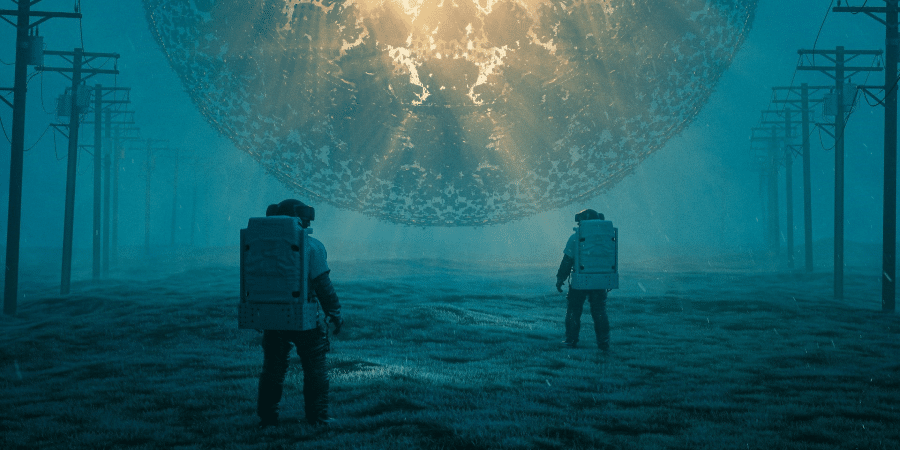
Actors could interact with entirely digital environments, blurring the line between reality and fantasy like never before. Imagine a sweeping historical epic where entire cities are brought to life through AI, or a sci-fi thriller where alien landscapes are rendered with unparalleled detail.
The Final Cut: Ethical Considerations and the Human Touch
Now, before we get carried away with visions of robot directors and AI-powered monsters, let’s address the elephant in the room (or maybe the robot on the set). The rise of AI in filmmaking raises some ethical concerns. Will AI-generated films lack the heart and soul of human-made stories? Will the reliance on AI lead to a homogenization of filmmaking styles?
A recent article by The Director’s Guild of America emphasizes the importance of human creativity in the face of technological advancements. AI is a powerful tool, but it should never replace the human touch. The best films will continue to be those that combine cutting-edge technology with a compelling story and talented actors to bring it to life. Think about it: AI can generate a visually stunning action sequence, but it can’t capture the raw emotion on an actor’s face or the subtle nuances of human interaction that make a scene truly resonate with an audience.
Curtain Call: A Collaborative Future
So, what does the future of filmmaking hold? It’s not a world where robots take over the director’s chair and churn out soulless blockbusters. Instead, it’s a future of collaboration, where AI acts as a powerful tool to empower filmmakers, streamline processes, and push the boundaries of storytelling. Imagine a world where independent filmmakers can create visually stunning films with limited resources, or where established studios can explore even more ambitious projects with the help of AI.
The future of movies will be AI-powered, but it will still be driven by human imagination, passion, and the desire to create stories that move us, inspire us, and make us popcorn-munching moviegoers for life. And who knows, maybe someday AI will even be able to write a truly tear-jerking scene or craft a hilarious one-liner – but until then, leave the emotional depth and comedic timing to the human actors and screenwriters.
The future of film is bright, and it’s a future where technology enhances the human touch, not replaces it. So next time you settle into your cinema seat, keep an eye out for the subtle fingerprints of AI in the dazzling visuals or the seamless editing. But remember, the heart of the story, the characters you laugh with and cry for, the emotions that linger long after the credits roll – those will always be a testament to the enduring power of human creativity. And that, in the end, is the magic of the movies, a magic that AI can only hope to amplify, not overshadow.