Entertainment Post

Michael Surpasses Bohemian Rhapsody at Global Box Office

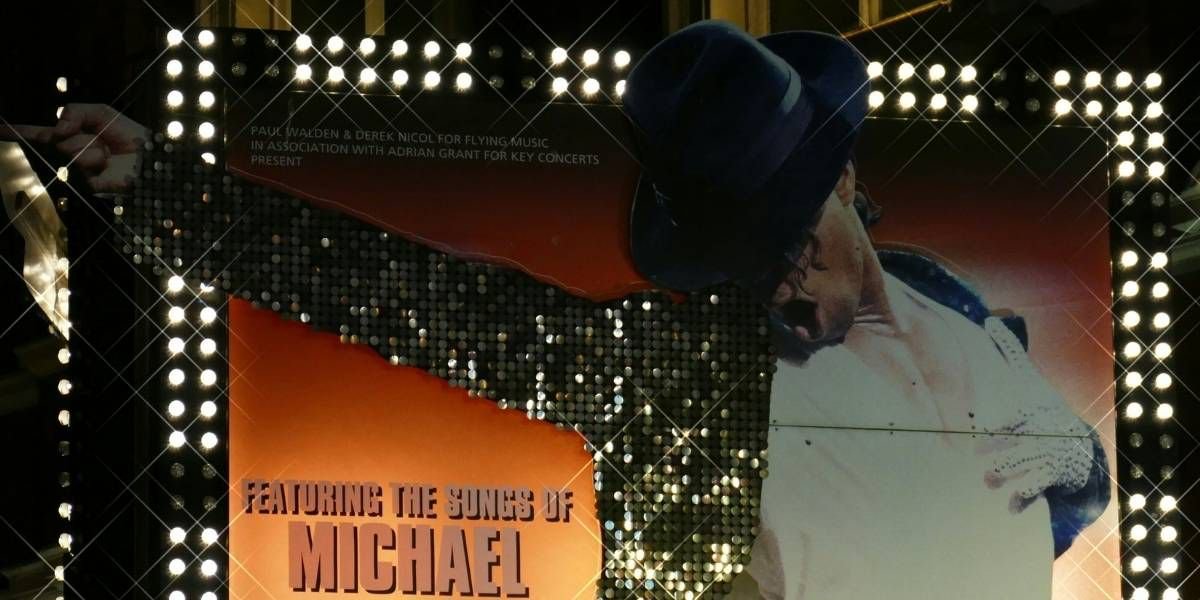
Michael biopic has reached a new milestone at the global box office after surpassing the earnings of Bohemian Rhapsody, making it the highest-grossing music biographical film released to date. The film, based on the life and career of Michael Jackson, achieved the record following continued ticket sales across international markets and a strong theatrical run that elevated it above previous leaders in the genre.

The achievement places the production at the top of a category that has produced several commercially successful titles in recent years. By moving ahead of Bohemian Rhapsody, the film centered on the late King of Pop has established a new benchmark for music-focused biographical releases in worldwide cinemas.

Michael Biopic Reaches Historic Box Office Milestone

The record-setting performance marks a significant accomplishment for the filmmakers, cast, and studio behind the project. The production chronicles Michael Jackson’s rise from his early years in entertainment through his transformation into one of the most influential performers in music history.

The film’s theatrical success was driven by strong audience turnout across multiple regions. International markets contributed substantially to the overall total, helping the feature maintain momentum well beyond its opening period. Continued interest from moviegoers allowed the release to steadily accumulate revenue and eventually surpass the previous record holder.

Industry observers have long viewed music biopics as a reliable genre for theatrical audiences, particularly when centered on globally recognized artists. The latest earnings milestone demonstrates the continued commercial appeal of films that explore the lives and careers of influential musicians.

The project attracted attention before its release due to its subject matter and its focus on one of the most commercially successful entertainers ever. Anticipation surrounding the film remained high throughout production and continued after its arrival in theaters.

Film Chronicles Michael Jackson’s Career and Legacy

The feature presents a dramatized account of Michael Jackson’s life, tracing his development from a child performer to an international music superstar. The story includes key moments from his career, highlighting major performances, recording achievements, and professional milestones that helped shape his public image.

Jackson remains one of the most recognizable figures in entertainment history. His contributions to music, dance, and popular culture have influenced generations of performers and audiences around the world. Albums such as Thriller, Bad, and Dangerous helped establish him as a dominant force in global music during multiple decades.

The production sought to recreate several well-known moments from Jackson’s career while introducing younger audiences to the scope of his impact on the entertainment industry. Music from his catalog plays a central role throughout the film, connecting major story developments with songs that became international hits.

The movie’s release generated extensive discussion among fans of Jackson’s work as well as general moviegoers interested in biographical storytelling. Interest in the project extended across multiple demographic groups, reflecting the broad reach of Jackson’s music and cultural influence.

The box office milestone further reinforces the enduring commercial value of content connected to the performer’s legacy. Decades after the peak of his recording career, Jackson’s name continues to attract substantial public interest across music, film, and media platforms.

Bohemian Rhapsody Held Previous Record

Before the arrival of Michael, the highest-grossing music biopic title belonged to Bohemian Rhapsody, the film based on the life and career of Queen frontman Freddie Mercury. Released in 2018, that production became a major commercial success and established a benchmark that remained in place for several years.

Bohemian Rhapsody earned widespread audience support and performed strongly in theaters around the world. Its box office results exceeded expectations and helped demonstrate the earning potential of music-centered biographical films. The production also received significant recognition during awards season and attracted new audiences to Queen’s catalog.

For years, its global earnings total stood as the highest figure achieved by a film in the music biopic category. Numerous releases followed, but none managed to surpass its overall performance until the latest milestone achieved by Michael.

The shift in the record books reflects the scale of audience interest generated by Michael Jackson’s story. While both productions focus on internationally recognized music icons, the newest release ultimately accumulated enough revenue to move ahead of its predecessor.

The comparison between the two films has drawn attention because both subjects occupy prominent places in popular music history. Freddie Mercury and Michael Jackson each left a lasting mark on entertainment, and films based on their lives attracted audiences across multiple continents.

Global Audiences Drive Strong Performance

A key factor behind the film’s commercial success has been its international appeal. Michael Jackson’s popularity extended far beyond the United States throughout his career, creating widespread recognition that translated into strong ticket sales in numerous countries.

The entertainer’s music achieved success across Europe, Asia, Latin America, Africa, and other regions, giving the film a broad potential audience. That global familiarity contributed to consistent attendance figures in markets outside North America.

Studios increasingly rely on international box office revenue when evaluating theatrical performance, and the latest earnings milestone reflects the importance of overseas audiences. Strong turnout in multiple territories allowed the film to maintain revenue growth over an extended period.

Music biopics often benefit from the established fan bases of the artists they portray. In this case, decades of worldwide popularity provided a foundation that helped the project attract attention before and after release. Audience interest was supported by continued engagement with Jackson’s music catalog and public legacy.

The film’s performance also illustrates how well-known entertainment figures can generate interest across generations. Longtime fans attended screenings because of their familiarity with Jackson’s career, while younger viewers gained exposure to his story through the cinematic adaptation.

This combination of established recognition and new audience discovery helped sustain demand in theaters, contributing to the revenue levels required to set a new record.

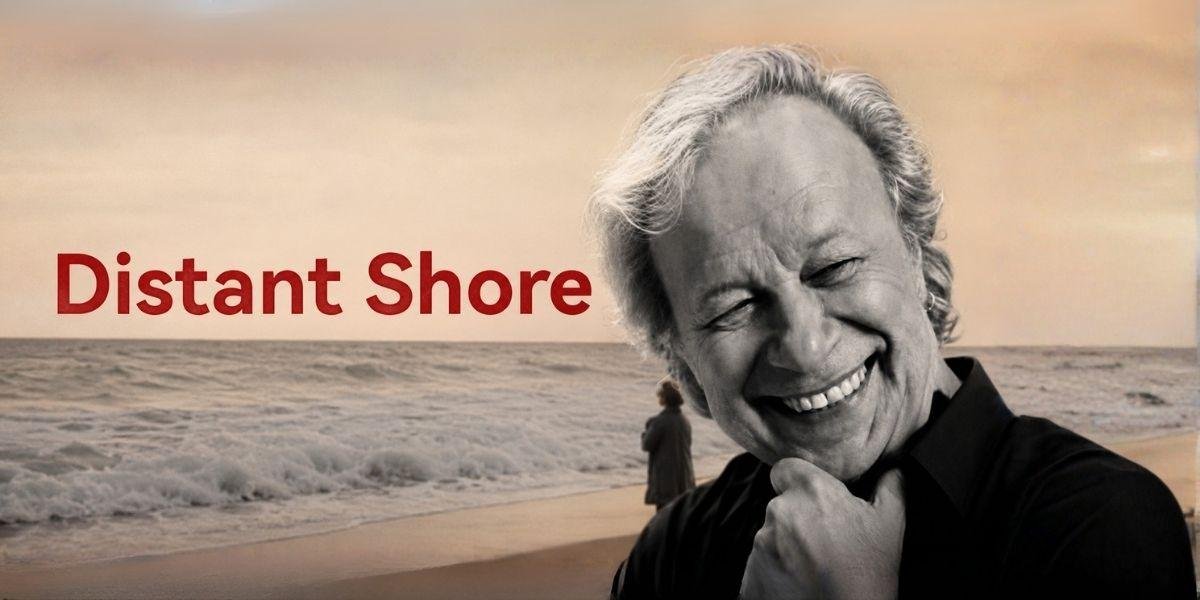
Harry Kappen’s “Distant Shore” Turns a Global Crisis Into an Intimate Human Story

For much of popular music history, songs about migration have tended to fall into one of two categories: the romanticized journey or the political statement. What makes Harry Kappen’s “Distant Shore” so striking is that it largely rejects both approaches. Instead, it occupies a more difficult space, one where uncertainty becomes the central emotion, and where survival itself is the story.

The song, taken from Kappen’s current album After the Crossing, arrives with a premise that feels almost impossible to condense into four minutes. Inspired by refugees forced to flee war, poverty, and dangerous living conditions, “Distant Shore” seeks to imagine the emotional reality of leaving home behind with no guarantee of reaching safety. Yet rather than framing the subject through politics or ideology, Kappen narrows his focus to the small details that make displacement feel devastatingly personal.

That choice gives the song its power.

From its opening lines, “Distant Shore” places listeners inside the experience rather than outside observing it. The lyric “I kiss the door I can’t replace” functions as a kind of emotional thesis statement. Home isn’t represented as a nation, a border, or an identity. It’s a doorway. A familiar object. Something ordinary that suddenly becomes precious because it may never be seen again.

Throughout the song, Kappen continues working at this scale. There are no sweeping speeches or broad declarations. Instead, there are crowded vehicles, endless nights, prayers whispered in exhaustion, and waves that rise “like concrete walls.” The imagery remains tactile and immediate. You can almost feel the claustrophobia.

Musically, “Distant Shore” is built on atmosphere rather than momentum. The arrangement unfolds slowly, guided by a floating mellotron that immediately evokes comparisons to David Bowie’s “Space Oddity.” Kappen has acknowledged Bowie’s influence, and the connection is undeniable. But while Bowie used space travel as a metaphor for alienation and detachment, Kappen uses physical migration as a lens for exploring vulnerability and hope.

The production is remarkably disciplined. In an era when independent artists often overproduce in an attempt to compete with major-label releases, Kappen takes the opposite route. The instrumentation serves the narrative rather than calling attention to itself. The keyboards drift gently through the mix. The guitars shimmer at the edges. The percussion pulses with quiet urgency.

Everything feels suspended.

That sense of suspension is reinforced by Kappen’s vocal performance. He doesn’t approach the song as a dramatic actor inhabiting a role. Instead, he sings with measured empathy. His voice carries concern and reflection rather than outrage. There’s a softness to his delivery that prevents the material from becoming exploitative.

That restraint is essential because “Distant Shore” deals with suffering without trying to sensationalize it.

The chorus, centered around the repeated question “Where is that distant shore?”, becomes the song’s emotional anchor. It functions on several levels at once. Within the narrative, it is a literal destination, a safe place beyond danger. But it also operates as a broader metaphor for stability, belonging, and hope.

Importantly, the song never answers the question.

There is no triumphant arrival. No guarantee of rescue. No neat resolution waiting at the end.

That ambiguity feels honest.

Part of what makes “Distant Shore” resonate is Kappen’s own perspective. Following his move from the Netherlands to Mexico, he became increasingly aware of the privilege involved in voluntary migration. Rather than centering his own experience, however, he uses that awareness as a point of contrast. His journey becomes a reminder of how profoundly different forced displacement can be.

That distinction gives the song moral clarity without turning it into a sermon.

Kappen’s background as a music therapist also seems relevant here. His songwriting demonstrates an unusual degree of emotional intelligence. He understands that empathy is most effective when it creates space rather than demanding agreement. “Distant Shore” invites listeners to inhabit another perspective without instructing them what conclusions to draw.

In a music scene often dominated by immediacy and spectacle, that approach feels refreshing.

What remains after the song ends is not a policy argument or a headline. It is a feeling, one of movement, uncertainty, fear, and fragile determination. Kappen transforms those emotions into a carefully crafted piece of atmospheric rock that is both deeply personal and quietly universal.

“Distant Shore” doesn’t pretend to solve anything. It simply asks listeners to imagine what it means to keep moving toward a horizon you cannot yet see.

Sometimes, that is enough.

Nobody Asked If You Were Ready

By: Matt Emma

You saw him standing there before you understood what was happening.

A small crowd gathered in the park. Some curious, some skeptical, some pretending not to care while staying close enough to hear every word. People slowed down. People stopped. Something unusual was unfolding in the middle of ordinary life.

No velvet ropes. No stage lights. No theater tickets. Just a man standing in front of strangers, looking directly into them with an intensity that felt almost impossible in a city built on distraction.

And then someone stepped forward.

Maybe it was you.

Something pulled you. You don’t fully know why you walked over, why you stepped onto that makeshift stage, why you stood in front of a stranger and said yes without knowing what you were saying yes to.

And then it started.

Four seconds in, something is being named. Your thing. The one you carry quietly and present to nobody. The gap between who you’re showing the world and who you actually are, spoken out loud with a precision that stops you completely.

Not because it’s theatrical. Not because it’s manipulative. Because it’s true.

That’s the moment Hidden Stars lives in. Not before it, not after it. Right there in the suspended second between being unknown and being completely known.

Crash Therapy doesn’t ease in. It doesn’t warm up or circle toward the point. It arrives the way real truth always does. Suddenly. Cleanly. Landing somewhere you weren’t guarding.

What makes it impossible to look away isn’t the accuracy.

It’s the relief.

You stepped up to a stranger.

You stepped down, understood.

Something in you knew before your mind did.

That’s why you walked over.

What begins to happen around the performance is almost as fascinating as the interaction itself. The line starts forming long before people fully understand what they’re waiting for. Some stand with folded arms, trying to decode it intellectually. Others nervously laugh with friends while secretly hoping they’ll be chosen next. Some watch from far away, pretending they are observers when they are actually participants already being drawn into the emotional gravity of the experience.

Because Hidden Stars is not really about performance.

It is about permission.

Permission to stop pretending for a moment. Permission to admit exhaustion, longing, heartbreak, confusion, ambition, loneliness, and desire. The things people spend entire lives editing out of public view suddenly become visible in broad daylight, in the middle of a crowded park, surrounded by strangers.

And instead of humiliation, something unexpected happens.

Connection.

The crowd doesn’t laugh when someone breaks open emotionally. They lean in. They recognize themselves. Every person waiting in line starts realizing they are not watching someone else’s story unfold. They are watching fragments of their own.

That is why the line grows.

Not because people want entertainment.

Because they want recognition.

New York is a city filled with people performing versions of themselves all day long. Powerful people. Beautiful people. Wealthy people. Invisible people. Everyone is selling certainty. Everyone is moving fast enough to avoid being truly seen.

Then, suddenly, Hidden Stars appears like a crack in the system. A temporary suspension of the performance.

For a few minutes, the armor disappears.

You see people come out laughing. Crying. Shaking their heads. Standing quietly afterward, trying to process what just happened to them. Friends hug each other differently afterward. Couples look at each other differently afterward. Complete strangers begin talking to each other in line because the atmosphere itself changes.

The experience becomes contagious.

Not through marketing.

Through emotional honesty.

That is what the image captures so perfectly. Not spectators. Participants. Anticipation mixed with fear, curiosity mixed with hope. A line of people standing in public, waiting for something deeply private to happen.

And underneath all of it sits the real question Hidden Stars asks every person who walks near it:

What would happen if someone actually saw you?

Not the version optimized for Instagram. Not the polished biography. Not the controlled conversation.

You.

For most people, the terrifying realization is that they don’t fear being exposed nearly as much as they fear never being understood at all.

That is why they walk over.

That is why they wait in line.

And that is why nobody forgets it once it happens.