Entertainment Post

Avatar Aang: The Last Airbender Moves to July 25 Release With First Trailer


Paramount has confirmed that Avatar Aang: The Last Airbender will premiere globally on Paramount+ on July 25 after moving up its release schedule. The studio also released the film’s first official trailer, giving audiences their first extended look at the animated feature from Avatar Studios.

Key Takeaways

  • Paramount moved the film’s release to July 25 on Paramount+.
  • The movie was previously scheduled for an October theatrical release.
  • The first official trailer and new promotional images have been released.
  • Eric Nam leads the voice cast alongside Dave Bautista and Steven Yeun.
  • The film marks the first feature-length release from Avatar Studios.

Paramount has confirmed that Avatar Aang: The Last Airbender will debut globally on Paramount+ on July 25, advancing its release from the previously scheduled October date. The announcement also introduced the film’s first official trailer and new promotional images, offering audiences an extended preview of the animated feature ahead of its streaming premiere.

The updated release plan follows an earlier decision to move the film from a theatrical debut to a direct streaming release. With the new July premiere date, viewers will be able to watch the film months earlier than originally expected when it becomes available on Paramount+.

The film continues the story of Aang after the events of the original animated series. Produced by Avatar Studios, the feature expands the franchise with a new adventure centered on the Avatar and his companions while introducing original characters connected to the world’s history.

What Changed in Avatar Aang: The Last Airbender’s Release Plan?

New Global Streaming Release Date

Paramount announced that the film will premiere worldwide on Paramount+ on July 25. The release replaces the previously announced Oct. 9 theatrical debut, making the streaming premiere the official launch for the animated feature.

The revised schedule also brings the release forward by several months. Paramount had previously confirmed that the film would bypass theaters in favor of streaming, and the latest announcement establishes the final release date for audiences worldwide.

Alongside the release date update, Paramount unveiled the first full trailer and released new images from the film. The promotional materials provide the first detailed look at the animation style, returning characters and several of the story’s central locations. Similar recent animated film marketing campaigns, including the first trailer for Shrek 5, have also centered on early footage to introduce audiences to upcoming franchise releases.

The film is also expected to be featured during activities at San Diego Comic-Con, where additional promotional material may be presented ahead of the July premiere.

What Does the First Trailer Reveal About the Story?

The trailer introduces Aang as he continues to carry the responsibility of being the world’s last Airbender while confronting a new challenge tied to the future of Air Nomad culture.

According to the official synopsis, Aang discovers an ancient power that could help preserve his people’s legacy. Joined by his friends, he begins a journey to locate that power before it can be used in a way that threatens the peace achieved after previous conflicts.

The preview also introduces Tagah, an ancient airbender whom Aang believes could play a key role in restoring his culture. The trailer presents new action sequences, familiar bending techniques and several locations inspired by the original animated series.

The footage focuses on both large-scale battles and character-driven moments while establishing the central conflict that will drive the film’s story.

Who Voices the Main Characters in the Film?

Main Voice Cast

Eric Nam voices Aang in the animated feature. The cast also includes Dave Bautista as Tagah, Jessica Matten as Katara, Román Zaragoza as Sokka, Steven Yeun as Zuko and Dionne Quan as Toph.

The film brings together established actors from film, television and voice acting to portray both returning characters and new additions to the franchise.

Story and Creative Team

The story was developed by franchise creators Michael Dante DiMartino and Bryan Konietzko alongside Tim Hedrick and Kenneth Lin. Hedrick and Christopher Yost wrote the screenplay.

Lauren Montgomery directed the film with co-directors Steve Ahn and William Mata. Production duties were handled by Latifa Ouaou and Maryann Garger together with DiMartino and Konietzko through Avatar Studios.

The creative team includes several contributors with previous experience working on projects connected to the Avatar universe.

Why Is This Movie Important for Avatar Studios?

Connection to the Original Series

Avatar Aang: The Last Airbender is the first film or television project scheduled for release from Avatar Studios, the production company established in 2021 as a division of Nickelodeon Animation Studio.

The studio was created to develop new stories set within the world of Avatar: The Last Airbender and The Legend of Korra. The feature represents the first completed production from that initiative.

The original Avatar: The Last Airbender television series aired on Nickelodeon between 2005 and 2008. The animated series introduced Aang’s journey as the Avatar and concluded with the defeat of the Fire Nation under Fire Lord Ozai. The expanding slate of franchise-based animation follows a broader wave of studio projects, including the Disney Ice Age teaser trailer released earlier this year for another established animated property.

Avatar Studios is also developing the animated series Avatar: Seven Havens, which is scheduled to debut in 2027 and will continue expanding the franchise with a new generation of characters.

The release of Avatar Aang: The Last Airbender establishes the studio’s first major feature-length production before additional animated projects arrive.

Frequently Asked Questions

When will Avatar Aang: The Last Airbender be released?

The film is scheduled to premiere globally on Paramount+ on July 25.

Where can viewers watch Avatar Aang: The Last Airbender?

The animated feature will debut exclusively on Paramount+.

Who voices Aang in the new movie?

Singer and actor Eric Nam provides the voice of Aang.

What is Avatar Aang: The Last Airbender about?

The story follows Aang as he searches for an ancient power that could help preserve Air Nomad culture while preventing it from falling into the wrong hands.

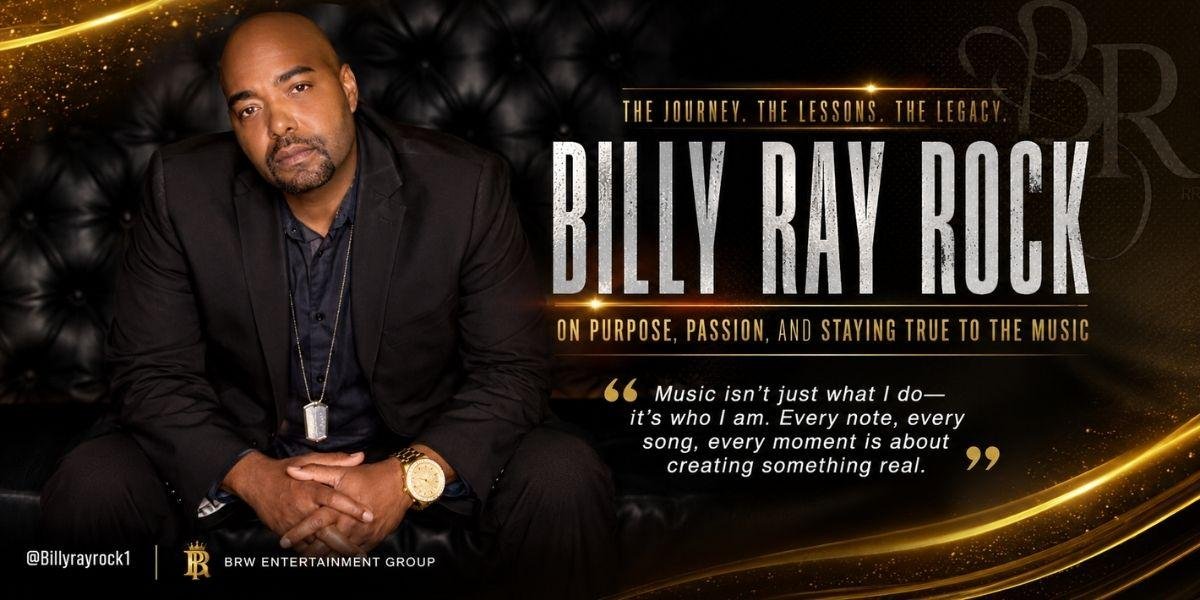
Billy Ray Rock: Finding Joy, Purpose, and Versatility Through Music

By Dave Mercer

From childhood dreams inspired by his older brother to discovering that music could genuinely impact people’s lives, Billy Ray Rock’s journey has been fueled by creativity, perseverance, and an unwavering passion for entertaining. In this candid interview, he reflects on the moments that shaped his career, the lessons he’s learned from decades in the music industry, the inspiration behind his uplifting single “I’m Happy,” and the legacy he hopes to leave as an artist unafraid to cross musical boundaries.

Every artist has a story before the spotlight. What was your childhood like, and how did music become part of your life?

Music became a part of my life when I was a child listening to my brother Freddy practice his saxophone in the back room next to mine. We grew up in a very poor home. We didn’t have much money, and this was before video games became common. Even if they had been around, we couldn’t have afforded them.

I’d lie in my room with no TV and nothing else to do but listen to my brother practice. A few years later, he and his band performed at my elementary school. At first, I thought, “I’ve been listening to this in the next room all this time, what’s the big deal?” But then, after they finished playing, every girl I had a crush on rushed to the stage to get autographs. That’s when I thought, “That’s my ticket!”

At first, it was fueled by wanting attention from the girls, but once I got into music myself, I realized I truly loved it. The idea of creating something from nothing became a passion, and that’s what has stayed with me ever since.

Was there a defining moment when you realized music wasn’t just a hobby, it was your calling?

I realized music was my calling back in the mid-to-late 1990s when I released a song called “Booty Slide.” The song really caught fire, and after one show, a young woman came up to me and told me how much it had changed her life.

That surprised me because, at its core, it was simply a fun song about dancing. It wasn’t written with any deep emotional or inspirational message in mind. If a song like that could have such an impact on someone, I realized I had so much more inside me to say. That was the moment I truly believed music was my calling.

Success can mean different things to different people. How do you personally define success today?

To me, success means inner happiness, being happy with who you are, what you’re doing, and where you are in life. If I can maintain that happiness and inner peace, everything else is just a bonus.

Keeping that perspective also helps me handle both success and failure. I never get too carried away by my successes, and I never get too discouraged by my failures.

What lessons has the music industry taught you that life couldn’t?

The music industry has taught me that about 98 percent of the people around you are genuinely nice. They care about you, but often only as long as you’re making music and helping keep everyone employed.

Over time, though, a small number of those people become true friends and move beyond business into your personal life. Those relationships are rare, but they’re real.

The industry taught me that work is work, and home is home. I probably understood that before, but this business reinforced just how important it is to keep those worlds separate.

“I’m Happy” feels optimistic without ignoring life’s struggles. How much of that reflects your personal outlook?

The optimism in “I’m Happy” is about remembering that it’s okay to be happy while also recognizing that life still happens. Difficult times are inevitable, but they shouldn’t stop us from appreciating the good moments.

That absolutely reflects my personal outlook. Part of being truly happy is remembering how much worse things could be and appreciating that they aren’t. People often say, “Don’t forget where you came from,” and I think that’s important.

When life is going well, part of appreciating those blessings is remembering the struggles you’ve overcome. If you forget those struggles, happiness can turn into complacency because you begin to feel entitled instead of grateful.

What keeps you motivated during difficult seasons creatively and personally?

What keeps me motivated is knowing how good it’s going to feel when I reach the finish line, whether it’s completing a song, a television script, or any other creative project.

For me, it’s all about that sense of accomplishment when the work is finally done. That’s what keeps me pushing forward.

If you could give one piece of advice to young independent artists trying to build a career, what would it be?

Trust your instincts, and perfect your craft.

Make sure your notes are right. Make sure your production is solid. Build your music on a strong foundation, because if the music itself isn’t great, everything else becomes much harder.

When people hear Billy Ray Rock five years from now, what do you hope they remember about your music?

I hope people remember me as a true multi-genre artist, someone who wasn’t afraid to make rock, R&B, funk, EDM, or dance music.

If there’s one artist I’d love to be compared to, it’s Prince. Not because I think I’m Prince, but because of his incredible versatility. He proved that great music doesn’t have to stay inside one genre, and that’s the kind of flexibility I hope people remember when they think about Billy Ray Rock.

Ashes Awaken’s “Hallelujah” Hits Like a Freight Train

By: Leslie Banks

Somewhere along the line, rock music got embarrassed by sincerity.

Everybody wanted another layer of irony, another wink, another carefully curated pose that said, Don’t worry, I don’t actually mean all this. Faith got filed away into niche markets, rebellion became branding, and the raw nerve that once made rock and roll dangerous started getting anesthetized by self-awareness.

Then along comes Ashes Awaken with “Hallelujah,” and they don’t just throw sincerity back into the room; they crank it through a stack of amplifiers until the walls begin to shake.

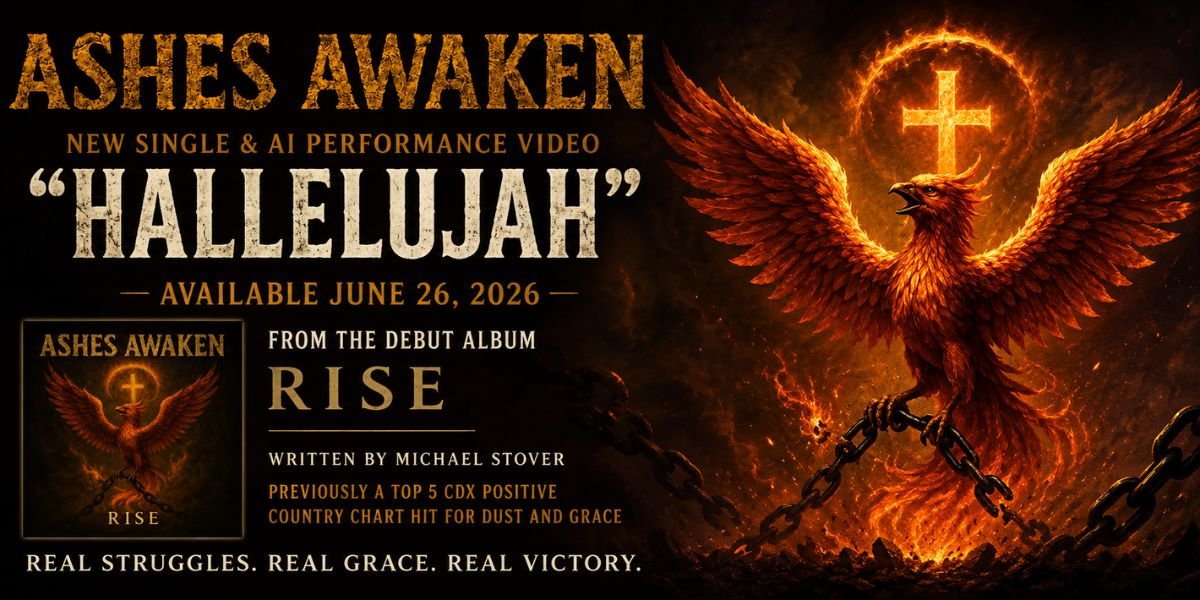
The funny thing is, this song has already lived one life. Written by Michael Stover, it first found success as a Top 5 CDX Positive Country chart hit for his project Dust and Grace. In another artist’s hands, it was a country testimony. Here, it’s been reborn as a full-blown Christian metal anthem, and the transformation feels less like a genre experiment than a revelation.

The opening doesn’t creep toward its destination. It charges.

I wanna sing something to ya I wanna sing hallelujah…

That’s it. No psychological maze. No cryptic poetry designed to impress graduate students. Just the oldest instinct in music itself: somebody has experienced something life-changing, and now they can’t shut up about it.

Imagine that.

The guitars arrive with enough muscle to flatten buildings, but they’re never there simply to prove how heavy the band can be. Every riff serves the song. Every drum hit pushes the message forward. The arrangement understands something that too much contemporary metal forgets. Dynamics aren’t about volume alone. They’re about conviction.

And conviction is what fuels every second of “Hallelujah.”

When Stover sings,

I wasn’t born a believer, I was a desperate deceiver Until I found my Redeemer…

He’s doing something that’s become almost radical in modern rock: admitting transformation without apology.

No hedging.

No fashionable uncertainty.

No “maybe.”

Just a man standing in front of a microphone saying, “Here’s who I was. Here’s who I am now.”

Whether you agree with his theology almost becomes irrelevant because the emotional honesty is undeniable.

That’s the strange magic happening here. This isn’t praise music trying to imitate heavy metal. This is heavy metal discovering that praise can be every bit as explosive as rage.

Rock has always been built on release.

The Who smashed guitars.

The MC5 screamed for revolution.

Punk spat in authority’s face.

Ashes Awaken simply points that explosive energy somewhere else. Instead of tearing something down, they’re building something up. The emotional mechanics remain exactly the same.

The chorus repeats the word “hallelujah” until repetition itself becomes transcendence. Some listeners will hear simplicity. Others will hear hypnosis. The best gospel music has always understood that repeating truth isn’t redundancy. It’s meditation. By the fourth or fifth “hallelujah,” you’re no longer analyzing the lyric. You’re inside it.

That’s a trick churches have known for centuries.

Metal just happens to provide bigger speakers.

Musically, the band threads an interesting needle. You can hear modern Christian metal influences in the guitar attack, but there are flashes of classic melodic craftsmanship underneath. The choruses are built to soar rather than merely crush, suggesting someone who grew up understanding that Queen, Journey, and Boston knew a thing or two about writing hooks that survive generations.

That melodic instinct keeps the song from collapsing under its own weight.

Then there’s the line that quietly carries the whole thing:

Everybody praises the Lord.

On paper, it almost seems too direct.

In practice, surrounded by walls of distorted guitars and drums that sound like thunder rolling across steel mills, it becomes oddly defiant. In a culture terrified of saying anything with complete certainty, Ashes Awaken plants its flag without asking permission.

That kind of confidence can make people uncomfortable.

Good.

Rock music was never supposed to make everybody comfortable.

“Hallelujah” succeeds because it never mistakes complexity for depth. It understands that the hardest thing any songwriter can do is tell the truth plainly enough that nobody misses it. Stover doesn’t hide behind metaphor when gratitude will do. He doesn’t bury faith beneath clever wordplay. He simply sings it with enough force that even skeptics have to acknowledge the conviction behind it.

This is a song that believes every note it plays.

In an era drowning in calculated authenticity and algorithm-friendly mediocrity, that’s almost revolutionary.

“Hallelujah” isn’t trying to convert heavy metal into worship music.

It’s reminding us that sometimes the loudest sound a guitar can make isn’t rebellion.

Sometimes it’s gratitude.