Entertainment Post

The Glamour Was Always the Weapon and How Danielle M. Wong Uses Hollywood’s Shiniest Surface to Tell a Darker Story

By: Walter Miller

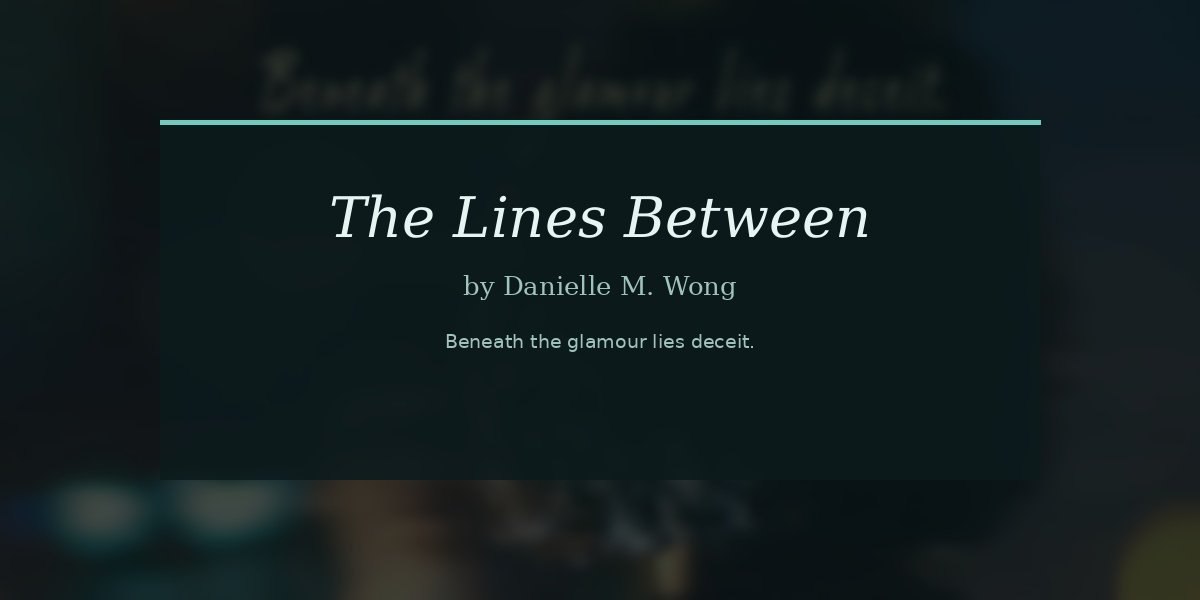
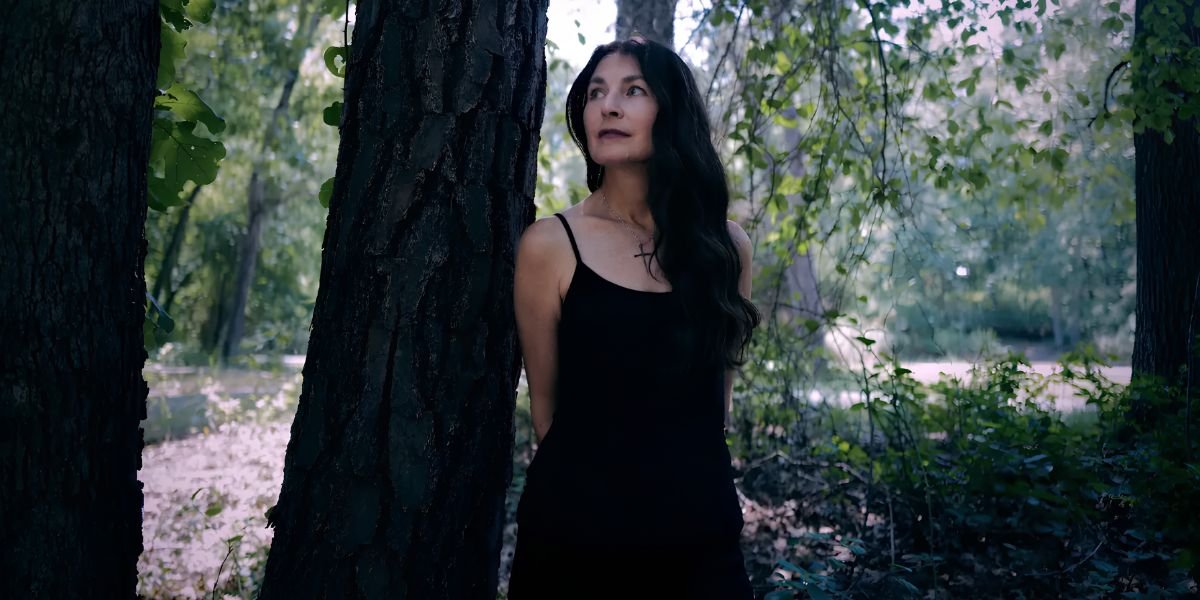
Many thriller writers use Hollywood as a setting. Danielle M. Wong uses it as a mechanism, and the distinction is what makes The Lines Between interesting rather than simply well-executed genre fiction. In Wong’s novel, the specific properties of celebrity culture, its relationship to performance, image management, and the deliberate construction of public persona, are not just background details that establish atmosphere. They are the source of the novel’s central darkness, the system within which the deception operates and from which it draws both its logic and its power.

Stevie Young understands this world from the inside, having spent her professional life managing the gap between what her clients are and what the public is permitted to see. Her arrival in the household of Dean Bennington and Lana Lim positions her at the intersection of access and vulnerability that makes for a compelling thriller protagonist, someone who knows enough to be dangerous but not yet enough to be safe. When Lana’s mysterious injury begins to unravel the carefully maintained public narrative of their relationship, Stevie finds herself trying to understand what is real inside a world that was built specifically to make that question difficult to answer.

Wong writes the novel’s central relationship between appearance and reality with nuance that reflects clear thinking about what celebrity culture can do to the people it produces. The characters in The Lines Between are not simply deceivers. They are people who have been shaped by a world that values performance over authenticity, until the distinction between their performances and their actual selves has become difficult to locate, even for them. That psychological complexity gives the novel’s revelations weight and sadness because what is being revealed is not only a secret, but also the cost of keeping it.

The prose throughout fits the story, smooth, controlled, and precise, moving between perspectives and registers with the confidence of a writer who understands the technical demands of the form. Wong uses those techniques in service of character and theme rather than as ends in themselves. The pacing is controlled, the structure is thoughtful, and the eventual revelations satisfy in the way carefully constructed psychological suspense can.

The Lines Between is a Hollywood psychological thriller that treats its setting with intelligence and care. Danielle M. Wong uses the glamour not merely as a backdrop, but as part of the machinery that drives the story’s tension.

If you want a thriller that uses the specific properties of its setting as the actual engine of its darkness rather than as a glamorous backdrop for familiar genre mechanics, The Lines Between by Danielle M. Wong is the novel that shows you exactly what that distinction produces when a great writer commits to it completely. Grab your copy on Amazon today and find out what Hollywood was always hiding behind its shiniest surface.

Good Morning America Reveals 2026 Summer Concert Series Lineup

Good Morning America has released the lineup for its 2026 Summer Concert Series, featuring performances by Keith Urban, Coco Jones, Dan + Shay, YEONJUN and Sublime. The announcement includes the scheduled artists, performance dates and venues for the annual live music event airing on ABC.

Key Takeaways

  • Good Morning America announced its 2026 Summer Concert Series lineup.
  • Keith Urban, Coco Jones, Dan + Shay, YEONJUN and Sublime are among the featured performers.
  • Concerts will be held at the GMA studio and Central Park in New York City.
  • The performances will air throughout the summer on ABC.
  • Ticket information is available through Good Morning America‘s official channels.

The GMA 2026 Summer Concert Series will feature performances from Keith Urban, Coco Jones, Dan + Shay, YEONJUN and Sublime after Good Morning America released its lineup and performance schedule for this year’s annual music event. The announcement provides viewers with artist appearances, concert dates and venue information for performances that will air throughout the summer on ABC.

The concert series brings together artists representing country, R&B, pop and rock music. According to the announced schedule, performances will take place both inside the Good Morning America studio and at Central Park in New York City, continuing the show’s seasonal live music format.

The series is sponsored by Norwegian Cruise Line, with audience members able to follow updates and ticket information through Good Morning America‘s official platforms.

GMA 2026 Summer Concert Series Lineup Announced

Good Morning America confirmed five featured performances as part of the 2026 Summer Concert Series schedule.

Country singer Keith Urban opened the announced lineup with a performance scheduled for July 10. Coco Jones follows on July 24, bringing the Grammy-winning R&B artist to the morning television stage later in the month.

Dan + Shay will perform on July 31, completing the July portion of the schedule. The duo joins a busy season of televised live performances alongside other major tours announced this year, including the Journey farewell tour expansion

The announcement also includes August performances from YEONJUN and Sublime. The lineup spans multiple musical genres while featuring artists with established audiences across television and live entertainment.

The series will air during regularly scheduled episodes of Good Morning America on ABC.

July Performance Schedule

July includes three scheduled artist appearances.

Keith Urban is listed as the opening performer on July 10, followed by Coco Jones on July 24. Dan + Shay complete the July schedule with a performance on July 31.

Each performance forms part of the show’s summer concert activities and will air as part of the morning broadcast.

August Performance Schedule

The August lineup begins with YEONJUN, who is scheduled to perform on August 5.

Sublime follows with a performance scheduled for August 14.

Both August appearances are planned for Central Park, according to the published concert schedule.

Performance Schedule Features Five Headlining Artists

The announced performers represent several music genres.

Keith Urban continues to maintain an active touring and recording schedule while remaining one of country music’s best-known performers. His appearance opens this year’s concert lineup.

Coco Jones joins the schedule following continued success as a recording artist and performer. Her appearance adds contemporary R&B to the concert series.

Dan + Shay return to network television with a scheduled performance at the end of July. The duo has released multiple country hits and remains a regular presence on award shows and televised music events.

YEONJUN brings K-pop representation to the lineup. Fans following recent international concert announcements may also recognize the momentum surrounding the BIGBANG world stadium tour, another major K-pop event scheduled for 2026.

Sublime completes the announced artist list. The band’s scheduled appearance will also take place in Central Park, adding a rock performance to the seasonal lineup.

Featured Artists

The lineup combines solo performers, music duos and bands across multiple genres.

Country music is represented by Keith Urban and Dan + Shay, while Coco Jones appears as the featured R&B performer. YEONJUN expands the lineup with K-pop, and Sublime contributes a rock performance.

The announced schedule distributes performances across July and August while using both studio and outdoor venues.

Central Park and Studio Venues Host the Concerts

The 2026 Summer Concert Series will use two locations for performances.

Some artists will appear inside the Good Morning America studio, while selected concerts will take place in Central Park in New York City.

According to the published schedule, YEONJUN’s August 5 performance is planned for Central Park.

Sublime is also scheduled to perform in Central Park on August 14.

The remaining announced performances are expected to take place from the show’s studio.

Using both venues allows the series to accommodate performances designed for television audiences while also hosting larger outdoor concerts for fans attending in person.

Televised concert events remain a regular part of the entertainment calendar alongside major touring announcements such as Kesha’s Freedom Tour schedule, which also features performances across multiple cities.

The published schedule identifies venue locations for artists whose performances will take place outside the studio.

Broadcast Details and Ticket Information Released

Good Morning America stated that the Summer Concert Series will air throughout the summer during the program’s regular broadcasts on ABC.

The morning news and entertainment program airs beginning at 7 a.m. Eastern Time.

The announcement also directs viewers to the show’s official digital platforms for updates related to performances, artist appearances and ticket availability.

Official social media channels continue to provide event information, including schedules and additional concert details as performances approach.

Ticket information is available through Good Morning America‘s official channels rather than through the television broadcast itself.

The concert series is presented with sponsorship from Norwegian Cruise Line, which is identified as the event sponsor in the official announcement.

Summer Series Continues Annual Live Music Tradition

The Summer Concert Series remains part of Good Morning America‘s seasonal lineup of live entertainment broadcasts.

The 2026 edition follows the established format of combining televised studio performances with selected outdoor concerts in Central Park.

This year’s announced schedule includes performances spread across July and August, with artists appearing on different broadcast dates throughout the summer.

The lineup reflects a mix of country, R&B, K-pop and rock performers, giving the series representation across multiple music genres.

Viewers can watch each scheduled performance during Good Morning America broadcasts, while fans interested in attending concerts in person can obtain ticket information through the show’s official resources.

Additional artist information and performance updates are expected to be shared through Good Morning America‘s official communication channels as each scheduled concert approaches.

Frequently Asked Questions

Which artists are performing in the GMA 2026 Summer Concert Series?

The announced lineup includes Keith Urban, Coco Jones, Dan + Shay, YEONJUN and Sublime.

Which concerts will take place in Central Park?

YEONJUN is scheduled to perform in Central Park on August 5, while Sublime is scheduled to perform there on August 14.

How can fans get tickets for the GMA Summer Concert Series?

Ticket information is available through Good Morning America‘s official channels and digital platforms.

When will the 2026 GMA Summer Concert Series air?

The performances will air throughout the summer during regularly scheduled episodes of Good Morning America on ABC.

Which venues are hosting the 2026 concert performances?

The announced performances will take place at the Good Morning America studio and in Central Park in New York City.

The Quiet Revolution in Shweta Harve’s Have You Loved Like a Tree?

By: Michael Grey

Popular music has always found its prophets in unlikely places. A train whistle. A motel room. A street corner. A broken heart. Shweta Harve’s Have You Loved Like a Tree? chooses something even older, something that has stood silently through every revolution humanity has managed to invent: a tree.

It’s a curious proposition. Trees don’t speak, campaign, advertise, or accumulate followers. They simply endure. They witness civilizations rise and disappear beneath their branches. In a century increasingly measured by notifications, deadlines, and digital applause, Harve offers a question that sounds almost ancient: What if love looked more like that?

The title isn’t merely poetic. It’s disruptive.

For decades, popular music has celebrated love as conquest, heartbreak, obsession, ecstasy, or escape. Love races toward someone or runs away from someone. It burns. It crashes. It explodes. Rarely does it remain still.

Harve proposes stillness.

That alone feels quietly radical.

The song unfolds with remarkable patience, refusing nearly every convention of contemporary production designed to keep listeners from reaching for the skip button. There are no oversized drops waiting around the corner. No dramatic key changes engineered for maximum emotional extraction. Instead, the arrangement settles into itself the way morning light slowly fills a room.

Acoustic instruments establish the setting with understated confidence. Piano phrases drift through the mix almost like passing thoughts. Gentle rhythmic foundations never insist upon themselves. Every musical choice appears dedicated to preserving space rather than filling it.

That restraint isn’t an absence of ambition.

It’s discipline.

Modern production frequently mistakes abundance for richness, layering sound until every available frequency competes for attention. Here, silence remains part of the composition. The pauses matter. The breathing matters. Even the smallest instrumental gesture seems to acknowledge that reflection requires room to exist.

Harve’s vocal performance follows the same philosophy. She never attempts to overpower the song’s message through sheer technical display. Her delivery remains measured, conversational, quietly assured. Rather than standing above the arrangement, she inhabits it.

That distinction changes everything.

Because the song isn’t asking listeners to admire its construction.

It’s asking them to examine themselves.

The tree functions as both metaphor and mirror. It offers shade without calculating return. It survives storms without announcing resilience as personal branding. It continues growing despite seasons of apparent stillness. Somewhere inside that image lies an uncomfortable contrast with a culture increasingly organized around visibility, productivity, and perpetual motion.

The song never states that outright.

It doesn’t have to.

Its questions perform the work that declarations cannot.

There’s an older tradition hiding beneath Have You Loved Like a Tree?, one that reaches beyond popular songwriting into parables, folk wisdom, and oral storytelling. The greatest folk songs rarely offered complicated solutions; they carried simple images that listeners unpacked across generations. A river. A road. A mountain. Here, the tree joins that lineage.

Its meaning shifts depending on who’s listening.

One listener hears environmental stewardship.

Another hears parenthood.

Someone else hears forgiveness.

Another hears faith.

The song remains remarkably open without becoming vague. That’s a difficult balance to achieve.

The production reinforces that openness by resisting obvious emotional cues. Rather than manipulating listeners toward predetermined feelings, it allows mood to emerge gradually through texture and pacing. Warm acoustic tones dominate the mix, giving the recording an organic quality that feels increasingly rare within digitally polished contemporary music.

Nothing sounds accidental.

Nothing sounds overworked.

The song’s greatest accomplishment may be its refusal to hurry toward significance. It trusts repetition. It trusts atmosphere. Most importantly, it trusts the listener’s willingness to remain present long enough for meaning to develop.

That confidence feels almost countercultural.

Popular culture often treats contemplation as inefficiency. Every platform rewards acceleration. Every algorithm prefers reaction over reflection. Even music has become increasingly optimized for instant emotional accessibility.

Have You Loved Like a Tree? Quietly declines the invitation.

Instead, it asks whether patience itself might still possess artistic value.

That’s a larger question than the song initially appears to pose.

Like much worthwhile art, its subject extends beyond its immediate narrative. The tree becomes less a botanical image than a philosophy of living. Growth happens invisibly before anyone notices it. Strength accumulates slowly. Generosity becomes meaningful precisely because it asks for nothing in return.

These aren’t fashionable ideas.

Perhaps that’s exactly why they matter.

Harve has increasingly established herself as an artist interested less in documenting contemporary life than interrogating it. Rather than merely reflecting the emotional atmosphere of the moment, her songwriting consistently searches for alternatives. Mindfulness instead of distraction, connection instead of isolation, reflection instead of reaction.

This latest work may represent the clearest expression of that artistic impulse.

It doesn’t reject the modern world.

It simply asks whether we’ve mistaken movement for progress.

By the song’s conclusion, no grand revelation has arrived. There are no definitive answers waiting beyond the final chorus. Instead, the question continues echoing after the recording ends, quietly accompanying listeners back into their ordinary routines.

That’s where its real power resides.

Not in the recording itself, but in the silence that follows it.

If the most enduring songs become part of the way we think rather than merely part of what we hear, then Have You Loved Like a Tree? has already begun planting roots. It offers no manifesto, no sermon, no certainty, only an image so deceptively simple that it becomes difficult to forget.

And perhaps that’s always been the work of the best songs. Not to tell us what the world is, but to leave us seeing it differently.

The Angel Mythology at the Heart of The Book of Eternity Isn’t What You’d Expect. That’s Exactly the Point.

By: Sandra Williams

Most stories about angels start from the same assumption. Angels are good. The battle is between them and something darker. The human caught in the middle has to choose the right side and survive.

Jacqueline Pennewill’s The Book of Eternity starts from a different place entirely. And the difference is what makes it genuinely interesting.

Angels, in the world she has built, are not uniformly good. They never were. The history of angels is a history of conflict, hierarchy, and beings who were thrown from heaven for reasons that still echo through the centuries. Jacqueline knew that story was there. What drew her was the complexity hiding inside it.

The Research That Opened a World

Before she started building the mythology of The Copper Moon Series, Jacqueline went looking for what actually existed. She researched the Nine Orders of Angels and the history of fallen angels, the beings expelled from heaven and what that expulsion meant, for them and for the world they fell into.

What she found was a whole universe of conflict and history that most stories had barely scratched. She used that research as a foundation, building loosely from it rather than rigidly upon it, and created two rival factions: The Surge, who uphold order, and The Fallen, who wreak havoc.

The setup on the surface looks like a clear moral divide. It doesn’t stay that way.

The Copper Moon as Symbol

The title of the series comes from a celestial image Jacqueline felt was the perfect visual anchor for everything the story explores. The Copper Moon is a rare atmospheric event, a moon that appears when conditions align in a specific way, suspended between the ordinary and the otherworldly.

She describes it as a fragile line between light and darkness, heaven and earth, mortal and divine. In the story, the Copper Moon marks the moment when those worlds touch, when something supernatural stirs in the shadows of the ordinary. It is a moon of reckoning and renewal, a reminder that even in darkness there is still light.

That image threads through all three books in the planned trilogy, appearing in different forms but always carrying the same weight.

Why the Angels Feel Human

One of the most deliberate choices Jacqueline made in building the supernatural world was keeping the angels human in appearance and human in behavior. They have been moving among people for centuries. They were human once. They have histories. They have been shaped by experiences. They feel things.

The most challenging part of the writing process, she says, was making sure the fantasy world never overshadowed the characters. She didn’t want Grey or Zale or any of the others to be swallowed by the mythology. The relationships come before the fantasy world. That was her guiding principle, and it shows in how grounded the story feels despite its extraordinary premise.

Chiaroscuro on the Page

Jacqueline has always loved chiaroscuro, the play of light and dark in both art and literature. It’s a concept from visual art, the technique of using strong contrasts between light and shadow to give depth and drama to an image.

In The Book of Eternity, chiaroscuro isn’t just an aesthetic choice. It’s a structural one. The entire story lives in the space between opposites. Good and evil. Human and divine. Grief and healing. Love and danger. Nothing in the book is entirely one thing or the other, and that complexity is what gives it its particular texture.

She came to the story, she says, because the blurred line between what is real and what isn’t has always fascinated her. She has always loved dark characters. She has always been drawn to the other story, the one hiding underneath the version everyone expects.

The Book of Eternity is that other story.

If you’ve been waiting for an angel story that doesn’t play it safe with good and evil, The Book of Eternity by Jacqueline Pennewill is available now on Amazon. The Copper Moon rises. Nothing in its light is quite what it seemed.

How ENERGYbits and Its 2016 Shark Tank Appearance Expanded Public Visibility for an Algae Nutrition Brand

Television exposure has shaped how small consumer brands become visible in the United States. Business reality shows, especially those focused on startups, give early companies access to audiences they would not reach through regular ads. ABC’s Shark Tank, which began airing in 2009, became one of the best known examples. Audience reports based on Nielsen estimates show the program often reaches several million viewers per episode in prime time. Coverage of the series has also noted a common pattern. Companies featured on air often see a rise in web searches and site visits right after broadcast, even when no investor deal is made.

In that setting, ENERGYbits Inc., a Boston-based nutrition company founded in 2010 by Catharine Arnston, built its early presence in a small part of the whole-food nutrition market. The company sells spirulina and chlorella tablets and describes them as whole-food nutrition products. Before national television exposure, its reach came mainly through direct online sales and smaller media channels. These included regional TV spots, podcast interviews, and wellness events. At that time, algae-based foods were not a mainstream category in the United States. They sat far behind common products like protein powders and multivitamins in retail presence and public awareness.

The company reached its widest audience in November 2016 on Season 8, Episode 9 of Shark Tank. Arnston presented ENERGYbits to investors and asked for $500,000 in exchange for 5 percent equity. That request implied a valuation of about $10 million. The pitch focused on spirulina and chlorella tablets as compact food products. The investors challenged the valuation during the segment and raised questions about market positioning. The appearance ended without a deal.

Even without funding, the episode gave the company national exposure it had not previously had. Shark Tank regularly drew millions of viewers per episode during that period, based on industry reporting. Media commentary on the show has often said that visibility alone can change consumer interest in featured brands. After the broadcast, ENERGYbits continued to reference the appearance in its materials. Later coverage in business and entertainment outlets revisited the segment when discussing companies that had appeared on the show and what happened after.

After the episode aired, independent media outlets reported on the company’s status. The Daily Meal wrote a retrospective that focused on ENERGYbits’ continued direct sales of spirulina and chlorella tablets. The Takeout also covered the appearance and described the company as part of a group of wellness brands that gained attention through Shark Tank, even without securing investment on air. These reports treated the show as a visibility moment more than a funding outcome.

Before Shark Tank, the company had appeared in smaller media formats. In December 2011, Arnston appeared in a Boston Herald lifestyle video blog segment discussing algae nutrition. In January 2012, she appeared on Better Connecticut, a regional lifestyle program on WFSB Channel 3. These appearances were local in reach and focused on introducing algae food to general audiences rather than investors or national markets.

Early written coverage also came from niche and digital outlets. Tech Cocktail, Boston Magazine Online, and Algae Industry Magazine published pieces that discussed the company’s branding and its effort to position algae tablets within wellness trends. The focus in these articles was often novelty and consumer curiosity rather than scientific review or clinical data. At the time, algae food products were still unfamiliar to most US consumers.

As the company grew, it used interviews and podcasts as part of its public communication. These channels became common for wellness brands that rely on direct-to-consumer sales. Arnston’s interviews helped keep the company in circulation among audiences interested in plant-based diets, fitness culture, and whole-food nutrition routines. This form of exposure did not depend on retail distribution or traditional advertising.

ENERGYbits also appeared in entrepreneurship rankings and business lists. In 2014, it was included in BostInno’s “Fifty on Fire” list in the sports and fitness category. In January 2015, Entrepreneur Magazine named the company runner-up in its Project Grow Challenge. These recognitions were tied to startup activity and business development rather than independent evaluation of product claims or medical evidence.

As visibility increased, the company also became part of wider supplement industry discussion. Companies in this sector are often reviewed by consumer protection groups and advertising oversight bodies. Claims related to health and nutrition are frequently examined for support and accuracy. This kind of scrutiny is common in the wellness market, which includes products with wide variation in scientific backing.

Years after its Shark Tank appearance, ENERGYbits remains a direct-to-consumer company selling algae tablets in the United States. Its public profile is still closely linked to the 2016 broadcast, which remains its most widely seen media moment. The company’s path reflects a broader pattern where television exposure and online wellness media helped niche nutrition brands reach public attention during the 2010s, even when no investment deal was made.

Disclaimer: These statements have not been evaluated by the Food and Drug Administration and are not intended to diagnose, treat, cure, or prevent any disease. Consult a qualified healthcare professional before making dietary changes.