
The first production is planned for December. The harder task is deciding what must survive when every future place changes.
The easiest way to make a location series recognizable is to repeat the same picture in different countries. It is also the quickest way to make the countries interchangeable.
Too Beautiful to Be Real now faces the harder alternative. The international institution, which began as an archive, is planning its first location-based production in Ecuador for December 2026. The exact site within the country remains undisclosed. The broader plan is to continue into other parts of Latin America and later elsewhere in the world, with plans to select international talent across future productions.
That makes Ecuador more than a first stop. It is the first place where the project has to discover what, exactly, can be repeated.
The obvious answer would be scenery, but scenery is the one thing a location series cannot keep.
Ecuador will not look like the next country. The next country should not look like Ecuador. If the project depends on reproducing one landscape, one climate, one palette, or one type of person, then expansion will only dilute the original.
A durable series needs something harder to define: grammar.
Not a formula in the reductive sense, and not a house style that forces every country into the same image. A grammar is a set of relationships that remains recognizable even when the nouns change. In film, photography, publishing, and exhibition work, this is often what separates an anthology from a collection of unrelated episodes.
For Too Beautiful to Be Real, the archive already provides an editorial inheritance: a way of selecting, organizing, and presenting people. The production series now has to translate that sensibility into physical work without simply relocating the archive to a new backdrop.
That is a more difficult task than choosing beautiful locations.
The Ecuador production will have to answer practical artistic questions that an archive can postpone. How much should a location dominate? How much should the participant? What kind of framing makes the relationship between the two feel intentional rather than decorative? How much can change from one production to the next before the project stops feeling continuous?
Those are not questions with universal answers. The point of a first production is that the answers become visible in practice.
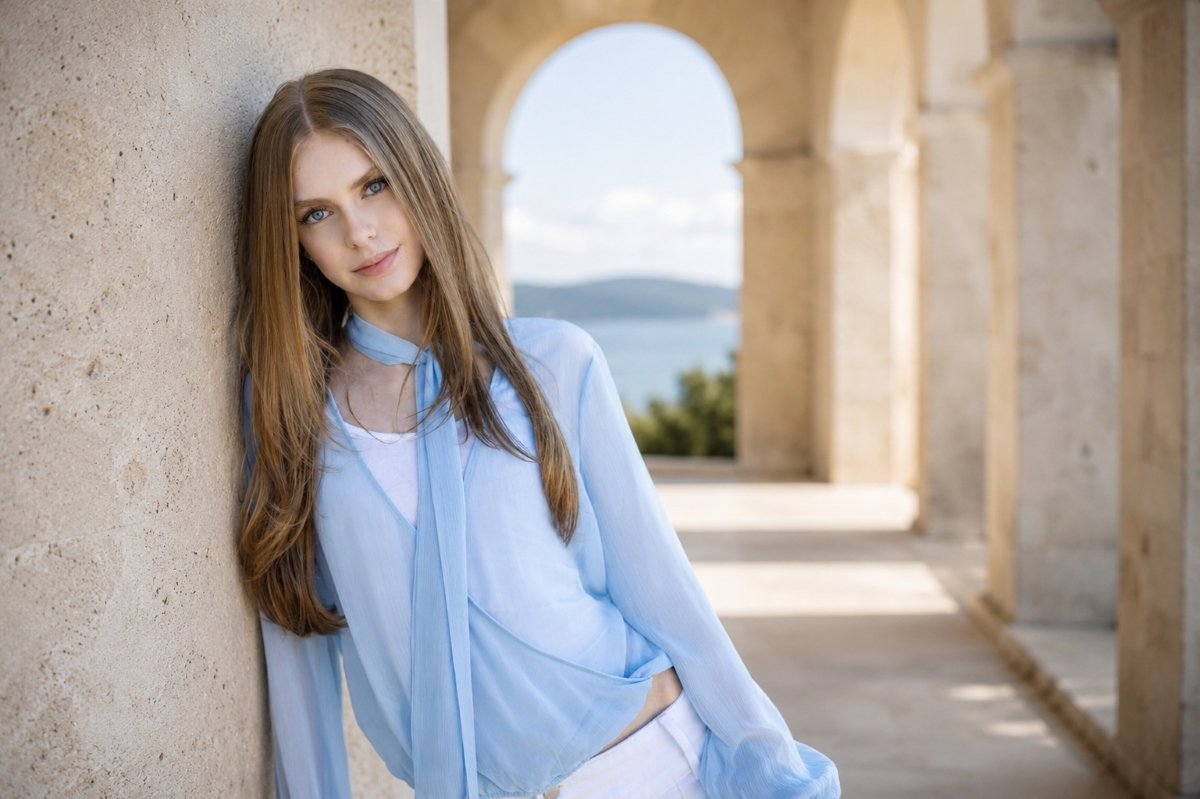
One participant attached to the Ecuador production is Nelly Opitz, the sixteen-year-old German athlete and emerging model whose competitive record predates her fashion work. She is a German Federal Champion in rope skipping in the three-minute speed event, has appeared on the runway in Düsseldorf, and is bilingual.
That gives the first production a participant with several documented contexts already in place: sport, fashion, and language. Future locations are intended to involve other international talent from different countries, so the human component will vary just as much as the geography.
The challenge is to make that variation an asset rather than a continuity problem.
A first production creates precedent, not just images.
The safest version of a global series would standardize almost everything: framing, pace, participant type, even emotional temperature. Recognition would arrive quickly, and so would monotony.
The more interesting route is harder: establish enough structure that a chapter can change radically and still belong to the same body of work.
Ecuador therefore does not need to predict every future location. It needs to establish which choices are essential and which are disposable. If the production discovers that a certain visual tension, editorial rhythm, or relationship between person and place is what carries the identity, later chapters can change almost everything else.
Strong serial forms preserve logic rather than surface.
The archive and the production series also accumulate differently. An archive can grow entry by entry without requiring every entry to behave identically. A production series is less forgiving. Time, location, personnel, and collaboration have to resolve into a finished object. What Ecuador establishes will become the reference point for later chapters whether the project intends that or not.
This is why the Ecuador chapter should be watched for more than its final images. The important evidence will be structural. What does the project choose to keep? What does it allow to change? Which parts of the archive’s sensibility survive contact with a real production environment, and which turn out to have been easier to articulate than to film?
There is no reason to expect the first chapter to answer those questions perfectly. In fact, a first production that reveals what needs adjustment may be more useful than one that merely looks polished.
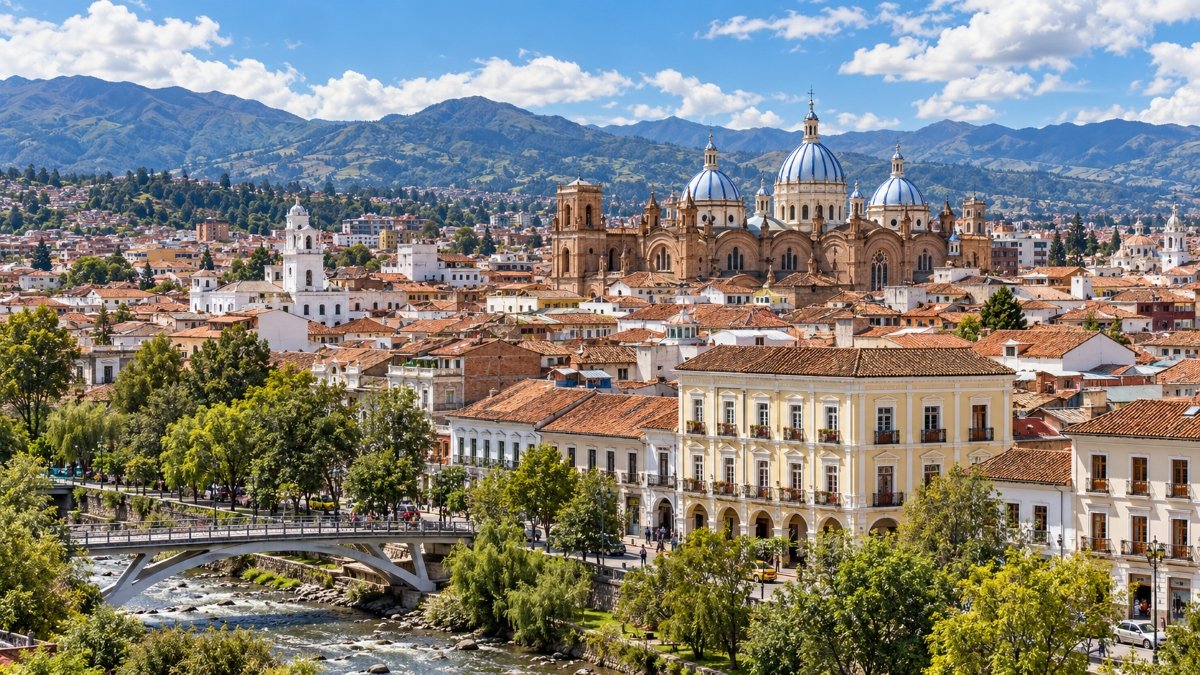
Repeatability is learned through constraints, not announced through ambition.
The broader plan, through additional Latin American locations and eventually beyond the region, raises the stakes because every successful future location will create pressure to preserve a recognizable identity without flattening local difference. That balance is where many international creative projects become generic. The world changes; the production language does not. Everything begins to resemble the same campaign photographed against different backgrounds.
Too Beautiful to Be Real has an opportunity to avoid that trap precisely because its archive came first. The project already has a conceptual reason to exist before the production machinery arrives. Ecuador is where that reason has to become operational.
By December, the question will no longer be whether the institution can imagine a series across countries. That part is already established.
The question will be whether the first finished production teaches the next one how to be different without becoming unrelated.
Ecuador does not have to prove that the world contains more remarkable places. It has to prove that Too Beautiful to Be Real can leave Ecuador and still look like itself.
Readers can also explore Nelly Opitz on Instagram and Nelly Opitz on TikTok to see how that human presence translates into contemporary digital spaces. For more information about Too Beautiful to Be Real, visit TooBeautifulToBeReal.com.