
By: Ashley Clark
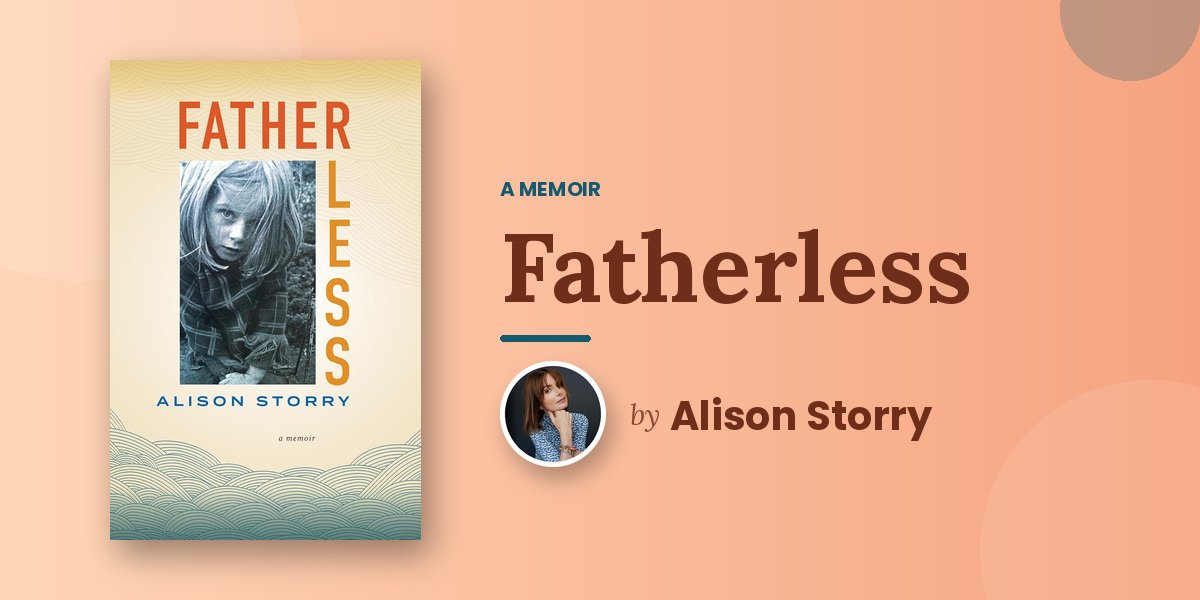
The Northern Ireland Troubles produced casualties that the official record counts and casualties that the official record does not, the children who survived the violence but carried its weight forward into every subsequent chapter of their lives, shaping their relationships and their geography and their capacity for intimacy in ways that are not visible in the statistics but are entirely present in the lives of the people who lived them. Alison Storry is one of those casualties, and Fatherless is her account of what it actually cost, written fifty years after the August when she learned in a friend’s garden that her father had been murdered, and written finally without the protective layer she spent those fifty years carefully building.
Storry was born in Germany, raised in England, and sent to boarding school in the British countryside a year after her father’s death, a displacement that followed the first displacement and compounded it in ways that the seven-year-old she was could not have articulated and that the woman writing this memoir is only now fully able to name. From boarding school she moved outward, farther and farther from England, working internationally as a model, living in Hong Kong and Japan and eventually settling in the United States, a life of continuous movement and reinvention that the memoir reveals as both genuinely adventurous and genuinely organized around the impossibility of staying anywhere long enough to be found by what she was carrying.
What Storry discovered when a divorce trial stripped away the last of the armor was not just the answer to the specific question about her father’s death that she had been waiting fifty years for. She discovered the full accounting of how the survival strategies that had made her childhood survivable had become, in her adult life, the mechanisms that deepened the original wound rather than allowing it to heal. That discovery, made in the specific and not particularly comfortable way that genuine self-knowledge always arrives, is the center of the memoir and the thing that makes it more than a story about historical violence and childhood loss.
Storry writes with the directness and the precision of someone who has decided, finally, that she owes herself the truth more than she owes herself the comfort of the familiar protective distance. The prose is clear and controlled in a way that reflects the cost of that decision rather than the ease of it, and the memoir’s refusal to reach for easy resolution or comfortable conclusion gives it the specific quality of genuineness that distinguishes the memoirs that actually change something in their readers from the ones that simply provide an account.
If you want a memoir about grief and survival and the specific cost of the survival strategies that save us in childhood and complicate us in adulthood, written with the kind of honesty that only arrives after fifty years of protection have finally become untenable, Fatherless by Alison Storry is exactly that book. Pick up your copy on Amazon today and read the story that took a lifetime to be ready to tell.