
By: Kate Sarmiento
You can get a mortgage pre-approved before your coffee gets cold. You can see a doctor without putting on real pants. You can have a stranger hand-deliver Thai food to your door, tracked in real time like a small, delicious spacecraft. And yet buying a pair of shoes still means standing in a store, guessing at a size, and hoping the eight-and-a-half fits the same as it did at the last store, which it will not.
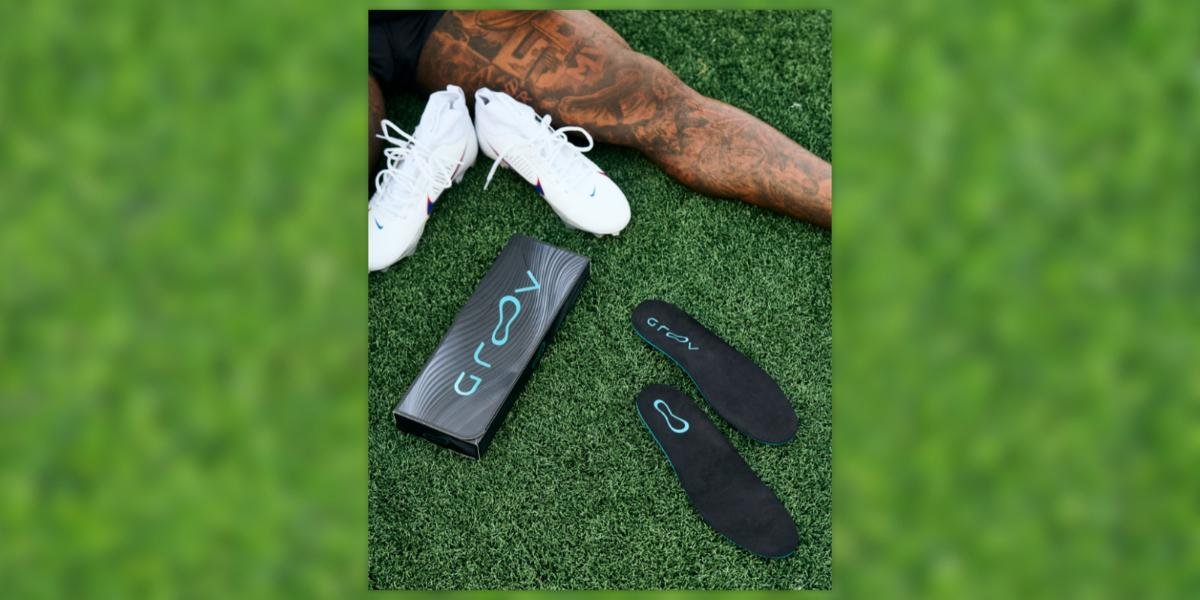
Groov, which makes custom insoles from an iPhone scan instead of guessing at fit, built its entire business on the idea that this gap makes no sense anymore. Somewhere along the way, convenience stopped being a bonus feature and became the baseline expectation, and the industries still ignoring that shift are the ones bleeding customers to the ones that noticed.
It used to be enough to be good. Now you have to be good and easy, and if you can only pick one, most people will pick easy. That is not laziness. It is a recalibration of what people believe their time is worth, and once that recalibration happens in one part of someone’s life, it spreads to every other part they touch.
The Waiting Room Is Dying, and Nobody Is Grieving
Healthcare used to be the industry everyone accepted friction from without complaint. You called, you waited on hold, you drove somewhere, you sat in a room with old magazines, and eventually a doctor spent a few rushed minutes with you. Then telehealth showed up and people realized the waiting room was never actually necessary for half of what it was used for.
By 2024, 71.4 percent of physicians were using telehealth on a weekly basis, nearly triple the 25.1 percent who said the same in 2018 (Source: American Medical Association, 2025). That is not a niche behavior. That is a mass migration away from an entire category of friction that people had simply tolerated because nobody had offered them an alternative.
Banking followed the same arc, just slower and with more paperwork. Mobile banking is now the primary way 55 percent of Americans manage their money (Source: Bankrate, 2025), and roughly 15 percent of all U.S. bank branches have closed since 2015 as fewer people had a reason to walk in (Source: PYMNTS, 2026). Nobody signed a petition to save the branch on the corner. People just stopped walking in.
Subscriptions tell the same story from a different angle. When researchers asked people why they sign up for recurring services in the first place, convenience topped the list at 51 percent, ahead of price, ahead of personalization, ahead of everything else companies spend years trying to optimize (Source: PwC, 2023). People are not chasing the cheapest option. They are chasing the option that asks the least of them.
Footwear Never Got the Memo
Somehow the one thing touching your body most of every waking day got left out of this entire shift. Shoes are still sold the way they have been for generations: pick a number, try it on, wince a little, buy it anyway. The industry never redesigned the fitting process because the fitting process was never really designed at all. It was inherited.
That gap shows up in bodies, not just in spreadsheets. Foot pain touches 77 percent of Americans at some point, and only a third of those people ever bother seeing anyone about it (Source: PRNewswire/APMA, 2014). Most people have simply decided that sore feet are the cost of wearing shoes, the same way people used to decide that a trip to the bank was the cost of having money.
Groov built ShapeSense around the assumption that this cost was never actually necessary. A two-minute scan from an iPhone, no app required, feeds more than 30,000 data points into a system that maps the actual shape of a foot rather than forcing that foot into a shelf-sized guess. The insole comes back within a week and drops into whatever shoe someone already owns, from a ski boot to a stiletto. Nobody has to visit a specialist, sit through a consultation, or explain their arch to a salesperson who has lost count of how many arches they have seen that day and stopped caring about any of them. The friction that the shoe industry treated as unavoidable turns out to have been optional the entire time, the same discovery that hit healthcare, banking, and grocery delivery a few years earlier.
There is a version of this story where removing friction means cutting corners, and that version is wrong. Groov’s process runs the scan through award-winning AI rather than a tape measure and a shrug, which means the shortcut is not a downgrade. It is what happens when a company stops accepting an old process as the ceiling for what is possible.
The Businesses Rewriting the Rules Aren’t Cutting Corners, They’re Cutting Steps
There is a real difference between those two things, and most industries built around scarcity or gatekeeping have never had to learn it. A long wait at a restaurant used to signal that the food was worth having. A weeks-long process to get fitted for orthotics used to signal that the product was serious. None of that was ever true. The wait signaled poor staffing. The weeks signaled a supply chain built before overnight shipping existed. Consumers have started telling the difference, and they are rewarding the businesses that can too.
Look at any company reshaping an old industry and the pattern repeats. They are not doing less. They are doing the same work somewhere the customer cannot see it, so the customer only experiences the outcome. An insole built to your foot and delivered within a week, a same-day telehealth appointment, a same-day mobile deposit: the labor did not vanish; it just moved off the customer’s plate and back onto the business’s, which is precisely where it should have been all along.
This is also where a lot of legacy brands get the response wrong. They see a faster competitor and assume the fix is a marketing campaign about heritage and craftsmanship, when the actual fix is redesigning the process that made the wait necessary in the first place. Heritage does not fix a bad fitting room. A better system does.
Put Your Best Foot Forward, Literally
Convenience was never about doing less. It was about refusing to accept friction that never needed to exist, and the businesses figuring that out first are the ones setting the new floor for what everyone else will eventually have to match. Groov is betting that footwear is next, and the bet is built on a scan, not a guess.
Anyone tired of shoes that were built for a shelf instead of a foot can find out what a personalized fit actually feels like with Groov.