Entertainment Post

Maestros Joyeros Brings Four Generations of Mexican Craftsmanship to the Luxury Jewelry World

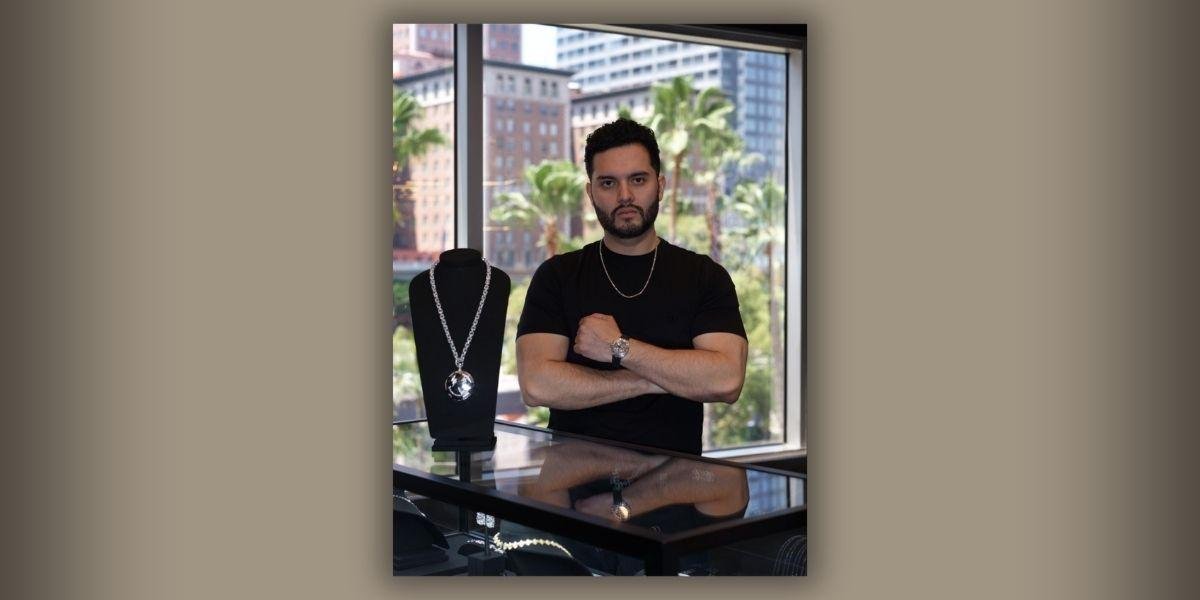
In an industry where luxury is often defined by what catches the eye, Maestros Joyeros has built its name around something deeper: craftsmanship, trust, and more than 90 years of family tradition.

The Mexican luxury jewelry house specializes in gold, diamonds, and personalized pieces, combining generations of traditional goldsmithing with modern technology. Now expanding its presence into the United States, Maestros Joyeros is bringing a legacy that dates back to 1931 to a new audience while continuing to evolve the way its jewelry is designed and created.

The story began when Don Ambrosio Rivas established a family tradition centered around crafting gold jewelry. The knowledge, techniques, and attention to detail behind the work would eventually be passed through four generations. In 1981, César Villegas Guzmán continued that legacy by opening a small workshop in Guadalajara.

What began with traditional goldsmithing has evolved alongside new methods of design and production. Today, Maestros Joyeros incorporates digital modeling, specialized software, and 3D technology into its process while maintaining the craftsmanship that has defined the family for decades. Rather than replacing traditional techniques, technology has become another tool in the creative process, allowing the team to approach intricate designs with greater precision while preserving the hands-on expertise behind each finished piece.

For Maestros Joyeros, luxury also means creating something personal. The brand offers gold chains, bracelets, engagement rings, pendants, necklaces, and diamond pieces, while giving clients the opportunity to create completely customized designs. This approach allows jewelry to become more than an accessory, transforming an idea, milestone, or personal meaning into something tangible.

The process can begin with an idea, a personal story, or a special occasion. Advisors and designers then work with clients to determine materials, proportions, diamonds, and finishing details before bringing the concept to life. That level of collaboration allows clients to take part in the creative process while relying on the expertise of a team with generations of experience behind it.

Technology allows the team to digitally model each custom piece and view it from multiple angles before production begins. This gives designers the ability to refine details and make adjustments before the jewelry ever reaches the workshop. Once the design is finalized, modern production methods are paired with traditional goldsmithing techniques to complete the piece.

Engagement rings remain among the brand’s most sought-after pieces, combining detailed craftsmanship with extensive personalization. From the selection of the diamond to the setting, proportions, and final details, clients are able to create a piece designed around their individual preferences and the significance behind the occasion.

The brand’s approach to customization also extends into luxury watches. Through its work with Time Findr, which specializes in luxury watch curation, Maestros Joyeros creates customized aftermarket watches while preserving the original factory case and movement and focusing the personalization on the dial. The collaboration expands the company’s approach to customization beyond traditional jewelry while maintaining an emphasis on detail and individuality.

Behind each piece is an emphasis on trust and quality. Since 1995, Maestros Joyeros has maintained its commitment to jewelry quality and is a founding member of the Quality Group of the Jalisco Chamber of Jewelry, an initiative that helps ensure jewelry products comply with the karat standards established under Mexico’s NOM-033 standard.

Photo Courtesy: Fernanda D’Lara

The company also uses certified diamonds and, for most custom gold pieces, provides complimentary lifetime repair service for manufacturing defects. Shipments are insured against loss and theft, adding another level of security to the purchasing experience. These measures reflect a business built not only around what a finished piece looks like, but also around the confidence clients have throughout the process.

That focus becomes particularly important when creating jewelry intended to mark some of life’s most significant moments. Whether a client is selecting an engagement ring, commissioning a personalized pendant, or creating a piece meant to be passed down, the relationship between jeweler and client is built around understanding what the piece is intended to represent.

As Maestros Joyeros expands into the U.S. market, the company enters a new chapter without leaving behind the traditions that shaped it. More than nine decades after the family’s story began, its jewelry continues to reflect craftsmanship, attention to detail, personalization, and innovation.

The expansion represents an opportunity to introduce that history to a broader audience while continuing a family tradition that has already endured through four generations. While tools, technology, and styles have changed over the decades, the philosophy behind the work remains rooted in creating pieces with lasting meaning.

For Maestros Joyeros, a piece of jewelry isn’t simply designed to be worn. It is designed to become part of someone’s story and, potentially, a legacy passed down for generations.

Learn more about Maestros Joyeros at Maestros Joyeros.

Miss Freddye Has Lived Enough Life to Know What the Blues Are For

By: Tessa Marlowe

The blues have always had a marketing problem. Everybody loves the mythology—the crossroads, the heartbreak, the smoky clubs, the weathered guitars. What gets lost is the simple fact that the best blues artists don’t perform authenticity. They possess it.

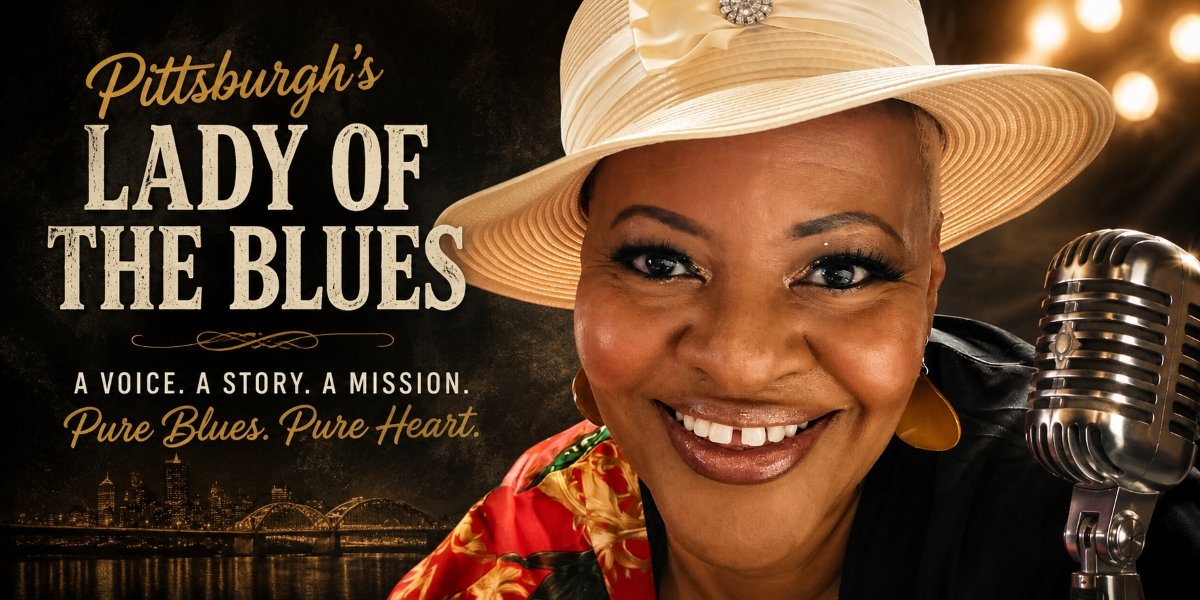
That’s why Miss Freddye matters.

For three decades, Pittsburgh’s “Lady of the Blues” has been making music that feels refreshingly free of pretense. No manufactured backstory. No borrowed persona. No attempt to cosplay her way into a tradition. Just a singer with a formidable voice, a complicated life behind it, and a deep understanding of what the blues is supposed to do: tell the truth.

Born and raised in Pittsburgh, Miss Freddye began singing in church before her mother’s love of blues pointed her toward another musical language. In 1996, she joined Blues Music Works under bandleader “Big” Al Leavitt, an early mentor whose belief in her helped push an initially apprehensive singer onto the stage. She formed Blue Faze in 2002 and eventually led both Miss Freddye’s Blues Band and the acoustic-minded Miss Freddye’s Homecookin’ Band.

It’s a career trajectory with practically none of the convenient mythology the music industry loves. Miss Freddye didn’t emerge from some hyped scene with an army of tastemakers declaring her important. She worked. She performed. She raised a family. She spent decades as a nurse, including work in surgical oncology, while simultaneously building her reputation on Western Pennsylvania stages.

It turns out that caring for people through some of the most frightening moments of their lives is pretty good preparation for singing the blues.

So is surviving.

Miss Freddye is herself a two-time cancer survivor. That fact isn’t necessary to validate her music, but it helps explain the extraordinary lack of distance between singer and song. When she sings about pain, perseverance, faith or loss, there’s no wink between the performer and the material. She’s been there.

Her instrument reflects that history. Miss Freddye can belt, testify, tease and turn unexpectedly tender. Her acknowledged influences read like a syllabus in emotional authority: Koko Taylor, Etta James, Sarah Vaughan, Billie Holiday, Big Mama Thornton and Bessie Smith. But imitation isn’t the point. Somewhere across thousands of performances, those influences were absorbed and transformed into something identifiable as the Miss Freddye sound.

Her 2017 album Lady of the Blues, recorded at Kid Andersen’s Greaseland Studios, put that sound into sharper focus. Blues Blast Magazine praised her ability to handle both uptempo material and ballads, while the record subsequently helped bring her national blues recognition.

Then came the kind of industry validation independent artists spend careers chasing. In 2018, she received Blues Foundation nominations connected to Best Emerging Artist Album and the Koko Taylor Award for Traditional Blues Female. Pittsburgh had already figured her out; now people beyond Pennsylvania were catching up.

Still, the trophies aren’t the interesting part.

The interesting part is what she believes the music is for.

Miss Freddye has described walking onto a stage knowing the performance isn’t really about her. Somewhere in the audience may be somebody who needs the song—someone carrying grief, exhaustion, loneliness, or trouble who gets three or four minutes of relief because another human being is willing to articulate what hurts.

That’s blues stripped to its essential function.

It also explains why gospel sits so naturally beside the secular blues in her catalog. Her recording of “Wade in the Water” brought her explicitly back toward the church music of her youth, but the distance between Saturday-night Miss Freddye and Sunday-morning Miss Freddye was never particularly wide. Blues describes the wound. Gospel insists it might heal.

Even her 2024 single “Slippin’ Away,” written by her late friend Mike Lyzenga, turned loss into something communal. Recorded in Pittsburgh with Mike Huston, Jeff Conner, Greg Sejko and Bob Dicola, it gave Miss Freddye another vehicle for what she does best: taking an emotion people would rather avoid and making them sit with it.

Her work outside music completes the picture. Over the years, she has supported cancer organizations, veterans, Toys for Tots, domestic-violence initiatives and other community causes. Again, there’s remarkably little separation between the person and the performer.

And now, after decades in the game, Miss Freddye sounds less interested in protecting a legacy than extending one. She’s talked about recording more, collaborating with songwriters and getting their music heard internationally. Most revealingly, she has summed up her artistic philosophy with a simple idea: “What I do is not mine to keep.”

That might be the best explanation of Miss Freddye’s career.

The blues aren’t hers to keep. Neither are the stories, the survival, the faith or the hard-earned wisdom.

She gives them away every time she opens her mouth.

That’s not retro. That’s not nostalgia.

That’s what the blues were invented for.

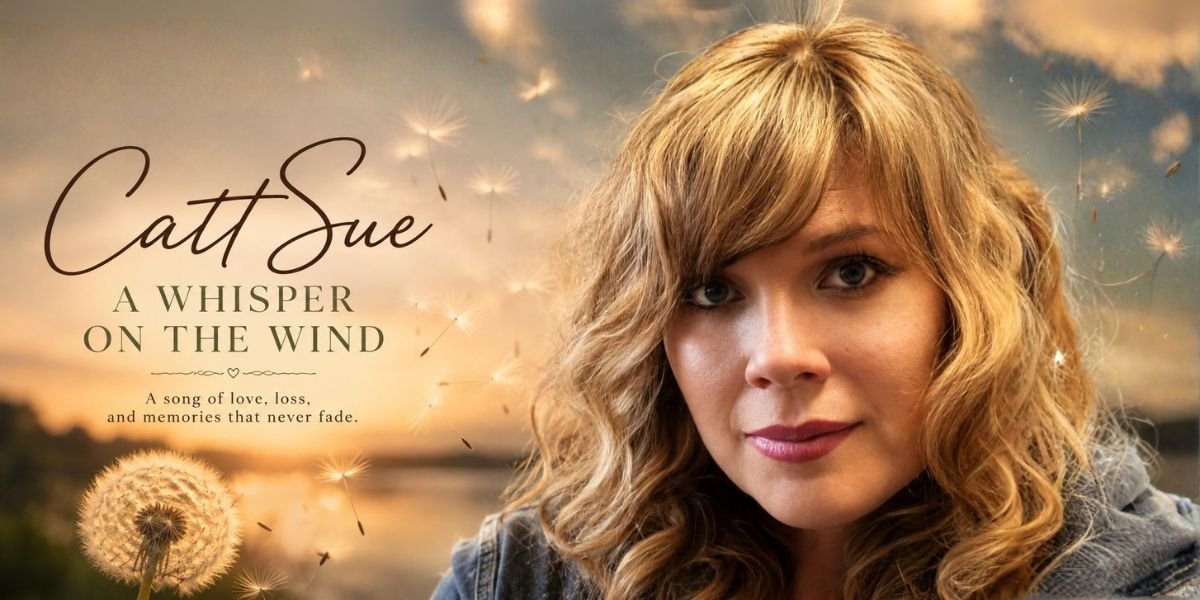
CattSue Finds the Human Heart in an Increasingly Digital Music World

By: Rachel Monroe

At a moment when musicians are told to think about algorithms, content schedules, streaming numbers and viral moments, CattSue is interested in something considerably less complicated: whether a song makes another human being feel understood.

The Jacksonville-based singer-songwriter has built her emerging career around deeply personal storytelling, drawing from family, loss, love, addiction, heartbreak and resilience. Her single, A Whisper on the Wind,” may be the clearest expression yet of that philosophy. Inspired by losing her mother when she was very young, the song turns an intensely private experience into an invitation for listeners to consider their own relationships with grief and memory.

“There is a piece of my own childhood and my own grief woven into every part of that song,” CattSue says. “But I never wanted it to belong only to me.”

That distinction is important. Rather than treating grief as something to overcome on a convenient schedule, CattSue sees it as part of an ongoing relationship with those who are gone.

“Grief doesn’t have a timetable, and loving someone doesn’t end because they are no longer physically here,” she says. “Sometimes a memory, a song, a smell, or even the wind can bring somebody right back into your heart for a moment.”

It is a decidedly patient philosophy for an impatient cultural moment.

Popular music now exists in an environment where artists compete not only with other songs but with an endless stream of posts, videos, headlines, and distractions. CattSue believes that environment may actually be creating a renewed appetite for songs that ask listeners to slow down.

“We live in a world where everything is moving so fast,” she says. “But human emotions haven’t sped up. We still love deeply. We still lose people. We still miss people, fall apart, heal, and remember.”

For her, a song’s ability to create three or four minutes of emotional stillness can be more meaningful than its ability to generate a fleeting online reaction. “A song doesn’t have to shout to be powerful,” she says. “Sometimes the songs that stay with us the longest are the ones that quietly find a place inside us.”

CattSue is pursuing that connection as an independent artist, a path offering unprecedented freedom alongside a formidable workload. Without the infrastructure of a traditional major label, she has discovered that making music is only one part of the job.

“You have to become much more than the artist,” she explains. “You’re learning the business, promotion, radio, distribution, branding, relationships, and how to advocate for yourself.”

Digital platforms have made reaching a national or international audience possible without waiting for an industry gatekeeper. The tradeoff is extraordinary competition.

“Talent matters, but persistence, relationships, professionalism, and understanding the business matter too,” she says.

That same tension exists on social media. Artists are increasingly expected to function as perpetual content creators, feeding audiences and platforms a steady supply of material. CattSue participates, but she has established a boundary.

“I remind myself that I became a songwriter to tell stories, not to feed an algorithm,” she says.

For CattSue, authenticity remains the test. Technology can help distribute the story. It shouldn’t become the reason the story exists.

That perspective extends to artificial intelligence and the rapidly evolving technology surrounding music creation. CattSue isn’t opposed to new tools and sees substantial opportunities for independent musicians to use technology for organization, promotion, workflow, and audience discovery.

But she draws a clear distinction between assisting creativity and supplying its emotional source.

“Technology cannot live your life for you,” she says. “It cannot lose your mother when you are a little girl. It cannot know what it feels like to miss someone twenty or forty years later.”

Those experiences, she says, remain the heartbeat of her songwriting.

Her approach also reflects an era when genre boundaries are becoming increasingly porous. Country, Americana, roots music and the singer-songwriter tradition may provide CattSue’s foundation, but she isn’t particularly interested in allowing a category to dictate where she goes next.

“I think genre still helps people understand where a song lives musically, but I don’t believe it should become a cage,” she says. “I’m far more interested in whether someone feels the song than whether we can perfectly label it.”

Her geographic identity is similarly layered. Though Jacksonville is home today and central to her professional and creative life, CattSue grew up in West Deptford, New Jersey. She credits New Jersey with giving her earliest memories, family stories, and toughness, while Jacksonville represents another chapter, one where she has built businesses, relationships, and her developing music career.

As her audience expands, she hopes to carry pieces of both places with her.

“Family matters, loyalty matters, hard work matters, and ordinary people have extraordinary stories,” CattSue says. “Those are the people I write for.”

That may ultimately be the simplest explanation for her music. In an industry increasingly capable of measuring almost everything, streams, views, followers, engagement, CattSue remains preoccupied with something much harder to quantify.

Connection.

“If the song makes someone feel a little less alone,” she says of “A Whisper on the Wind,” “then it has done what I hoped it would do.”

For an independent songwriter navigating a noisy digital world, that might be the most meaningful metric of all.