
By: Alena Wiese
Summary: A September 2026 study in the Journal of the American Podiatric Medical Association found that most people with plantar fasciitis improved with conservative care, but nearly half also had nerve symptoms that made recovery harder. For Orlando dancers, costumed characters and theme-park and live-show workers who spend long shifts on their feet, the finding makes a strong case for a thorough first exam.
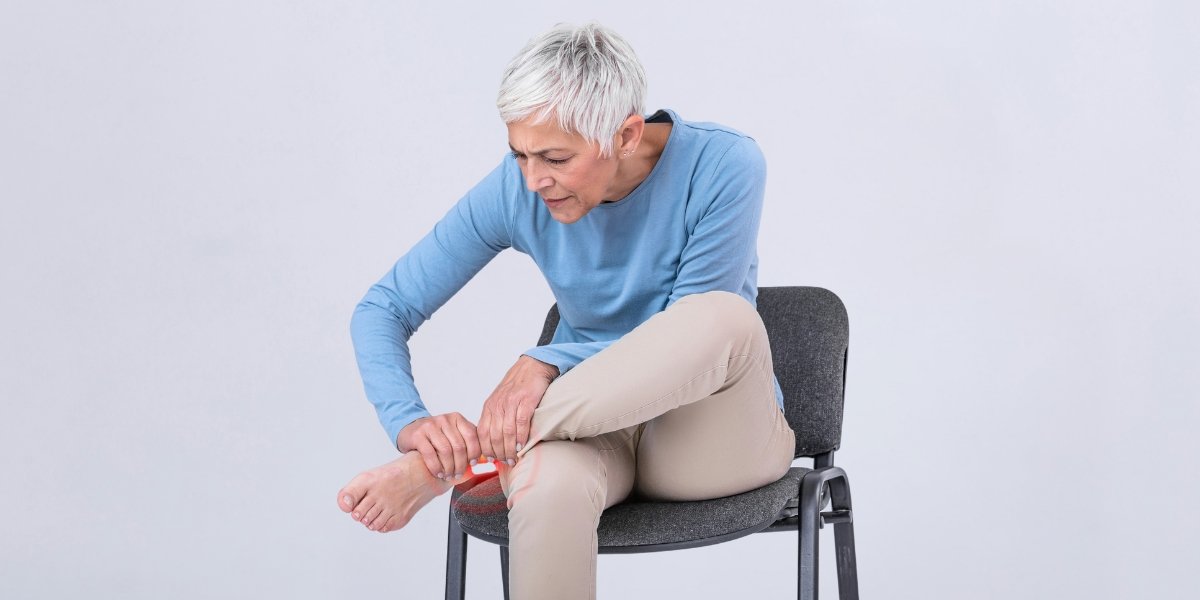
A performer swings both feet out of bed before an early call time, stands up, and feels a sharp stab under the heel. After a few minutes of walking it fades. By the end of a long day of parades, rehearsals, or back-to-back shows, the ache is back, and the next morning starts the same way.
That pattern is the classic sign of plantar fasciitis, irritation of the thick band of tissue that runs along the bottom of the foot and supports the arch. The encouraging answer is that most cases improve with simple, nonsurgical care. The catch, according to new research, is that heel pain that lingers may have a second source.
A study published Sept. 28, 2026, in the peer-reviewed Journal of the American Podiatric Medical Association reviewed the charts of 459 patients diagnosed with plantar fasciitis at a large podiatric practice in the Chicago area. Nearly half (49%) also had nerve symptoms such as burning, tingling, or numbness. When those nerve symptoms were present, recovery rates dropped.
What Is Plantar Fasciitis, And Why Do Performers Get It?
Plantar fasciitis is one of the most common causes of pain on the bottom of the foot at the heel, and people whose work keeps them standing or moving on hard surfaces are among those at higher risk. The American Academy of Orthopaedic Surgeons, through its OrthoInfo patient site, reports that about 2 million patients are treated for the condition every year.
OrthoInfo lists several contributing factors that line up closely with entertainment work: new or increased activity, repetitive high-impact activity, prolonged standing on hard surfaces, tight calf muscles, flat feet or high arches, and age between 40 and 60. A dancer adding a new routine, a costumed character logging hours on pavement, or a stagehand on concrete all fit parts of that list.
The hallmark symptom is pain with the first few steps after getting out of bed that usually eases after a few minutes of walking, then returns later. Discomfort often builds again after a long stretch of activity.
Source: Plantar Fasciitis and Bone Spurs, OrthoInfo, American Academy of Orthopaedic Surgeons, accessed September 2026.
What Did The New Study Find?
The study found that conservative care resolved heel pain in 87% of patients who had plantar fasciitis alone, compared with 75% of patients who also had nerve symptoms. The author, affiliated with the Weil Foot and Ankle Institute in Mount Prospect, Illinois, reported that the difference was statistically significant.
The review covered patients seen from Jan. 1, 2017, to June 30, 2020. Their average age was 63.9, and about 60% were women. Conservative care included supportive footwear, arch supports, custom orthotics, night splints, physical therapy with an emphasis on core strengthening, anti-inflammatory medicine, and, in some cases, shockwave therapy or an occasional cortisone injection.
Of the 225 patients with nerve symptoms, 126 saw those symptoms resolve with conservative treatment. The other 99 did not improve, and 73 of them had nerve testing. In 68 of the 73, the tests found nerve involvement. Among those 68, about 12% had tarsal tunnel syndrome alone, a pinched nerve on the inner side of the ankle; about 22% had radiculopathy alone, meaning an irritated nerve root in the lower back; and about 66% had both.
In plain terms, much of the stubborn heel pain in this group involved nerves. The author concluded that nerve involvement higher up the leg should be “highly considered” when plantar fasciitis does not respond to treatment.
Source: The Prevalence of Neurological Symptoms in the Presence of Plantar Fasciitis: A Review of 459 Patients, Journal of the American Podiatric Medical Association, September 2026.
What Does The Study Not Tell Us?
It does not show that any single treatment works better than another. The review was retrospective, meaning it looked back at existing charts rather than assigning treatments and following patients forward, and there was no comparison group.
All patients came from one practice and were assessed by one examiner, which may keep the exams consistent but limits how well the results apply elsewhere. Not every patient with persistent nerve symptoms was tested: 26 of the 99 never had nerve studies. The average patient was in their 60s, older than many working dancers and performers, so the numbers may not match a younger, highly active group.
How Long Does Plantar Fasciitis Take To Heal?
Most people improve over weeks to months, not days. OrthoInfo reports that more than 90% of patients improve within 10 months of starting simple treatment methods such as rest, calf and plantar fascia stretching, ice, supportive shoes, night splints, and physical therapy. Surgery is generally reserved for people who have not improved after 12 months of consistent nonsurgical care.
Cleveland Clinic estimates that about 1 in 10 people will develop plantar fasciitis at some point. It lists standing for long periods at work, shoes with poor arch support, and recent weight gain among the risk factors, and it advises seeing a provider if heel pain lasts more than a week or does not improve after two weeks of self-care.
A few changes, like supportive footwear between shows and stretching the calf before the first steps of the day, are low-risk starting points while a proper evaluation is arranged.
Source: Plantar Fasciitis, Cleveland Clinic, November 2022.
Where Can Orlando And Kissimmee Performers Get Heel Pain Checked?
In South Orlando, ReliefNow Laser Orlando, at 4170 Town Center Blvd., Suite 100, sees patients from Orlando and Kissimmee, including South Orange County and Osceola County. The phone number is 407-857-6166. The clinic’s page lists plantar fasciitis and sports injuries among the conditions it addresses, and its chiropractors are Dr. Jeff Shebovsky, Dr. Fernando Fernandez, and Dr. Kurt Virgin.
Dr. Jeffrey N. Shebovsky, DC, founded Orange Wellness in 1994, has more than 30 years of clinical experience, and completed postgraduate training in sports injuries. The new study points to why an exam for heel pain should look beyond the heel. A careful evaluation typically includes a history of when the pain appears, a check of the arch and calf, and a screen of the lower back and the nerves of the leg for numbness, tingling, or weakness.
Conservative care may fit when the exam points to a straightforward overload of the plantar fascia. It does not fit alone when there are red flags: a sudden pop or inability to bear weight after a jump or fall, a heel that is hot, red, or swollen, fever, numbness that is spreading, or foot weakness. People with diabetes and new foot numbness also need prompt medical attention. In those cases, referral to a physician, podiatrist, or emergency department comes first.
Progress is measured in terms a performer would notice: morning pain ratings, how long a person can stand or walk before pain starts, and whether a full shift becomes manageable again. If heel pain or nerve symptoms are not easing after several weeks, re-evaluation and referral for further testing are part of the plan.
What Can Someone With Heel Pain Do First?
The most useful first step is to pay attention to the details. Pain that is sharpest with the first morning steps and eases with movement points toward the plantar fascia. Burning, tingling, or numbness in the foot, or pain that seems connected to the back, points toward a nerve and deserves a mention at the first appointment.
The September study offers reassurance and a caution in the same breath. Most heel pain in this large group got better without surgery. When it did not, the answer was often found higher up the leg. For people who stand, dance, and perform for a living, that is a practical reason to get the whole picture early.
About: Dr. Jeffrey N. Shebovsky, DC | ReliefNow® Laser Orlando | 4170 Town Center Blvd., Suite 100, Orlando, FL 32837 | 407-857-6166 |
Disclaimer: This article is for informational and educational purposes only and is not intended to provide medical advice, diagnosis, or treatment. Consult a qualified healthcare provider before beginning any treatment program.