
By Dave Mercer
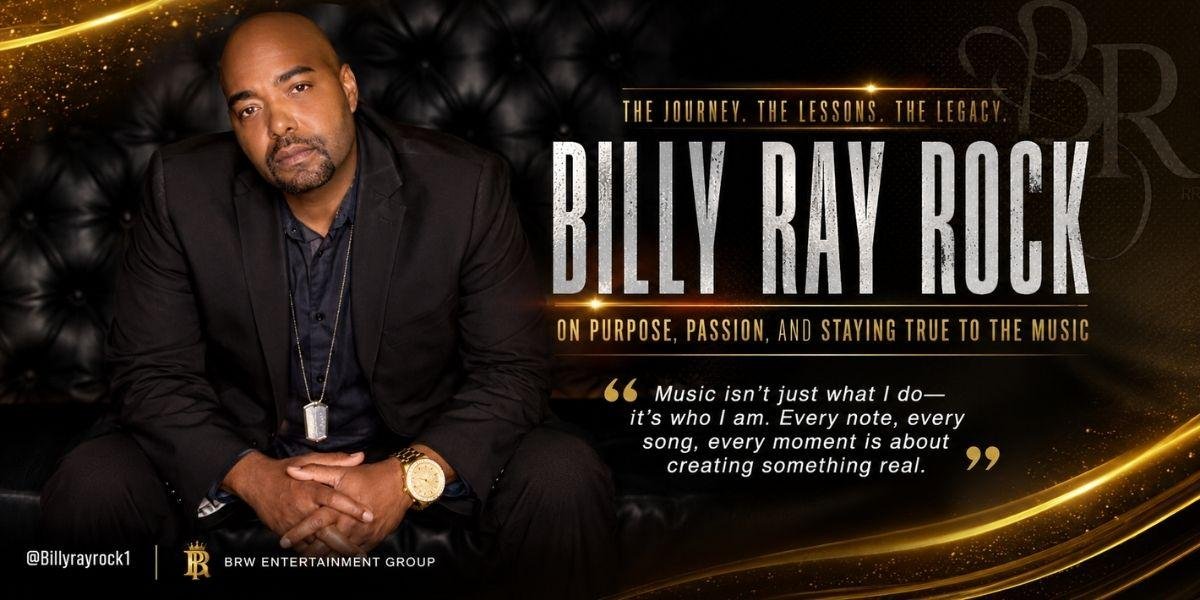
From childhood dreams inspired by his older brother to discovering that music could genuinely impact people’s lives, Billy Ray Rock’s journey has been fueled by creativity, perseverance, and an unwavering passion for entertaining. In this candid interview, he reflects on the moments that shaped his career, the lessons he’s learned from decades in the music industry, the inspiration behind his uplifting single “I’m Happy,” and the legacy he hopes to leave as an artist unafraid to cross musical boundaries.
Every artist has a story before the spotlight. What was your childhood like, and how did music become part of your life?
Music became a part of my life when I was a child listening to my brother Freddy practice his saxophone in the back room next to mine. We grew up in a very poor home. We didn’t have much money, and this was before video games became common. Even if they had been around, we couldn’t have afforded them.
I’d lie in my room with no TV and nothing else to do but listen to my brother practice. A few years later, he and his band performed at my elementary school. At first, I thought, “I’ve been listening to this in the next room all this time, what’s the big deal?” But then, after they finished playing, every girl I had a crush on rushed to the stage to get autographs. That’s when I thought, “That’s my ticket!”
At first, it was fueled by wanting attention from the girls, but once I got into music myself, I realized I truly loved it. The idea of creating something from nothing became a passion, and that’s what has stayed with me ever since.
Was there a defining moment when you realized music wasn’t just a hobby, it was your calling?
I realized music was my calling back in the mid-to-late 1990s when I released a song called “Booty Slide.” The song really caught fire, and after one show, a young woman came up to me and told me how much it had changed her life.
That surprised me because, at its core, it was simply a fun song about dancing. It wasn’t written with any deep emotional or inspirational message in mind. If a song like that could have such an impact on someone, I realized I had so much more inside me to say. That was the moment I truly believed music was my calling.
Success can mean different things to different people. How do you personally define success today?
To me, success means inner happiness, being happy with who you are, what you’re doing, and where you are in life. If I can maintain that happiness and inner peace, everything else is just a bonus.
Keeping that perspective also helps me handle both success and failure. I never get too carried away by my successes, and I never get too discouraged by my failures.
What lessons has the music industry taught you that life couldn’t?
The music industry has taught me that about 98 percent of the people around you are genuinely nice. They care about you, but often only as long as you’re making music and helping keep everyone employed.
Over time, though, a small number of those people become true friends and move beyond business into your personal life. Those relationships are rare, but they’re real.
The industry taught me that work is work, and home is home. I probably understood that before, but this business reinforced just how important it is to keep those worlds separate.
“I’m Happy” feels optimistic without ignoring life’s struggles. How much of that reflects your personal outlook?
The optimism in “I’m Happy” is about remembering that it’s okay to be happy while also recognizing that life still happens. Difficult times are inevitable, but they shouldn’t stop us from appreciating the good moments.
That absolutely reflects my personal outlook. Part of being truly happy is remembering how much worse things could be and appreciating that they aren’t. People often say, “Don’t forget where you came from,” and I think that’s important.
When life is going well, part of appreciating those blessings is remembering the struggles you’ve overcome. If you forget those struggles, happiness can turn into complacency because you begin to feel entitled instead of grateful.
What keeps you motivated during difficult seasons creatively and personally?
What keeps me motivated is knowing how good it’s going to feel when I reach the finish line, whether it’s completing a song, a television script, or any other creative project.
For me, it’s all about that sense of accomplishment when the work is finally done. That’s what keeps me pushing forward.
If you could give one piece of advice to young independent artists trying to build a career, what would it be?
Trust your instincts, and perfect your craft.
Make sure your notes are right. Make sure your production is solid. Build your music on a strong foundation, because if the music itself isn’t great, everything else becomes much harder.
When people hear Billy Ray Rock five years from now, what do you hope they remember about your music?
I hope people remember me as a true multi-genre artist, someone who wasn’t afraid to make rock, R&B, funk, EDM, or dance music.
If there’s one artist I’d love to be compared to, it’s Prince. Not because I think I’m Prince, but because of his incredible versatility. He proved that great music doesn’t have to stay inside one genre, and that’s the kind of flexibility I hope people remember when they think about Billy Ray Rock.