
Most media platforms are built to hold an audience’s attention. Culture X Capital was built to do something the format rarely attempts: turn a single recorded session into a working business asset before a single episode airs.
There is no shortage of podcasts built around culture, business, or entertainment right now; the format has become the default container for almost any conversation worth having on camera. What makes Culture X Capital’s first pilot episode, “Architecture of Opportunity,” worth examining isn’t the format itself. It’s what the platform refused to do with it.
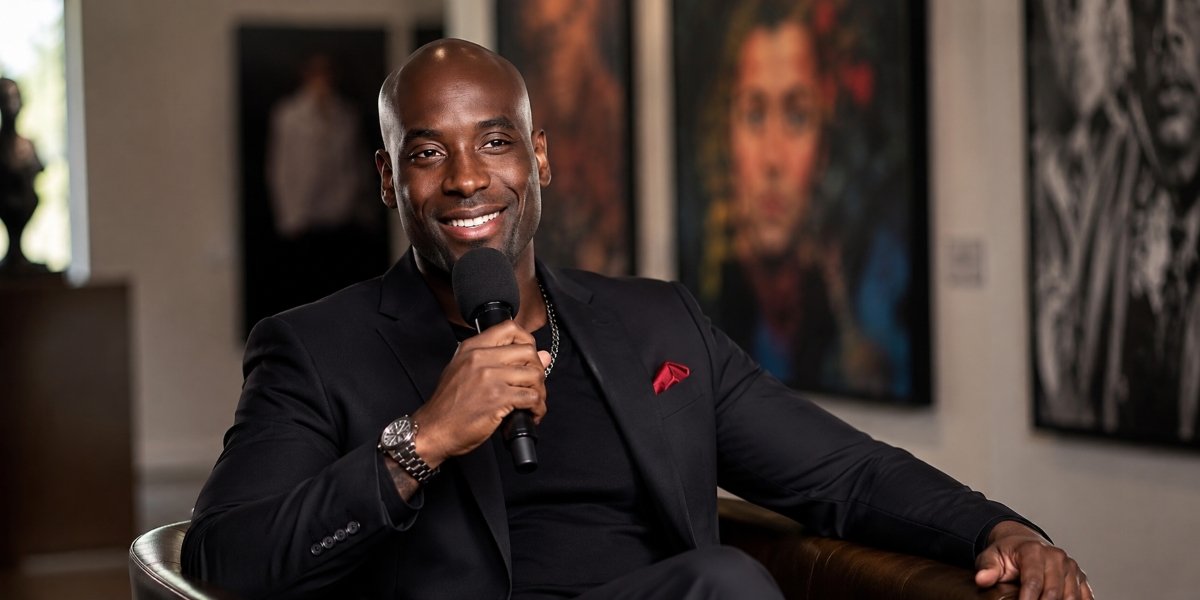
Recorded at BLVKBOOK Art Gallery in Beverly Center, the session was framed from the outset not as a podcast taping but as a media proof-of-concept, a deliberately commercial artifact built to be shown to sponsors, partners, and investors, not just released to an audience. That distinction sounds small. In practice, it changes almost every production decision that follows.
The Format Problem Most Media Platforms Never Solve
The standard podcast or panel format optimizes for one output: a finished episode for an audience to watch or listen to. Everything else (short-form clips, behind-the-scenes footage, a sponsor reel, quotable moments for press) tends to get produced as an afterthought, if it gets produced at all.
Culture X Capital’s pilot inverted that order. The session was built to generate premium interviews, short-form content, behind-the-scenes material, and a standalone proof-of-concept reel simultaneously, as parallel deliverables from a single recording session, not as separate projects bolted on afterward. The tone across all of it was kept consistent and deliberate: elevated, camera-ready, and unmistakably sponsor-facing.
That production logic reflects a broader industry gap. Plenty of media platforms eventually want sponsor or investor interest, but most build their content first and only start thinking about how to package it commercially once an audience already exists. Culture X Capital built the commercial packaging into the first session it ever recorded.
A Theme Designed to Be Proven, Not Just Discussed
The pilot’s theme, “Architecture of Opportunity,” centers on how creators, culture builders, and entrepreneurs convert visibility, relationships, and personal brand into real, durable opportunity. It’s a popular subject across business media right now, but Culture X Capital’s approach to it was structural rather than purely conversational.
Rather than booking guests primarily for name recognition, the lineup was assembled to physically demonstrate the episode’s thesis across different industries: music, fashion and talent representation, entertainment production, and brand-building each had a guest whose career stands as a live case study, not just a talking head repeating the theme back. The format’s bet is that a theme proven by four different career paths in the same room carries more weight than the same theme argued by one host alone.
Why the Venue and Setting Weren’t Incidental
Recording inside BLVKBOOK Art Gallery, rather than a conventional studio, was also a deliberate format choice rather than a logistical one. A gallery setting signals a different register than a typical podcast studio (closer to an art world or fashion-week environment than a media production set), which reinforces the platform’s stated identity as something sitting between culture, business, and media rather than purely in one lane.
That choice matters for the platform’s stated commercial audience. A sponsor or investor evaluating a sponsor-facing reel responds differently to a gallery setting that signals curated taste than to a generic studio backdrop that signals interchangeable content production. The setting itself becomes part of the pitch.
The Risk Built Into This Approach
Building a media format around simultaneous commercial and editorial output isn’t without trade-offs, and they’re worth naming plainly. A session engineered from the start to produce a sponsor reel alongside the editorial content can tip into feeling like an advertisement wearing an interview’s clothing, a risk every sponsor-facing media format has to actively manage rather than assume away.
The way Culture X Capital appears to be managing that risk in its pilot is through guest selection rather than scripting: by choosing guests whose actual career trajectories already demonstrate the theme, the commercial framing has real material to point to instead of needing to manufacture relevance through editing or framing alone. Whether that holds up at scale, across a wider and more varied set of future guests, is the open question every episode after the pilot will have to answer.
There’s also a sequencing risk specific to launching with a proof-of-concept rather than a public-facing first episode. Building primarily for sponsors and investors before there’s a public track record means the platform has to convince commercial partners on the strength of a single session, without the usual evidence of audience traction that most pitches lean on. That’s a harder sell in the short term, and a more durable one if it works, because the resulting partnerships aren’t dependent on an audience number that could shift.
What the Format Bets On Going Forward
With a second episode already confirmed, set to feature Septimius the Great, Culture X Capital is positioning the pilot as the first instance of a repeatable format, not a one-time experiment. The bet embedded in that format is straightforward: that a small, intentionally mixed group of guests, recorded with simultaneous commercial and editorial output in mind, produces more usable material per session than a conventional single-guest interview format produces per episode.
Whether that bet scales across future episodes will depend on whether each subsequent room can match the first one’s mix of industries and career proof points. The platform’s longer-term ambition extends the lineup well past entertainment and fashion. Future sessions are expected to widen the circle to founders, investors, diplomats, athletes, and other cultural leaders, testing whether the same format holds up across an even broader range of rooms. For a platform whose entire premise is that culture and capital are the same conversation, that consistency, not any single viral episode, is the actual product being built.